
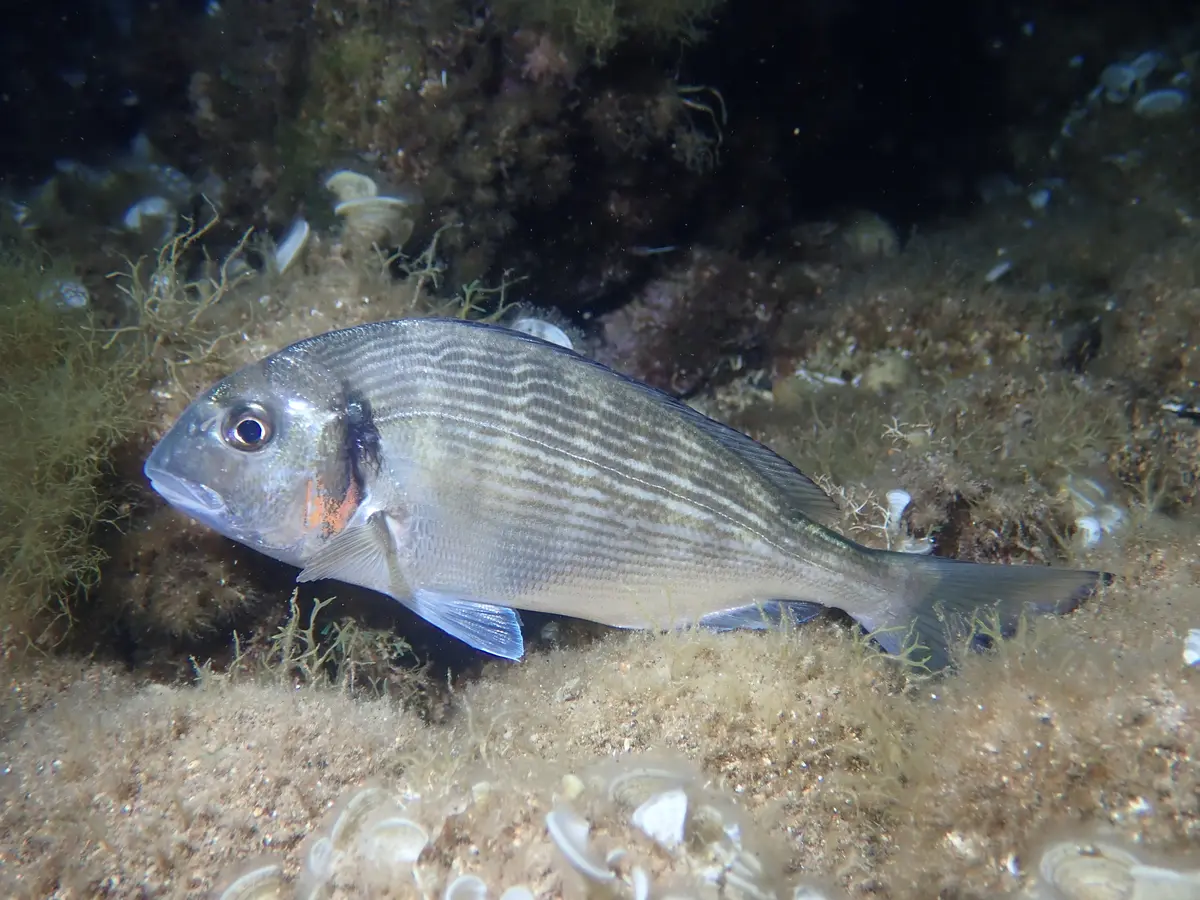
Gilthead seabream, or dourada, reward accuracy more than spectacle. On the Algarve coast, a visitor can fish sheltered harbour margins, estuary approaches or open beaches, but each setting brings different access, safety and regulatory questions. Late autumn and winter offer quieter shore sessions and changing sea conditions; they do not guarantee an inshore run. This guide builds a cautious plan around legal licensing, zone checks, bottom-fishing basics and careful handling. The cover is a licensed Mediterranean photograph of Sparus aurata, not an Algarve location or a recent catch report.
Licensing and local restrictions
Portugal’s DGRM states that recreational sea and brackish-water fishing requires the appropriate licence, with shore, vessel, underwater and general licence categories. Foreign visitors can use the routes described by DGRM, including the BMar process or regional offices. Check the current licensing page before fishing because fees, procedures and validity can change. The licence is only the first layer. DGRM lists prohibited areas, port and navigation-channel restrictions, bathing concessions and protected-area rules. Parts of the southwest Alentejo and Vicentine Coast have specific controls and no-fishing locations. Read current notices from the relevant harbour authority and protected-area manager and obey on-site signs.
Do not guess the minimum size
DGRM maintains current tables for species, minimum capture sizes and closed periods. Use those tables for dourada on the day of the trip, and learn the official measurement method. The DGRM FAQ states that undersized specimens must be returned immediately even if dead, and that possession or transport below the legal minimum is prohibited. Because tables and measures can be amended, this guide deliberately does not reproduce a number from an older chart. Carry a rigid measure, identify the fish before retention and release uncertain or undersized fish promptly. A legal minimum is not a recommended harvest target. Decide in advance how many fish the group can use and chill correctly.
Select a safe shore type
Three broad options suit a first plan. A sheltered harbour or estuary edge can offer calmer water but may include navigation, port-security or sanitation restrictions. A sandy beach provides room to cast but requires reading surf, sweep and bathing-area rules. A rocky point can reach deeper water, yet swell and slippery ledges raise consequences sharply. Choose the safest venue that is clearly open, not the most dramatic photograph. Visit in daylight, identify escape routes and watch several wave sets before approaching rock. Never fish a low ledge under rising swell. Respect private property, working ports, shellfish areas and other anglers.
Habitat and tide
Gilthead seabream feed around mixed sand, shell, rock, weed edges and areas holding crabs or molluscs. On a beach, look for a gutter, darker trough, rip edge or break in the bar. In an estuary, fish moving water beside a channel rather than the fastest centre flow. Around rock, present beside the rough-ground boundary instead of casting directly into every snag. Tide can change both feeding access and personal safety. Fish one stage long enough to learn it, and mark where waves reach on the rising tide. Wind direction and water clarity influence casting and rig movement. A place that is comfortable at low water may become inaccessible two hours later.
Rod, reel and line
A medium shore rod around 3 to 4.2 metres suits many beach and rock situations, but length should match the venue and casting ability. Pair it with a corrosion-resistant reel, reliable main line and a shock leader where the sinker and casting style require one. Use a fluorocarbon or abrasion-resistant nylon hook length sized for clear water and rough contact. Carry sinkers that match the bottom: a simple pear or bomb for gentle conditions, a gripper when sweep prevents the bait from holding. The goal is not maximum weight; it is a rig that settles, signals bites and can be retrieved without excessive snagging. Inspect knots and leader after every rough-ground cast.
Two useful rigs
A sliding running ledger is simple for calmer water. The sinker moves on the main line above a swivel, with a hook length long enough to allow natural movement. A two-hook paternoster can test two bait heights on a beach, provided the current hook and line limits are followed. DGRM’s FAQ explains that shore anglers may use up to three lines or rods and up to nine hooks, but local or protected-area rules may be stricter; most beginners should use one rod until they can manage it safely. Keep hook patterns strong and appropriately sized. Avoid complicated rigs that create tangles and lost plastic. Use a landing net or safe lifting method where a high wall makes direct lifting harmful.
Baits and presentation
Common natural-bait approaches use worms, shellfish or crustacean pieces, but collection rules and bait sourcing matter. Buy lawful bait rather than removing organisms from a protected or restricted shore. Thread soft bait carefully and use elastic sparingly so the hook point remains clear. Cast to a selected feature, tighten only enough to maintain contact and place the rod securely above waves. Dourada can give tentative taps before a committed pull. Do not strike every movement created by surge. A gradual lift and firm resistance may be a better cue. Re-bait at planned intervals and record which bait remains intact, because crabs and small fish can empty a hook without a clear indication.
Fish handling
A gilthead seabream has strong spines and crushing teeth. Use a net on manageable ground, wet your hands and support the fish horizontally. Keep fingers away from the mouth and gill plates. Prepare pliers and the measure before lifting the fish from water. If releasing, remove the hook quickly and allow the fish to regain balance in clean water without being battered by surf. If retaining a lawful fish, dispatch humanely and place it on ice. Do not leave catch in a warm bucket or display it on dry rock. The cover photograph shows a representative fish underwater and is not a handling demonstration.
Weather and surf safety
Check the maritime forecast, swell period, wind, rain and daylight. Long-period swell can produce occasional waves much larger than the average, and a harbour wall can be overtopped even when the inner water appears calm. Wear footwear with suitable grip and never turn your back on breaking water. Fish with a companion on exposed rock and carry a charged phone in a waterproof case. On beaches, keep gear above the high-water line and use a light for packing up, not for extending an uncertain exit. Stop before the path, car park or crossing becomes flooded. Lightning, falling rock and unstable cliff edges are separate hazards from the sea.
A three-hour plan
Confirm the licence, DGRM size table, closures, harbour notices and protected-area status before leaving. Arrive near daylight and spend fifteen minutes watching water movement. Set one running ledger with one legal bait. Fish a near gutter or mixed-ground edge for thirty minutes, then a second distance rather than repeatedly recasting to the same empty spot. As tide changes, move only to pre-identified safe positions. If small fish dominate, increase bait and hook selectivity or relocate; do not continue deep-hooking undersized fish. Log tide, wind, water colour and bite timing. Finish with time to inspect the path and pack every piece of line and bait wrapping.
Leave the place better
Take all cut line, hooks and packaging home. Do not discard unused bait into a marina or estuary. Clean salt from rod, reel and metalwork with fresh water and dry gear before storage. Report pollution, injured wildlife or illegal fishing to the appropriate authority rather than confronting others. Recheck the DGRM pages before the next trip because licensing, closed periods and local notices may change. A good Algarve shore session is one in which the location was legal, the angler remained safe, fish were measured and handled correctly, and observations were recorded honestly—whether the catch was one dourada or none.