
Make a large reservoir smaller
An Alqueva bass session becomes easier to understand when you choose one arm, one type of bank and two presentations. Start with a point leading into a bay, compare the shallow shelf with the adjacent slope, and note where the lure first touches bottom. If a fish responds, repeat that combination nearby. Crossing the reservoir after every quiet cast hides the pattern you are trying to find.
This is a cool-weather plan for late autumn and early winter, including November and December. It does not promise a seasonal peak. The numerical tackle, depth and timing ranges below are practical starting suggestions. Local species and access facts come from the listed municipal and conservation sources; the fishing sequence is an adaptable example rather than a report of a recent catch.
Identify achigã and understand its food
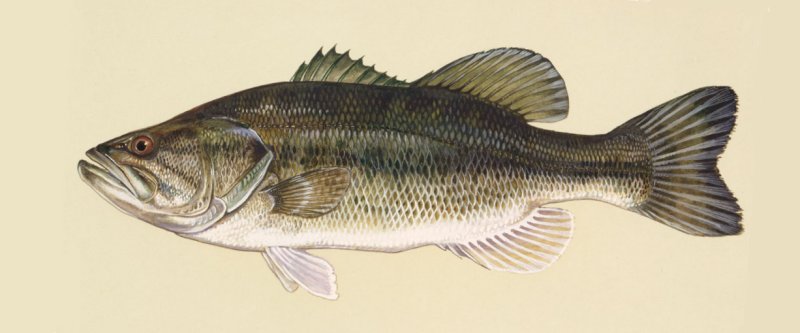
Achigã is the Portuguese name used for largemouth bass, listed as Micropterus salmoides in the Portuguese sources and fishing rules. Look for a large mouth, a body compressed from side to side and a dorsal fin with adjoining spiny and softer sections. Larger fish have a conspicuous jaw extending back toward and beyond the eye. Do not use a green colour alone as identification.
A small pumpkinseed, or perca-sol, has a much deeper, more rounded body and a smaller mouth; it is not a juvenile bass simply because both fish have a spiny dorsal fin. If a catch is unfamiliar, identify it before deciding how to handle retention rules. This matters in a fishery containing introduced species with different legal treatment.
Bass eat fish, crustaceans and insects, with the available prey and fish size affecting the meal. The LIFE Saramugo account describes an opportunistic diet, not a single preferred Alqueva bait. A soft minnow tests the small-fish option; a compact craw-shaped bait tests a slower bottom presentation. Neither proves that bass at your chosen point are feeding on that particular prey today.
Choose an access base, then a fishing area
Alqueva lies in the Alentejo, within the Guadiana system. The Reguengos de Monsaraz municipal fishing page lists achigã among the reservoir's fish. For boat access, the municipality-backed Moura nautical station describes a launching ramp, floating platforms and a mooring facility at Centro Náutico de Moura–Alqueva, near the dam. Estrela has a quay and nautical facilities and lists sport fishing among its activities.
Those are planning bases, not permission to cast from every pontoon or fish beside the dam wall. Confirm current launch arrangements, restricted areas and the operating condition of the ramp before travel. A shore angler should obtain permission for the chosen bank rather than crossing farmland because water is visible from a road. Keep the boat within a manageable distance of the launch if wind is building.
From either base, choose a lawful bay or point with a clear return route. Inspect what is actually present: rock, bare clay, sparse vegetation or submerged wood. Water-level changes can make last season's shoreline photograph misleading. The important feature is the present underwater edge, not the place where the bank used to meet the water.
Read depth before choosing a lure
Use an initial search band of roughly 1–6 m where the terrain and conditions permit. This is a working range for the rigs below, not a claim that all Alqueva bass occupy it. A bank point may offer several depths within one cast, while a broad shallow bay may require a different station to reach the first break.
Make the first casts parallel or oblique to the bank so the lure remains in one depth band for longer. Then cast across the slope to locate where bottom contact changes. A smooth fall followed by a distinct stop suggests a shelf; repeated knocks suggest harder material; a heavy, springy retrieve may be vegetation. Confirm these interpretations with another cast rather than treating one sensation as a map.
As water cools, compare a slower presentation close to cover with a moving lure in open water. A sunny afternoon can be a useful time to test a shallow margin, but sunlight alone does not establish warmer water or feeding fish. Wind can disturb a bank and move small prey, yet excessive line bow makes a supposedly slow presentation uncontrollable. Select a fishable bank first.
Rig one: a Texas-rigged soft bait
A 2.0–2.3 m medium spinning or casting rod, a 2500–3000 spinning reel or equivalent baitcaster, and 15–20 lb braid provide a versatile start. Add about 1–1.5 m of 10–15 lb leader, increasing abrasion resistance around rough wood and rock. Match the rod's casting range to the complete rig, not just the sinker.
Slide a 3.5–7 g bullet weight onto the leader, pointed end toward the rod, then tie on a 2/0–3/0 offset hook. Choose an 8–11 cm soft worm, minnow or compact craw that leaves adequate hook gape. Insert the point through the nose, bring it out underneath, slide the bait up to the offset and rotate it. Reinsert the point at the measured position so the body hangs straight and the point sits lightly concealed.
Leave the weight free-running initially. It lets the bait settle slightly apart from the sinker and avoids turning every retrieve into a rigid unit. In dense cover a more compact arrangement may help, but do not add complexity before testing a simple rig.
Cast along the outside of a visible branch or across the clean side of a point. Allow the rig to settle while watching the line. Move it with a slow 20–40 cm lift, recover the slack and pause for several seconds. Feel for the difference between bottom resistance and a moving or pulsing weight. On a definite take, wind down and make a firm sweep; repeated hard strikes are unnecessary.
Rig two: a drop-shot for an open slope
When the bottom is clean enough and a fish seems unwilling to chase, try a 6–9 cm soft minnow on a size 2 to 1 drop-shot hook. Use a 1.5–2 m length of 8–12 lb leader. Tie the hook with a suitable knot, pass the long tag back through the eye so the point stands upward, and attach a 5–10 g drop-shot weight 30–50 cm below it.
The distance from hook to sinker is not the bait's exact height above bottom during a long horizontal cast. Line angle lowers that height. Fish a shorter cast or use a longer tag if you need more separation, while keeping the rig manageable. Nose-hook the bait through a small amount of material so it moves freely without tearing off.
Let the sinker touch down, remove excess slack and make tiny rod-tip movements while leaving the weight in place. Pause with the bait still. Then move the entire rig a short distance and repeat. If the sinker drags continuously, the rig is covering ground rather than holding a hesitant fish's attention.
A bite may feel like extra weight or appear as line moving away. Reel smoothly until the rod loads and lift with controlled pressure. A sharp overhead strike with a small exposed hook and light leader is more likely to break the connection than improve it. Use this rig outside branches; a concealed-hook soft bait is the better option inside clutter.
Rig three: a suspending minnow for the search
A 7–10 cm minnow plug gives a useful contrast to bottom rigs. Choose a model whose stated diving range suits the depth being fished, and test its behaviour beside the boat or bank. A lure described as suspending can rise or sink with different hooks, leader material and water conditions.
Cast across open water beside a point, wind a few turns to reach working depth, then give one or two short twitches followed by a pause. Start with pauses around two to five seconds and lengthen them if fish follow without committing. Keep enough slack for the lure to dart without losing all bite detection.
A natural silver or muted baitfish finish is a sensible first comparison in clear water. In coloured water, test a higher-contrast side or brighter belly. Colour cannot compensate for a plug diving beneath the fish or hitting every rock. If it repeatedly fouls bottom, switch to a shallower model or raise the rod rather than retrieving faster merely to escape.
| Bank or water condition | Holding or feeding possibility | Starting rig | How to present it | Main caveat |
|---|---|---|---|---|
| Sparse wood on a sloping bank | Cover beside a depth change | Texas-rigged soft bait | Short lifts with controlled pauses | Do not cast through an unlandable branch maze |
| Clean point or open shelf | Fish can patrol an edge | Suspending minnow | Cross the edge, twitch and pause | Confirm actual diving depth |
| Open slope after a follow | A fish may need a slower target | Drop-shot minnow | Hold the weight and quiver the bait | Long casts reduce bait height |
| Wind pushing a large line bow | Contact is being lost | Slightly heavier soft-bait rig | Shorter cast, low line angle | Move banks if control remains poor |
A worked half-day
Begin with one sheltered bay and the nearest legal point, not a list of distant coordinates. Spend twenty minutes locating the slope with the Texas rig. Suppose a 5 g weight gives clear contact at a moderate cast but a 3.5 g weight does not: keep the 5 g rig and alter the angle before increasing again.
Search the open side of the point with the minnow plug. If a fish follows close to the boat, stop extending the search and return with the drop-shot at the same depth. Give it a stationary pause before moving it. If there is no sign after a thorough pass, try the next comparable point, then a genuinely different bank type. This separates a presentation problem from a location problem.
Keep a short record of bottom type, lure depth, wind exposure and response. After a bite, duplicate the useful features rather than assuming every nearby bay holds fish. After repeated snags, shorten the cast and use the weedless rig; after repeated missed bites, inspect hook exposure and lure alignment before changing colour.
Local rules and a short handling note
ICNF administers inland recreational fishing licences. The consolidated national conditions list achigã fishing in still waters from 1 January to 15 March and 15 May to 31 December, with a 20 cm minimum; local management plans can differ. Check the current ICNF conditions for the exact water, including retention or return requirements for every species caught, before fishing. The linked government service explains the inland licence route.
Wear a suitable buoyancy aid afloat and return before wind makes the crossing difficult. Net fish, support the body horizontally and keep handling brief. Do not transport live fish or introduce bait fish to another water. A successful session should leave both a clear fishing lesson and an intact shoreline.