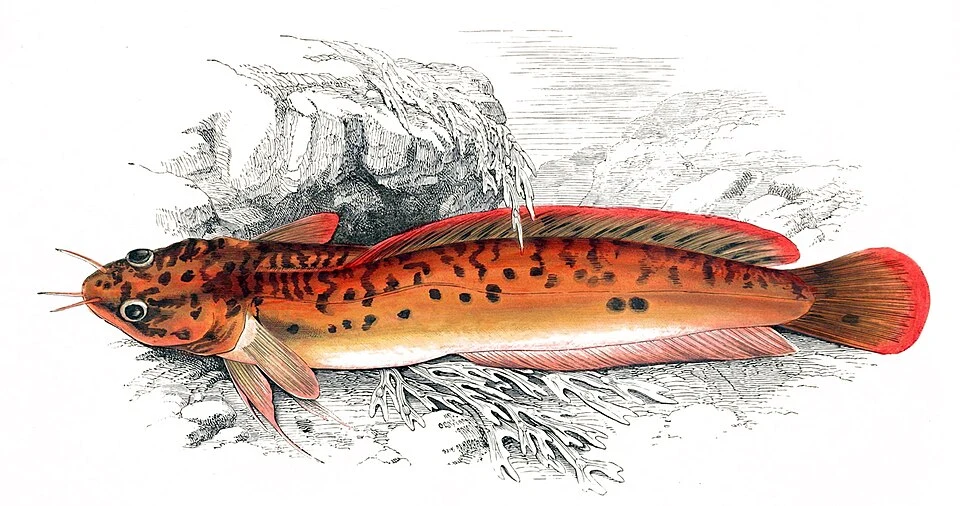
Kasago fishing from a public deck begins with finding a strip of bottom you can reach and leave cleanly. At Amagasaki Fishing Park in Hyogo, start with a straight drop close to the deck from an open station. The first useful clue is the time it takes the sinker to touch and the angle at which it comes back. A rig that drifts under the structure can snag before the bait reaches a fish. A short, compact rig allows you to sample the bottom while keeping your line in your own space.
Read the edge below the railing
Use Amagasaki City's municipal fishing park at 66 Heizaemoncho, and check the park operator's current opening and notices before travelling. The deck can experience wind and tidal flow even when water near the railing looks calm. This session is built around vertical natural-bait fishing. Choose a legal place with clearance beside your rod tip and behind you. Skip long casts and lure work. Ask staff where a short bait drop is permitted if you cannot tell from signs.
The fish is marbled rockfish, *Sebastiscus marmoratus*, known as kasago and often called gashira in western Japan. It has a large, spiny head, a broad mouth and a mottled body whose colours can vary from brown to reddish. The marbling, head shape and spines are more informative together than the red colour alone. Mebaru rockfish also occur in the region. They often look rounder-eyed and less heavily built through the head, and may hold higher in the water. If you cannot confidently separate a fish from a similar rockfish, leave it unidentified and release it carefully. Keep your hand away from the mouth and dorsal spines.
Marbled rockfish occur in the western Pacific, including the Japanese coast, and adults use rocky and reef habitat. Rocks and breaks in hard bottom provide hiding places and concentrate prey at very small scales. A Tokyo Bay study found that adult diets included decapods, amphipods and brittle stars, with the relative contribution of prey changing during the months sampled. That result is a reason to try a small shrimp-shaped bait close to structure. It does not establish what Osaka Bay fish ate this week. A compact piece of shrimp or fish can reach a fish holding next to cover with less twisting in moving water than a long strip.
Try the sheltered side of a station first. In stronger flow, make a few test drops at an available near-slack period or move to a station where the sinker stays underneath. In calm water or lower light a bait may get picked up a short distance outside a hide. At other times, you may have to hold near the bottom for longer. Cooler months are an opportunity to fish the structure slowly, with no fixed bite window. The reported winter larval season in Osaka is a biological observation and does not by itself predict a catch peak.
| What the test drop tells you | Rig choice | How to fish it |
|---|---|---|
| Sinker touches cleanly and stays beneath the tip | Short running-sinker rig | Lift a hand span, settle and pause |
| Hook catches but sinker comes back | Single dropper above a terminal sinker | Start with the bait 25–40 cm above bottom |
| Whole rig sweeps sideways | Slightly heavier terminal sinker | Move if you cannot keep the line in your space |
| Small pecks strip the bait | Shorter bait on the same hook | Repeat the same depth before moving |
Put the bait close with a running sinker
A 2.1–2.4 m light or medium-light rod, 2000–2500 reel and PE 0.6–0.8 braid make a starting outfit. Add a metre of 10–14 lb abrasion-resistant leader above a small swivel if the deck edge or rocks may rub the line. Thread a 5–12 g sliding sinker and a protective bead onto that section before tying the swivel. Tie a short 25–40 cm hook trace of 10–14 lb mono or fluorocarbon to the other end. Use a single short-shank bait hook around international size 6–2, matched to a thumbnail-sized shrimp piece. Hook sizes differ between Japanese and international patterns, so judge the gap and leave the point showing.
Lower the bait where you can watch the entry angle. Follow it down under light tension and reel in enough slack to feel first contact. Lift a few centimetres and hold for five to ten seconds. Then touch once more to confirm that the rig is still over fishable ground. Do not drag it sideways beneath the deck. A rattling sinker can be current pushing it against rock. A firm weight or a line that tracks away is a better signal to tighten and lift. Once attached, maintain pressure through the first short run so the fish cannot turn straight back into a crack.
Raise the bait on a single-hook dropper
Use a dropper if the hook snags before you get a useful pause, or if small crabs repeatedly strip the bait sitting on bottom. Start with a 70–100 cm section of 12–16 lb leader. Tie a short dropper loop 25–40 cm above the bottom end and attach a size 6–2 single hook, keeping the hook branch around 8–12 cm. Attach a slim 7–15 g sinker at the end. Lower it once to bottom and hold it there with just enough tension to feel the weight. You can then lift and reset without drawing the hook through the same gap.
This rig keeps the hook higher when the line is close to vertical. If the line is badly angled, it can still bring the bait into the rocks. Try one modest weight increase or move to a legal station sheltered from the flow. A small pale shrimp piece is easy to track during a clear-water check near the top. If the water is turbid, a fresh piece of bait can be more useful than increasing its size. An oversized strip rotates in current and can cover the hook point. Hold still for a few seconds after a light peck, then wind down and lift when the weight stays on.
Watch how the rig behaves during the first metre of each drop. A bait that spins with a short trace usually needs trimming or hooking through a thicker piece, not a larger sinker. If your rod is too long to keep the line clear of a neighbour, shorten your reach or move with staff guidance. At the end of each drop, bring the tackle back up under control. A fast lift can send a sinker or hook across the railing. Over a clean bottom it is worth raising the bait another hand span for one pass. Over a rough bottom, move laterally to clear the structure before lowering the sinker again.
Work two stations before changing bait
Imagine the park is open in late autumn and the tidal flow is easing. At the first station, drop a 7 g running sinker with a small shrimp piece and a 30 cm trace. You touch bottom cleanly once, then the next two drops hang up. Move your tip to a spot a little farther along the railing if it is open and permitted, and try the dropper with a 10 g sinker and the hook 30 cm above it. Keep the bait and hook the same. If the new rig comes back clean and a solid bite follows, repeat the vertical drop and pause before trying a different bait.
If both rigs come back clean but untouched, make a short move to a different depth or current angle within the facility. Start again by finding bottom, then lift into the lower part of the water rather than blindly adding weight. If all you get are brief taps, use a shorter shrimp piece or a small fish strip, then hold still through one extra pause. Once you hook a fish, keep it away from the deck structure and use a suitable net, with staff guidance where needed.
Check Amagasaki City and the park operator for current access and method rules. Keep lines in your station, avoid leaning over the railing and use pliers and a wet net to handle a spiny fish with minimal time out of water.