
November perch fishing at Lake Annecy is a short-season exercise in presentation control. A small lure that passes through one useful depth repeatedly teaches more than a heavy lure thrown as far as possible into a large, clear lake. Begin with the water you can fish accurately and expand the search only when you understand it.
This is a November 2026 plan, not an invitation to fish the lake throughout December. The local calendar closes the general season on 30 November. The rig sizes, search intervals and worked-session choices below are practical starting suggestions, while species information and local restrictions come from the sources listed separately.
Identify the target before choosing a lure
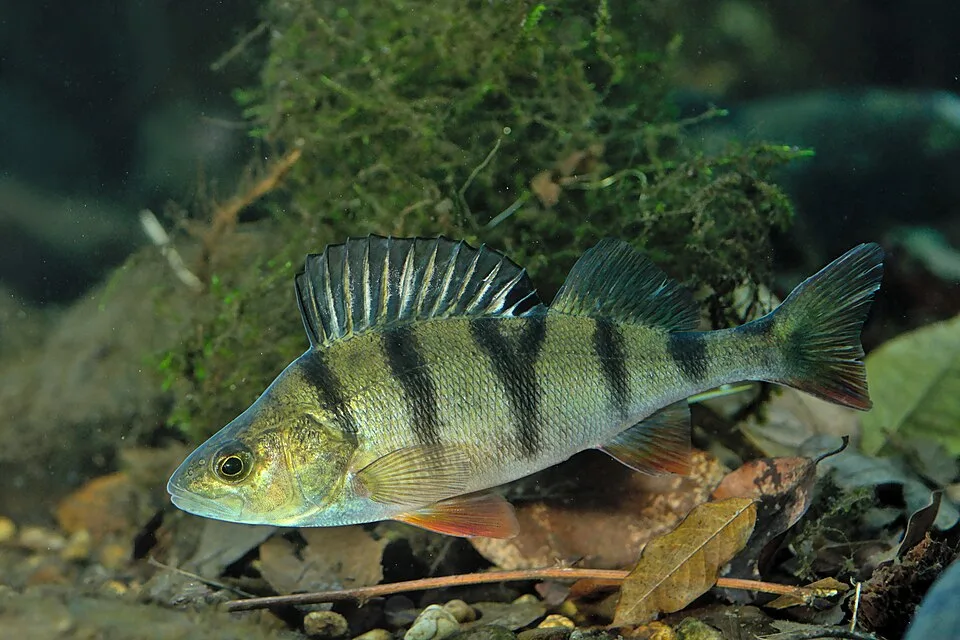
European perch, Perca fluviatilis, have a greenish body crossed by dark vertical bars, reddish lower fins and a prominent spiny dorsal fin. They differ from the more elongated zander, which has conspicuous canine teeth. They are also a different species from North American yellow perch, despite the shared striped appearance.
Perch form shoals and eat aquatic invertebrates, zooplankton and small fish. That makes both a compact swimming plastic and a small slow-moving bottom lure useful options. It does not establish which prey dominates Annecy on a particular November morning. Small-fish activity, follows and the depth of actual bites are better guides than assuming a single seasonal menu.
The species ranges widely through Europe and northern Asia; Lake Annecy's federation specifically lists it among the resident fish. Do not transfer another country's bag limits, opening dates or live-bait practices to this lake simply because the fish is the same.
Choose a legal shore section
Annecy is a public first-category fishery with its own rules. Obtain the appropriate fishing card and confirm the permissions attached to it. A lakeside promenade or accessible quay does not by itself establish that casting is permitted there.
Use Annecy Lac Pêche's reserve information to exclude restricted shoreline, including the designated sectors around Menthon-Saint-Bernard and Talloires. Then choose an authorised section with firm footing, space behind for a cast and a safe way to net a fish. Keep clear of navigation and other lake users.
Do not build the plan around a salmonid trolling or vertical multi-hook setup. November perch fishing and the earlier-closing salmonid season are different opportunities. This shore guide uses a single lure on a single rod, avoiding the special permissions and method definitions associated with the gambe, sonde and trolling arrangements.
Read the visible bank and its underwater continuation
A steep bank can put deeper water close to shore, but steep does not automatically mean productive. Compare a shallow margin, the first drop and the outer reachable lane. Any visible weed boundary, stone transition or small point is worth inspecting where it actually exists.
Make a short reference cast with a light jig into clean water. Let it sink on controlled line and count consistently. Repeat at a slightly longer distance. A longer count can indicate greater depth, but only when weight, line tension and wind remain comparable.
In cooler water, allow time to test a slower presentation near depth changes. A midday session can still be worth fishing when a safe, legal early or late window is unavailable. Do not turn the general dawn-and-dusk feeding tendency into a promise that fish cannot bite at another time.
| Observed feature | Why it matters | First presentation | Next adjustment |
|---|---|---|---|
| Clean shallow margin beside depth | A short route between holding and feeding water | Light jig swimming parallel to bank | Shorten the sink |
| Firm slope | Several depths can be reached from one position | Counted swimming plastic | Test a longer count |
| Weed or rough bottom edge | Cover and possible prey concentration | Lure just above the edge | Change angle before adding weight |
| Quiet clear water with followers | Fish are seeing but not committing | Smaller lure with longer pauses | Reduce sudden movements |
These are search decisions, not a map of guaranteed Annecy hot spots.
A light outfit that still controls the lure
Start with a 1.9–2.3 m light spinning rod rated for roughly 2–12 g, a 1000–2500 reel and fine braid around 6–10 lb breaking strain. Add about 1–1.5 m of 4–8 lb leader, adjusted upward where abrasion requires it. Straight light mono is an alternative for short casts and less complicated line management.
Set the drag to protect the leader under a sustained pull. Check knots and the final section of line after touching stones. A delicate rod tip helps detect small changes, but it does not justify using a damaged hooklength.
Carry 40–65 mm plastics, a few small jigheads, compact single-hook spoons and spare leader. Two or three body shapes in distinct silhouettes are enough to start. The first task is to establish a controllable depth, not to cycle through every colour in the box.
Swimming jig: explore one layer at a time
Thread a slim paddle-tail onto a jighead with the body straight and the hook point emerging centrally. Start around 2–4 g in modest depth and light wind. Increase toward 5–7 g only when distance or drift prevents reliable contact and the rod is rated for it.
Cast across the intended slope, let the lure sink to your chosen count and retrieve steadily. Keep the tip low enough for contact without dragging the lure along the stones. Add a short pause, then resume the same pace.
If the lure constantly scrapes bottom, shorten the countdown or use a lighter head. If it never reaches the depth you intend, first remove excessive line bow; only then increase weight. More lead cannot fix every problem caused by crosswind.
A stopped fall, a tap or sudden heaviness can indicate a fish. Wind into pressure and lift smoothly. Repeat the successful cast before moving, noting both the count and the direction. A shoal may move, but changing position after every bite makes it harder to learn its route.
Slow jig: shorten the movement
Use the same head with a slim worm or small pin-tail when you want less tail vibration and more time in one patch. Let it settle near clean bottom, lift only a few centimetres and pause. The rod movement should not turn each small lift into a metre-long leap.
Keep enough contact to see a line twitch but not enough tension to tow the plastic continuously. If the bottom is soft or weedy, suspend the lure above it rather than repeatedly burying the head.
Choose a darker profile when the lure disappears against a bright background, or a pale/translucent option when you want a smaller visual presence. These are practical visibility comparisons, not established Annecy colour rules. Test them at the same depth so the comparison has meaning.
If snags occur on nearly every cast, change the route or use the swimming presentation higher up. A productive perch rig should spend more time fishing than being pulled out of obstacles.
A single-hook spoon alternative
A small 3–7 g spoon can cover slightly more water and offer a different falling action. Check that its hook, split ring and swivel arrangement are sound and that it complies with the local method limits. One properly fitted single hook keeps this setup simple.
Cast beyond the useful lane, allow a short sink and wind until the spoon oscillates rather than spins. Pause briefly where it crosses the depth change. If fish follow to your feet, maintain a smooth final retrieve and leave room for a take; lifting the lure suddenly at the edge can end the opportunity.
A spinning spoon or twisted leader is a signal to slow down or check the rig. Do not interpret all flash as an attractive action.
Work an illustrative two-hour session
Begin after confirming your card, reserve boundaries and fishing hours. Walk the permitted shoreline without casting and choose two secure positions that reach different contours. Leave the exposed or crowded position out of the plan even if it looks deeper.
At the first position, test the near lane with the swimming jig, then the middle lane at two counts. Keep lure size and colour unchanged while you compare depth. If a perch follows but does not take, reduce the plastic's size or introduce a longer pause.
Switch to the slower jig in the most promising clean patch. If no evidence develops after a proper trial, move to the second position instead of endlessly increasing weight. Try the spoon where you can search a wider lane without crossing other anglers.
Record where a bite occurred relative to the slope, not just its distance from shore. A note such as “short pause above the first drop” is more useful for the next session than an unsupported claim that November fish always stay deep.
Brief local rules and care
Checked 28 October 2026: Annecy Lac Pêche and the Haute-Savoie federation list other species, including perch, as open through 30 November 2026 outside prohibited zones. Confirm your fishing-card rights, current reserves, allowed hours and catch-reporting duties. The local rules prohibit groundbaiting; this lure plan uses none. Do not carry the November plan into December without a fresh authorised season check.
Stay on secure banks, allow room for walkers and boats, and handle perch carefully around dorsal spines and gill covers. Support unwanted fish with wet hands and return them promptly. Precision, depth control and a calm change of method should occupy most of the session.