
Find the feeding shelf before choosing the bait
Winter roach fishing on the Grand Union Canal’s Aylesbury Arm rewards accurate depth control and restrained feeding. A small bait held at the right level beside the boat channel can be more useful than a large pile of feed in an attractive-looking but empty swim. This guide develops a daylight bank session for that canal, rather than promising that every bridge or moored boat holds fish.
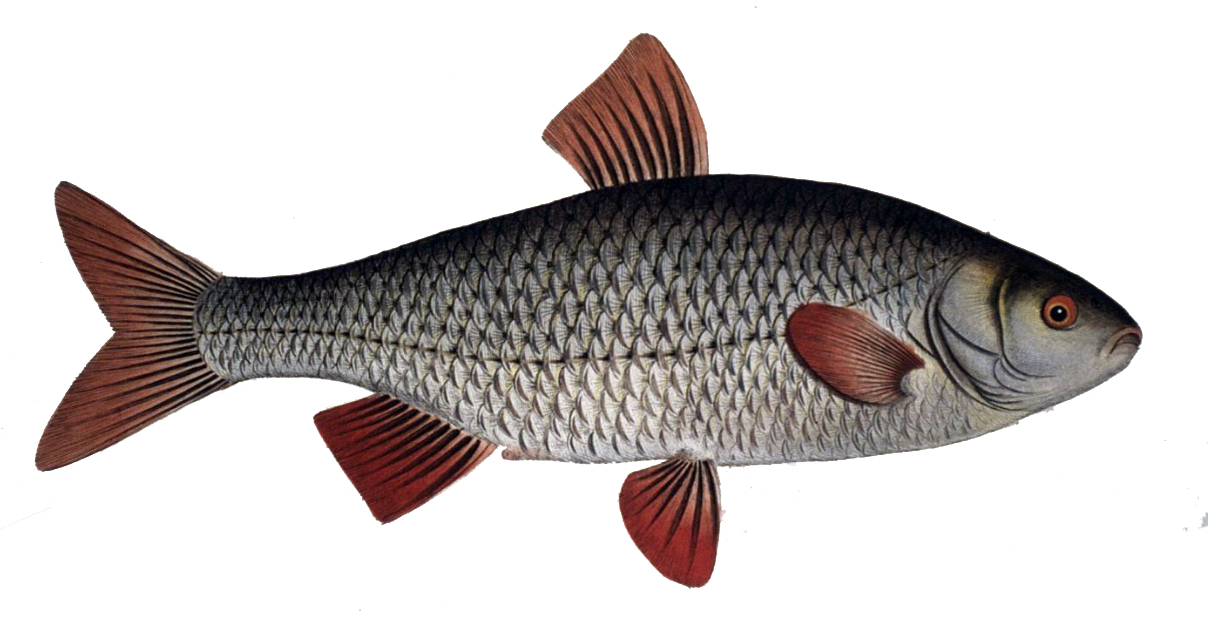
The Canal & River Trust identifies roach as Rutilus rutilus: a widespread English freshwater species associated with canals, lakes and slower rivers. Look for a silvery body, reddish eye and lower fins, and a mouth that faces forward. Rudd have a more obviously upturned mouth; red fins alone do not settle the identification. Roach-bream hybrids also occur. The cover is a historical scientific illustration, not a photograph proving the identity of an individual catch.
Roach eat insect larvae, small crustaceans and snails. That makes the junction between open bottom and plant cover worth investigating: it puts small natural food close to a feeding route. A bait need not imitate a particular organism exactly, but it should be small enough to take readily. In winter, finding a concentrated group matters more than attempting to feed fish into the area from a long distance.
Choose a verified stretch, then read the swim
The Tring Anglers describes the sheltered town section of the Aylesbury Arm as winter water for roach and skimmers. Its fishery page also identifies roach near Buckland Bridge 8 and the boat channel as worth exploring. These are documented starting locations, not current catch reports. The club lists day-ticket access on its canal waters; establish your exact permitted stretch before setting up. Its Aylesbury guidance excludes fishing beyond High Street Bridge, prohibits parking at Kingfisher House, and rules out night fishing.
At the water, spend ten minutes looking before feeding. First identify a level, permitted station with room behind you. Next inspect the near shelf, the slope into the navigation channel, and any reachable far shelf. Look for the edge of surviving vegetation, changes in water colour, and the quieter water beside rather than underneath boat moorings. Do not cast against hulls or across ropes.
Use a plummet to measure depth at several points. Clip it to the hook, lower it carefully, and adjust the float until it registers with the weight just touching bottom. Record the differences, then remove the plummet. A clean depression 20–30 cm deeper than its surroundings may be more useful than the most distant cast. That figure is a search suggestion, not a surveyed feature of this canal.
Locks and passing boats can create temporary movement. Watch which way tiny bubbles or your unbaited float travel. The useful presentation may be a slow drift along the channel edge, not a static bait in its deepest centre. Let a boat pass and the strongest turbulence settle before judging the swim.
Tackle that shows small bites
The following tackle ranges and timings are practical starting suggestions. Adjust them for actual depth, wind, fish size and the club’s rules; they are not universal prescriptions or a claim of field testing at this venue.
For rod fishing, try a 3.3–3.9 m light float rod, a 1000–2500 size fixed-spool reel, and 3–4 lb monofilament main line. Reel size labels vary between manufacturers. Add a 20–35 cm hooklength of roughly 0.08–0.10 mm line, commonly around 1–2 lb depending on the product. Check the stated breaking strain and knots. Use slightly stronger material near unavoidable abrasion and move away from structure that demands tackle too heavy for the presentation.
A fine-wire size 20 hook suits a single pinkie or small bread pellet; size 18 is a sensible alternative for a larger maggot or caster. Hook numbering is not standardized across patterns. Match the actual gape to the bait and leave the point exposed. A light, forgiving rod and a smooth drag protect the hooklength better than lifting hard when a fish turns.
A 4–6 m whip is another option where the channel edge is close. It removes casting complexity and keeps the bait over one small area, but it cannot reach every far-bank feature. Set its rig length so the fish can be brought to the net without dragging it through reeds or swinging it over the towpath.
Rig one: a light waggler for a slow fall
Choose a slim, bottom-attached waggler carrying approximately 0.5–1.5 g. Thread the main line through its bottom eye or a suitable float adapter, secure it with the smallest shot arrangement that holds position, and tie the hooklength to the end with a loop-to-loop connection. Place most of the loading near the float and two or three very small dropper shot progressively below it. Keep the final dropper roughly 15–25 cm above the hook as an initial setting.
Test the rig in the margin: enough tip must remain visible to distinguish a bite from wind ripple. Start with the bait just clear of bottom. If it catches debris on every run, shorten the depth a few centimetres rather than immediately adding more weight.
Cast slightly beyond the feeding patch with a gentle overhead or side cast, feather the line before touchdown, and draw the float into position. This straightens the hooklength instead of landing it in a heap. In a crosswind, dip the rod tip and take up loose line so the surface bow does not drag the float unnaturally. Keep enough freedom for a bite to register.
A steady dip, sideways movement or a float that rises and stays high can all indicate a take. Tighten with a short controlled lift. A sharp, sweeping strike throws small fish out of position and breaks fine line. Bring the fish away from the feeding patch, maintain steady pressure and net it.
Rig two: a pole or whip float for holding a lane
Use a slim 0.2–0.6 g pole float when you can lower the bait accurately into a short, repeatable run. Attach it using the maker’s eye and silicone sleeves, with enough sleeve below the stem to protect the line. Put a small bulk of shot about 30–45 cm above the hook, with one or two lighter droppers below. The bulk gets the bait through the upper water; the droppers control its final descent.
This arrangement is helpful when tow or a light wind keeps pulling a waggler off the chosen shelf. Lower the rig slightly up-current of the feeding point and follow the float with the pole tip. Hold it back only enough to keep the bait in the lane. Holding too hard can lift the hookbait away from bottom and make it accelerate when released.
If bites arrive before the float fully settles, move some weight upward and try a slower fall. If small fish intercept every bait above the better fish, move the bulk downward cautiously and use a slightly heavier float. Change one thing at a time so the next bite gives useful information.
Bait, feeding and useful alternatives
Start with a single pinkie, one maggot or a small punched piece of fresh bread, approximately 3–5 mm across. Keep bread soft and protected from drying. Thread only enough of a maggot’s skin to hold it without crushing it. Casters provide a useful alternative when tiny fish repeatedly strip maggots, though they do not guarantee larger roach.
Feed a small pinch into a compact area and watch how quickly it sinks and drifts. As a first experiment, add only a few loose offerings after several quiet presentations or after a fish. If bites weaken after feeding, pause the feed. Cold-water fishing is easily spoiled by providing more food than the fish currently want.
Do not assume a colour rule. Natural pale bread and ordinary maggots are sensible baselines; changing from pale to red maggot is a test of visibility and response, not an established winter advantage. Keep depth and feeding constant while comparing them. Colour changes cannot compensate for a bait trailing through weed.
Tiny artificial bloodworm-style baits on a size 18–20 hook can be tested where permitted, but natural baits are the more straightforward starting choice here. A small lure is not a necessary addition to a roach session. Choose alternatives because they solve a presentation problem, rather than packing every technique into one swim.
| Water or feature | Holding and feeding reason | Starting rig or bait | Presentation | Change to test |
|---|---|---|---|---|
| Clean channel-edge shelf | Travel route beside a depth change | Light waggler, bread punch | Just off bottom, little lateral drag | Adjust depth by 5–10 cm |
| Gentle tow past a sheltered station | Food moves along a repeatable lane | Pole float, single pinkie | Lower upstream and follow slowly | Alter bulk-shot position |
| Clear far-bank margin | Cover close to open feeding water | Small waggler, maggot | Accurate soft landing short of cover | Reduce disturbance before line strength |
| Repeated tiny-fish bites | Bait intercepted above the intended depth | Slightly larger caster, compact shotting | Reach the lower layer sooner | Move feed or try another depth |
| Weed or debris on the hook | Bait has left the clean lane | Either float rig | Raise bait and shorten the run | Shift sideways rather than add weight |
A worked two-hour session
Choose an allowed town-section station with a measurable channel edge. Plumb three lines: close shelf, near channel slope and a reachable farther line. Begin with the waggler over the clean slope, a size 20 hook and 4 mm bread punch. Set the bait about 5 cm clear of bottom and make five accurate presentations before increasing feed.
If nothing happens after roughly fifteen minutes, inspect the bait and hook for debris. Try 10 cm shallower, then the measured bottom depth. Next try one maggot on the same line. These are decision intervals, not predicted bite windows.
If fish take as the float settles, spread the shot and explore a slower descent. If there are repeated dips without fish, reduce the bait, check that the point is exposed and shorten the strike. When bites stop after a passing boat, wait for the tow to ease, recheck depth and restart lightly. Do not immediately dump feed into disturbed water.
After thirty to forty quiet minutes with clean presentations at different depths, test the second line or move to another permitted station. A small winter shoal may simply be elsewhere. Keep a short record of depth, bait, movement and response; that is more informative than recording only the number caught.
The Canal & River Trust highlights sheltered urban areas and moored-boat stretches as winter starting points. A stable afternoon can be worth trying after a cold morning, but there is no verified peak hour for this stretch. Choose a daylight session long enough to observe a change in activity.
Brief local notes
Check the linked Environment Agency licence and freshwater byelaw guidance, plus the club’s current ticket, bait and access rules. A rod licence does not replace fishery permission. Keep clear of signed power-line exclusion zones and leave the towpath unobstructed. Bring the club-required suitable landing net and unhooking mat. Handle fish with wet hands, return them promptly and take all line and hooks away.