
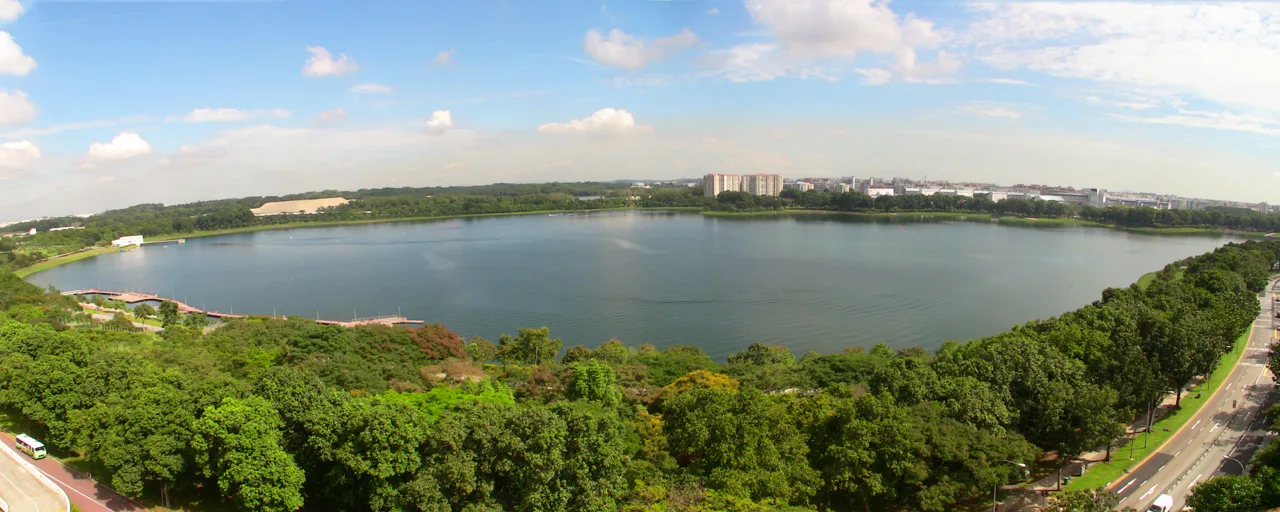
A first fishing session at Bedok Reservoir can be useful without becoming a hunt for a particular species. The immediate goal is to choose a permitted position, control a small artificial lure and leave with a clearer understanding of casting, depth and wind. This is a technique and access-planning guide for a shared urban reservoir, not a species forecast or a list of guaranteed fishing spots.
November and December are convenient months to plan a short visit, but the calendar does not reserve a calm morning or a safe afternoon. Rules and official information were checked on 23 October 2026. The practical tackle ranges and session sequence below are editorial starting points; adjust them to your skill, the conditions and the space actually available.
Find the fishing zone before choosing the tackle
PUB permits fishing only in designated areas at selected reservoirs and waterways. Its current fishing page includes a Bedok Reservoir map and explains that fishing zones are marked on site with signs and blue railings. Check the map before travelling, then confirm the boundary at the water. A path around the reservoir is not permission to fish along every part of it.
PUB requires artificial bait and says fly fishing is not allowed. Bring a spinning outfit and artificial lures for this plan; leave natural bait and groundbait at home. NParks advises carbon-steel micro-barbed or barbless hooks for reservoir and waterway fishing. Using suitable single barbless hooks also simplifies a beginner’s handling routine.
A closed gate, temporary restriction or sign at the site should change the plan immediately. Do not move beyond the marked area because it looks quieter or because another person is fishing there. If the permitted space is crowded, postpone casting or return another time. There is no benefit in finding fish at the cost of an unsafe backcast or an unauthorised position.
Understand the setting without overreading it
PUB describes Bedok as a former sand quarry converted into a reservoir and now used for water activities. It remains part of Singapore’s water infrastructure. That is the useful context for an angler: this is a shared place with operational and recreational uses, not an exclusive fishing pond.
The historical cover photograph shows the reservoir’s broader setting. It is not a current map, proof of an open access point or an illustration of the present fishing-zone boundary. Use the official map and signs for those decisions. Avoid planning a cast from a photograph alone; paths, vegetation, railings and activity areas can change.
From a permitted position, observe the surface before opening the lure box. Note the direction of wind ripples, the path of floating debris and whether other water users could enter your casting lane. Look for visible weed or a change in water colour that may affect lure depth. Do not describe every dark patch as deep water: shade and reflected cloud can create a similar appearance.
Pack for two hours, with room to stop early
A compact kit is easier to manage beside a shared path. A 1.8–2.1 m spinning rod rated around 3–12 g and a 2000–2500 size reel make a reasonable starting combination. Check the actual rod rating rather than relying on a model name. A beginner can start with 6–10 lb monofilament, while a confident braid user might choose 8–12 lb braid and a short 8–12 lb leader.
Carry three lure types with different jobs: a small shallow-running minnow around 45–65 mm, a compact 3–7 g spoon or spinner, and an unbaited soft-plastic lure on a modest jig head where permitted. The smallest lure is not always easiest to control. Choose a weight that loads the rod smoothly without forcing a hard cast, and keep the exposed hook arrangement as simple as the lure allows.
Pack long-nosed pliers, line cutters, spare leader, drinking water, sun protection and a bag for discarded line. Plan how you would land a fish from the actual position without climbing over a barrier or leaning dangerously towards the water. If the height makes safe landing impossible with your equipment, choose a different lawful position or do not fish there.
Keep the lure covered or removed while walking. A swinging hook at the end of a carried rod is an avoidable hazard. Organise the box away from the path, close it before fishing, and avoid laying rods or transparent line across a walking route.
Make the first cast deliberately short
Before each cast, look behind, beside and ahead. Wait for people to pass and for the water in front of you to clear. Do not assume that calling out makes a risky cast acceptable. The direction and length of a safe cast are set by the space available, not by how far the tackle can throw.
Start with a short, controlled cast into open water inside the fishing zone. Close the reel’s bail by hand and recover slack before retrieving. Watch the lure near the bank to learn what a steady retrieve looks and feels like. If it spins unnaturally or the line twists, check the lure, hook arrangement and attachment before casting farther.
Make several casts at one distance and speed. This is useful practice even without a bite. A beginner who changes lure, rod angle and retrieve speed on every cast has little basis for understanding what improved. Control first gives later experimentation a purpose.
Build a simple search pattern
Once the short cast is reliable, cover a small fan of open water without crossing another angler’s line or casting towards boats. Begin with a shallow retrieve. Move the rod tip enough to keep the line clear of the railing and keep the lure travelling predictably. If the lure collects weed, raise it in the water column or change the angle rather than dragging through repeatedly.
Test a slightly deeper retrieve only where you can avoid snagging. Let a sinking lure fall for a short, counted interval, then retrieve at the same pace as before. The count compares one cast with another; it does not tell you an exact depth. Wind, line diameter and lure shape all influence the result.
After a few repeatable casts, change one variable. Slow the retrieve, add a brief pause, or use a different profile. Keep a note of what changed. If there is no response after a sensible circuit of the available water, move within the designated area only if there is a safe opening. More casts from an unsuitable position do not turn it into a better position.
A following fish is a reason to pay attention, not to claim identification from a distant glimpse. Avoid naming a species you cannot distinguish. If you catch an unfamiliar fish, minimise handling and do not turn uncertainty into an unsupported claim that it can legally be retained.
Wind and thunderstorms set the limits
Meteorological Service Singapore explains that thunderstorms occur throughout the year and are especially prevalent during the October–November inter-monsoon period. Local storms often develop in the afternoon or evening, but that pattern does not make mornings immune. Check the latest forecast and lightning information before departure and again if conditions change.
Identify a substantial enclosed shelter or a safe route to a vehicle before starting. Stop fishing when thunder is heard or lightning threatens; do not wait for heavy rain to begin. An exposed bank, isolated tree or open-sided shelter is not a reliable place to continue holding a rod. Keep enough time and energy for the walk away from the water.
Wind also affects lure control long before it becomes a dramatic weather event. A bow in the line can pull a lure into an unsafe lane or conceal what it is doing. Shorten casts and choose a sheltered permitted position. If you still cannot keep the tackle within a controlled area, pack it away. This guide makes no forecast for a future trip date.
Share the space and reduce handling
PUB’s conditions and NParks’ etiquette guidance both place other users and the environment at the centre of responsible fishing. Leave room for walkers, avoid wildlife, and remove line and hooks rather than leaving them at the edge. Do not feed or approach otters or birds to clear a fishing position.
Prepare the landing and unhooking process before a bite. Use wet hands if contact is necessary, keep a fish supported and avoid prolonged photographs. Choose tackle strong enough to bring a fish under control without an unnecessarily long fight. Catch and release is the intended approach for this beginner’s session, subject to any species-specific legal direction; it is not a licence to mishandle protected wildlife.
If a lure snags, never pull it back towards yourself or other people under heavy tension. Move to a safe angle if that can be done lawfully, protect eyes and hands, and abandon the attempt if recovery requires entering the water or climbing a barrier. Preventing a snag through sensible depth and casting choices is better than improvising a dangerous retrieval.
A first-session plan
Before leaving home, read the current PUB fishing information, check the weather, prepare a small lure selection and identify your exit route. At the reservoir, spend the opening minutes confirming the zone, observing other users and arranging a safe landing position. Begin with short casts and a steady retrieve, then test depth and presentation one change at a time.
After about an hour, reassess the conditions and your concentration rather than fishing automatically to a fixed finish time. Heat, glare, crowding or building cloud can all justify ending early. Record the lure weight, retrieve sequence, wind and any problems with control. A session with no catch can still establish a reliable method for the next visit.
This guide was prepared with AI assistance using the official sources below. It makes no claim of firsthand fishing, present fish abundance, a guaranteed seasonal bite or unrestricted access around the reservoir.