
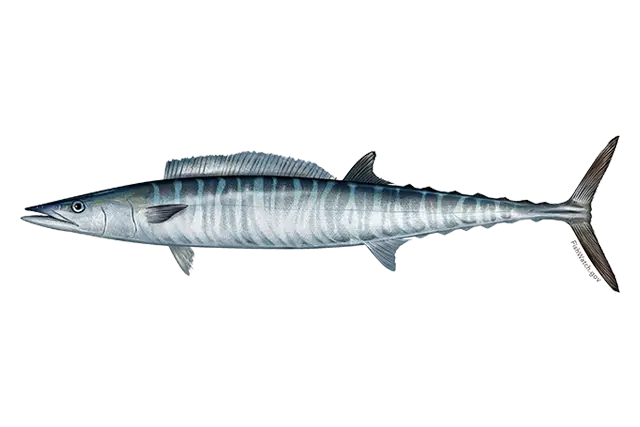
Wahoo are built for speed, and that tempts anglers to make the trip about fast trolling and aggressive tackle. Around Bermuda, the better starting point is a safe offshore plan that combines current fisheries rules, weather, boat readiness and a simple spread. November and December may offer opportunities, but a calendar is not a catch forecast. Water movement, bait, wind and the ability to work the offshore edge safely matter more than a slogan about “the season.” This guide is planning advice, not a live catch report. The cover is a NOAA public-domain species illustration, not a photograph of a Bermuda fish.
Check Bermuda’s rules on the day
The Government of Bermuda’s restrictions page, last updated in July 2026, lists a 3.2-kilogram minimum legal weight for wahoo. It also says recreational fishers may not sell their catch, a vessel may not have more than five hooks in the water at one time, and fixed fishing gear is prohibited. Separate protected areas and no-fishing zones must be respected. Read the current recreational-rules page, the catch-limit page and the mapped no-fishing areas before departure; a charter operator should explain how the rules apply to the planned route. Do not convert the five-hook vessel ceiling into a recommendation to tow five lines. A smaller spread is often safer and easier for a short-handed crew.
Decide whether offshore is appropriate
Bermuda’s reef platform gives way to deep water quickly, but geographical closeness does not make outside-the-reef conditions mild. The Bermuda Weather Service marine forecast reports wind, warnings, visibility, inside- and outside-reef seas and sea-surface temperature. Read the detailed forecast, current warnings and the next several periods, not only a phone weather icon. Compare conditions with the boat, crew and return route. A strong-wind or gale warning is a reason to cancel, not an invitation to “see how it looks.” Confirm fuel reserve, steering, bilge pumps, batteries, navigation, communications, safety equipment and the ability to clear a fouled line. File a float plan with a responsible person ashore.
Where to begin looking
Wahoo commonly associate with moving water, bait and abrupt structure. Around an oceanic island that may mean the edge of the platform, a bank, a current seam, a temperature break or activity around safely approached floating material. Use charts and lawful local knowledge to select two or three search areas, then let observed conditions decide. Birds diving on compact bait, flying fish, clean current edges and marks on the sounder are useful clues, but none guarantees wahoo. Avoid crowding another vessel’s track. If birds or marine mammals are present, keep a respectful distance and do not cut across feeding activity. The objective is to find an organised patch of life while retaining a safe route home.
Build a manageable spread
For many crews, three or four lines are enough: two short positions, one or two longer positions, and no crossing angles. Use robust conventional or heavy spinning outfits with smooth drags, quality swivels and leaders designed for a fast, sharp-toothed pelagic fish. Wire or cable near the lure reduces bite-offs, but connections must be well made and checked after every strike. Common presentations include rigged natural baits, diving plugs and streamlined trolling lures. Place different lure types where they run cleanly instead of mixing them at random. Confirm that every lure tracks before accelerating. Keep the cockpit free of loose hooks, leaders and gaffs, and brief each crew member on who clears which line.
Speed and boat handling
There is no universal trolling speed. The correct speed is the one at which the chosen baits or lures work properly in the actual sea. Watch them beside the boat before setting distance. A lure that rolls, skips uncontrollably or repeatedly fouls is not fishing effectively. In following seas, speed over ground can mislead; judge lure action and engine load as well. Run parallel to a productive contour or cross a current edge at a controlled angle, then repeat the precise line after a strike. Avoid violent turns with a full spread. When a fish is hooked, maintain enough way to keep tension while the designated crew clears unused lines safely.
Strike, fight and landing sequence
Before deploying, set drags with a scale or a consistent crew method rather than guesswork. Wahoo can strike at speed and continue running. The angler should keep the rod loaded, avoid sudden extra drag and stay clear of the line. Other crew should clear gear in a planned order, leaving the helmsman able to manoeuvre. Near the boat, the fish may surge or change direction. Keep hands away from wire under load and never wrap leader around a hand. If retaining a legal fish, use the boat’s established landing method with only trained people in the working area. If releasing, use heavy enough tackle to shorten the fight and a method that limits handling around teeth and hooks.
Ice and catch quality
If a wahoo is kept, decide before departure how it will be handled. A large insulated fish box, adequate ice or slurry and a clear deck route are part of the fishing plan. Do not leave a fish warming in the sun while the spread is reset. Bleeding and processing practices should follow local guidance and the crew’s safe procedure. Keep the legal minimum and any current reporting or possession requirements in mind. A recreational catch is not for sale. The number of fish that can be chilled and used responsibly may be lower than any legal maximum. Ending the trip after a good fish can be the best operational decision.
Conservation and bycatch
A fast trolling spread can hook tuna, billfish, dolphinfish and other pelagic species. Carry release tools and know how to identify protected or restricted species before fishing. Do not claim every released fish survives; survival depends on fight time, hook placement, handling and condition. Reduce unnecessary handling, avoid dragging a fish for photographs and keep a release alongside only as long as needed for recovery. Retrieve broken line and damaged leaders. Do not discard plastic skirts, packaging or bait bands. If fishing near mapped protected areas, navigation accuracy matters: a plotting error is not a defence for fishing inside a closure.
Common trip failures
The first is treating a seasonal reputation as a weather exemption. The second is towing more lines than the crew can clear. The third is using a lure that looks attractive in the box but will not track at the chosen speed. The fourth is carrying too little ice. The fifth is running directly over bait and birds rather than working the edge. The sixth is failing to recheck wire, hooks and knots after a bite. The seventh is relying on an old screenshot of regulations. Offshore errors compound, so simplify the spread, preserve fuel and leave a margin for changing seas.
A practical day plan
The day before, review the Bermuda marine forecast, warnings, official catch rules and no-fishing-area maps. Choose a primary and sheltered alternative route and establish a firm cancellation threshold. At the dock, test communications and safety equipment, load ice and assign roles. Begin with three lines and observe lure action. Work one contour or edge for a defined period, log bait and water clues, then move rather than wandering. After a strike, record position, direction, lure, speed and sea condition. Re-run the line only if safe. Finish early enough to cross the reef and secure the boat in daylight. A disciplined plan protects the crew and makes every useful observation available for the next trip.