
A flooded tree can hold golden perch at several levels, but dropping a lure into its thickest branches is rarely the best opening move. Begin outside the timber, establish a depth you can control, and make the lure pass beside the trunk or along the edge of the crown. Burrendong offers a useful setting for learning that deliberate approach.
This guide plans for late spring and early summer. The published local fishing guide identifies September through December as a favourable period, but that is seasonal guidance rather than a forecast for a particular week. Water level, wind, clarity and the position of bait can all change the day's work.
The fish and the reason to fish structure
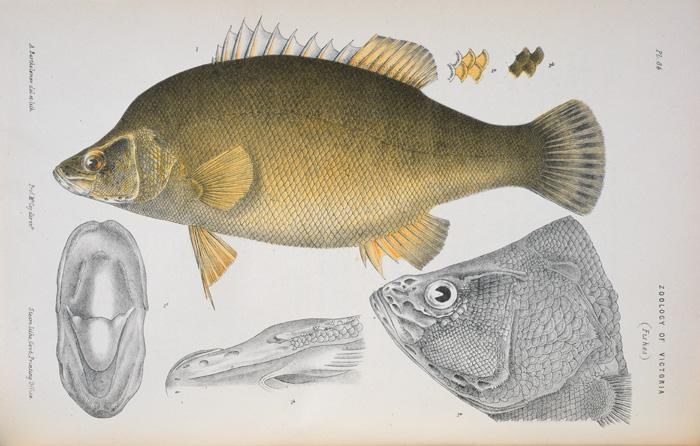
Golden perch, Macquaria ambigua, are also called yellowbelly. Adults have a relatively deep body, a concave forehead and a projecting lower jaw, with colours ranging from bronze and olive to brown over a yellowish underside. Do not identify every small yellowish native fish as a golden perch: silver perch and Macquarie perch are different species, with different identification and regulatory considerations.
The species occurs naturally in the Murray–Darling and certain inland drainage systems, with stocking extending its distribution. Young fish feed on zooplankton; larger fish take prey including fish, crayfish and molluscs. That progression explains why a compact swimming or crawling lure can be useful, without implying that every golden perch feeds on the same prey at the same time.
At Burrendong, drowned trees along old riverbeds are an established feature of the fishery. Treat a tree as a three-dimensional collection of edges. A trunk supplies a vertical reference; branching timber provides shelter; the adjacent open water gives a lure room to travel. The fish may be suspended rather than sitting at the deepest root.
Select an access and a manageable piece of water
Burrendong is near Wellington in central-western New South Wales, where the Macquarie and Cudgegong rivers meet. Lake Burrendong State Park, Mookerawa Waters Park and Cudgegong River Holiday Park are named access bases in the official location information. Check current fees, ramp condition, water level and opening arrangements with the operator before travelling.
Mookerawa provides a starting base for exploring the Macquarie arm. Bank anglers should choose a permitted rocky shoreline with a clear retrieve lane rather than assume they can reach every marked timber area. A boat opens more options, but it does not remove the need to select a sheltered route and a realistic return.
Begin with one short section: perhaps an outside row of standing timber and a nearby rocky point. Avoid trying to visit every named location before learning a presentation. Sounder marks are useful if available, but they are not a guarantee of species identity. Without electronics, visible trunks and the bank's slope still help you make a repeatable search.
Work the outer edge before the middle. Casting across the whole crown puts several branches between the lure and the rod. A shorter diagonal cast beside it is easier to keep clear and gives better control when a fish takes.
Build a responsive lure outfit
A 2.1-metre spinning rod around the 2–4-kilogram class, a 2500 reel, 4–5-kilogram braid and approximately a rod length of similar-strength leader form a light starting outfit for relatively open edges. Those broad dimensions are consistent with the local guide. Move to a stronger, compatible outfit if the cover demands it; do not simply lock down a light reel's drag.
Join braid to leader with a well-practised, tested connection and tie the lure directly or use a small, reliable clip rated for the job. Inspect the leader after brushing timber. A long leader gives an abrasion buffer but also adds another knot to manage through the guides.
Prepare two lure choices before approaching the first tree: a 50–75-millimetre grub on a small jighead and a compact lipless crankbait. Keep a shallow-running or medium-diving hardbody as an alternative for the point. The precise sizes, pauses and search times below are editorial starting suggestions, not measured optimum settings for Burrendong.
Method one: a grub beside the tree
Start with a 1/6–1/4-ounce jighead and a size 2 or 1 hook, adjusting to the plastic's body and actual depth. Place the hook beside the lure to judge where the point should emerge. Thread it through the centre of the nose and out through the back so the body sits straight. Leave the tail free to move.
Black or a natural brown-green body is a sensible first comparison; pearl or chartreuse offers a more visible alternative in stained water. Keep the profile and weight unchanged when testing colour, or you will not know which change mattered. A bright lure cannot compensate for fishing above or below the fish.
From a steady boat, lower the grub just outside the branches. Let it sink on controlled slack, stopping at a known level rather than automatically sending it to the bottom. Wind slowly upward for several turns, pause, and allow a short controlled drop. The tail can work with very little rod movement.
When casting, feather the line before splashdown and count the fall. Retrieve through the same depth band with small lifts and pauses. A short count tests the upper branches; a longer count tests below them. If you feel wood, stop pulling, ease the lure and change angle where possible. Forcing the hook into the branch generally converts a warning into a snag.
A take may feel like added weight, a tap or line movement during the pause. Reel down and make a firm, controlled sweep. Turn the fish toward open water while maintaining a bend in the rod. Avoid a high, vertical rod position that removes your ability to steer and overloads the tip.
Method two: a lipless crankbait over a clean edge
A compact sinking lipless lure around 45–60 millimetres gives a different vibration and fall from a grub. Use it on an open rocky point or outside a tree line where you have mapped a reasonably clear retrieve. Exposed treble hooks make it a poor first choice for probing an unknown thicket.
Cast across the slope and count down before beginning a slow retrieve. Add a short lift just sufficient to feel the lure work, then follow it down while maintaining contact. Repeatedly ripping it a metre upward can move it out of the useful band and make a snag harder to avoid.
Change one element at a time. If it strikes bottom constantly, shorten the countdown or increase forward retrieve slightly. If it travels high without touching or drawing interest, allow more sink time on the next cast. Replace trebles with suitable singles only if the change preserves the lure's balance and action.
A diving hardbody offers a third approach on a clear contour. Choose its advertised running depth to suit the actual water, then test at slow boat speed before committing to a pass. The lure should swim properly without constant bottom ploughing. Trolling speed is whatever produces controlled action and depth in that outfit, not a universal number.
Make position and depth the main decisions
| Situation | First presentation | Why it fits | Change after a poor result |
|---|---|---|---|
| Fish indicated beside an isolated trunk | Grub lowered outside the timber | Repeated passes through one depth | Work above and below the first level |
| Open rocky point | Lipless lure with measured countdown | Covers a horizontal band | Change angle before changing colour |
| Clean contour beyond the bank | Diving hardbody on a slow pass | Tests more water at stable depth | Adjust line length and lure depth |
| Frequent branch contact | Shorter cast with a single-hook grub | Reduces the obstructed retrieve | Move to the outermost edge |
| Wind prevents control | Sheltered tree or bank section | Restores a readable fall | Stop that drift rather than adding endless weight |
A worked morning in the Macquarie arm
After confirming access at Mookerawa, choose a sheltered stretch with visible trees and a nearby open point. Spend the first ten minutes inspecting the approaches and checking depth. Start at the outside tree with a dark grub, using a short, repeatable drop that remains clear of the branches.
Make several slow upward retrieves from that depth, then repeat one level shallower and one deeper. If a fish taps halfway up, note the approximate amount of line retrieved and revisit that band. Do not immediately send the next lure to the bottom just because the previous cast began there.
After twenty quiet minutes, test the point with the lipless lure. Make a small fan of casts from short to longer, retaining the same count for the first comparison. If contact with rock begins late in the retrieve, raise the rod slightly through that section and shorten the next fall. The object is a lure passing close to structure, not a collection of lost tackle.
Return to a promising tree when the light or boat position changes. That second visit tests a changed condition, rather than endlessly repeating an unproductive cast. Keep the session log simple: structure, depth band, lure, retrieve and response. Do not convert one fish into a claim about the whole lake.
Current rules and practical care
NSW DPIRD's current freshwater table lists golden perch at a 30-centimetre minimum, five daily and ten in possession. Check current local restrictions and your recreational fishing-fee obligations before fishing. Murray cod have a September–November closed season here; keep this a golden-perch session and avoid deliberately targeting cod. The older location booklet is background for methods, not a substitute for current rules.
Use a knotless net and support the fish horizontally, with wet hands and minimal time out of water. Submerged timber and changing water levels are also navigation hazards: slow down through unfamiliar areas, wear the appropriate flotation and end the session before wind makes the return difficult. The best improvement for the next outing is usually a better-controlled route beside the tree, rather than a larger lure collection.