A winter beach plan built around bottom contact
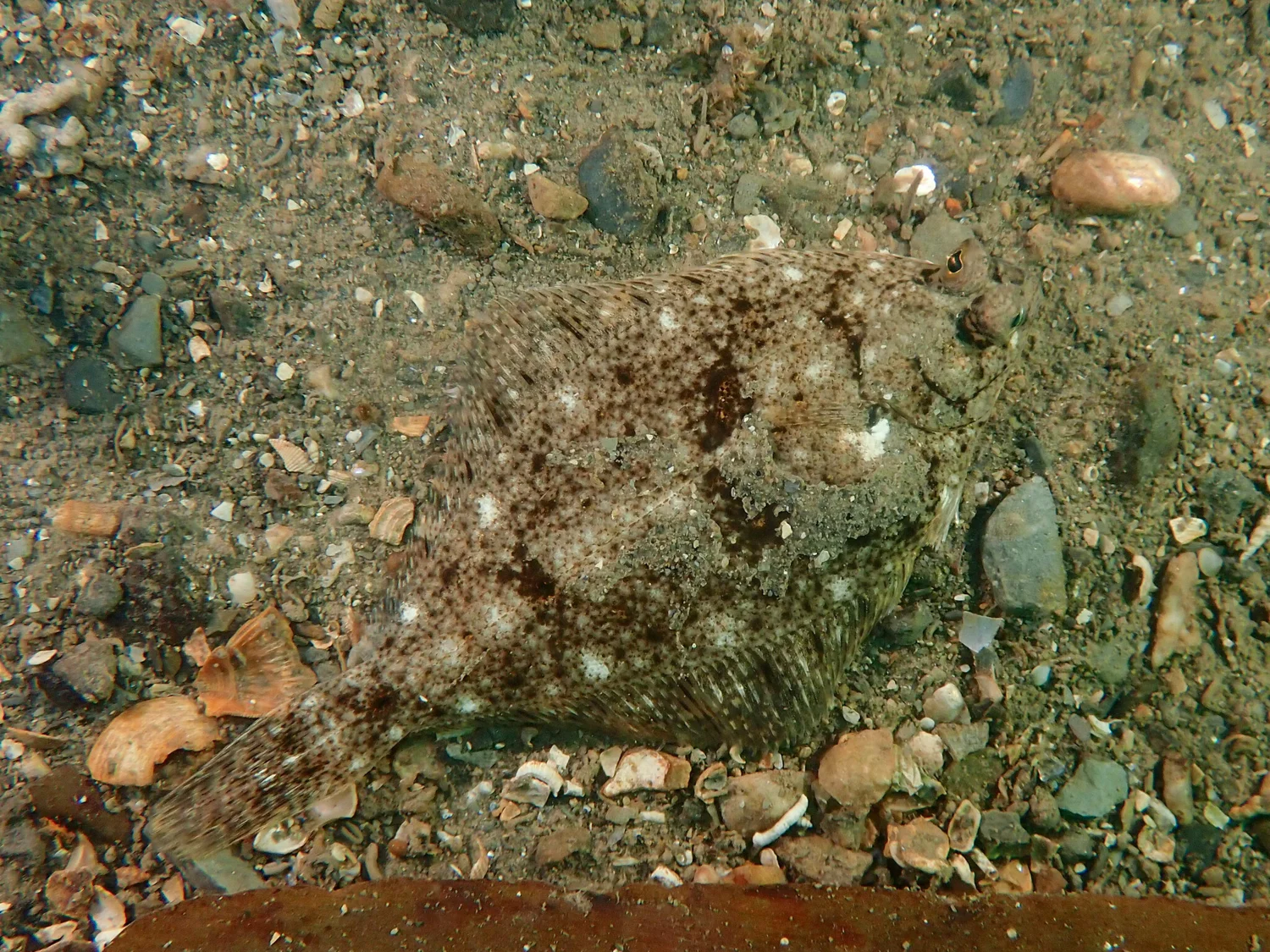
Clogga, roughly four miles south of Arklow, is a small County Wicklow beach identified in the established Irish shore guide for winter dogfish, flounder and whiting. That makes it a useful starting point for a deliberate bottom-bait session. It does not establish that fish are feeding there today. The local reference is a long-standing description, not a fresh catch report.
The target here is the lesser-spotted dogfish, also called the small-spotted catshark, Scyliorhinus canicula. Rather than treating it as an accidental catch while waiting for something larger, build a session around a manageable bait, a clear hook and a lead that stays where you put it. A short, repeatable cast can teach more than a series of maximum-distance casts into unknown ground.
Inspect the beach and its approach in daylight, follow current access signs and identify a retreat route before setting up. This plan stays on an accessible beach position; it does not require climbing onto nearby rocks. The numerical tackle ranges below are practical starting suggestions for modest conditions, not locally measured optimum settings.
Know which small shark you have caught
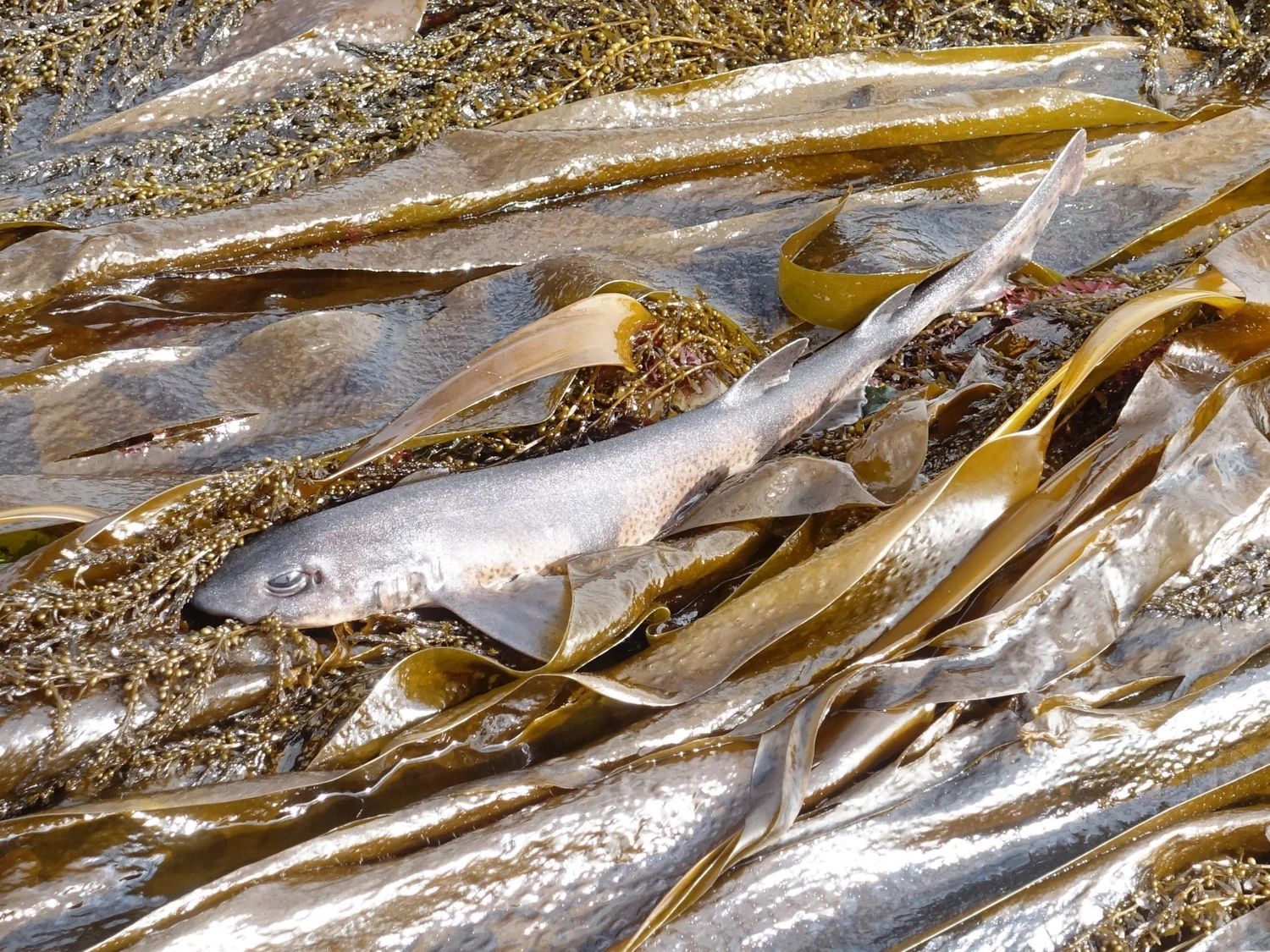
Look for a slender body, rounded blunt snout, grey-brown upper surface with many small dark spots, and a pale underside. The dorsal fins sit well back on the body. The larger-spotted catshark, often called bull huss, can look similar: its larger spots are a clue, but the nasal structures provide a more reliable distinction. In the small-spotted species, the nasal grooves connect with the mouth; they do not in the larger-spotted species.
Do not turn an uncertain identification into a retention decision. Have an identification reference available and keep handling brief. A photograph of the whole fish can be useful later, but it should not delay its return.
This species occurs widely around Ireland and across the northeastern Atlantic, with a distribution extending south toward West Africa and into the Mediterranean. It is associated with the seabed, including sand, mud, gravel and mixed ground. Published depth ranges include much deeper water than a beach angler reaches; those ranges describe the species, not a required casting depth at Clogga.
What the bait is trying to imitate
Small-spotted catsharks eat bottom animals such as crustaceans, worms, molluscs and small fish. They are active hunters at night, which gives an evening session a biological rationale. It is not a promise that darkness will overcome unsuitable sea conditions or an empty stretch of beach.
A compact fish strip, squid strip or ragworm bait is therefore a sensible test. Fish and squid offer different textures: a firm squid strip can remain on the hook when softer fish flesh is being removed. The useful comparison is bait condition and bite response, not an assumption that the strongest-smelling or largest bait must win.
Search for reachable sand beside a change in bottom texture rather than deliberately casting into the roughest patch. Food can occur at transitions, while a clean retrieval lane makes the presentation repeatable. Treat dark water as an observation to investigate: it may indicate depth, weed or simply changing light. Several cautious casts are more informative than a confident guess from the beach.
Set up for the lead you actually need
For a modest beach session, a 3.6–4 m shore rod and a 6000-size fixed-spool reel provide useful reach and line capacity. Reel sizing differs by manufacturer, so check capacity rather than buying by the number alone. Start with about 18–20 lb monofilament over clean ground. Stronger line may be appropriate around abrasion, but it also increases drag in current.
A 90–125 g lead is a practical trial range only where the rod is rated for the complete lead-and-bait load. Use a suitable casting shock leader, for example 50–60 lb mono for this modest arrangement, long enough to pass through the guides and leave several turns on the spool at the casting position. Follow the rod, leader and casting-system guidance rather than treating these numbers as permission for a powerful distance cast.
Take a stable rod rest, spare ready-tied traces, forceps, a line cutter and a wet unhooking mat. Prepare the landing area before casting. Set the reel drag to give under a sustained pull; a locked spool is unnecessary for this fish and can make an unexpected larger catch harder to manage.
Rig one: keep one bait close to the sand
A single-hook paternoster is the first choice when holding a defined lane matters. Use a strong mono rig body, initially about 60 lb and 70–90 cm long, with a top swivel and a secure lead attachment at the bottom. Fit a snood swivel between purpose-made stops and beads, positioned about 20–30 cm above the lead. Build it with components intended for shore casting, avoiding improvised crimps that damage the line.
Tie a 35–50 cm snood of about 25–30 lb mono to the swivel. Begin with a size 1 or 1/0 single hook, selected by its actual gape and strength. The snood must allow the bait to settle near the bottom when the rig lies out; it should not suspend a large bait well above the feeding layer.
Cut a narrow fish strip roughly 4–6 cm long as an initial suggestion. Pass the hook through the tougher skin, then secure loose flesh with a few light turns of bait elastic if necessary. Keep elastic away from the point and leave the gape clear. A compact bait is easier to cast and inspect than a long tail that folds around the hook.
Cast gently to a chosen near or middle-distance lane. Let the lead settle, then recover slack until the tip carries a slight bend. Stop winding before you drag the lead back toward shore. Learn the regular movement caused by waves so that a new sequence of taps or a sustained pull is easier to notice.
Rig two: a running ledger in quieter water
When current eases and the bottom proves clean, a running ledger gives a different presentation. Slide a running lead link onto the shock leader, add a protective bead and tie a swivel. Attach a 50–80 cm hooklength of about 25–30 lb mono and the same size of hook. Keeping hook and bait similar makes the comparison more useful.
Choose a plain lead that settles reliably, perhaps 60–100 g in suitable conditions. The weight sits on the bottom while the hooklength can move behind it. This is most useful for a controlled short or medium cast. If the hooklength keeps tangling or sweeping into weed, shorten it or return to the paternoster.
Allow the bait to rest initially. Constantly dragging a ledger across the bottom can move it out of the lane, bury it or collect debris. If a quiet spell prompts a search, retrieve and make a fresh cast a little to one side rather than hauling the same bait repeatedly through uncertain ground.
For either rig, a grip lead can help when a plain weight rolls too freely, provided the outfit is suitable. If holding position requires more weight than the rod comfortably handles, change the lane or wait for weaker movement. The answer is not unlimited weight.
Respond to the bite rather than a stopwatch
With a conventional J-hook, lift the rod from its rest, recover slack and use a controlled lift when a positive pull develops. Do not leave a developing bite unattended while waiting for a dramatic run. Equally, one wave-induced knock is not a reason for a forceful strike.
A non-offset circle hook is an alternative if you understand its different action. Choose a gape that remains open around the bait, wind steadily until the line tightens and let the rod load. Do not combine a circle hook with a sharp strike. For a first comparison, stay with one hook style long enough to learn its response.
Maintain steady pressure during retrieval. If resistance abruptly becomes fixed, stop pumping harder: the lead may have lodged rather than a fish becoming heavier. Change the line angle from a safe position or retrieve with an appropriate snag-release technique, keeping people clear of tensioned line. Never wrap line around your hand.
| Observation | Likely presentation problem | First change | What to check next |
|---|---|---|---|
| Bait comes back folded over the point | Hook obscured during the cast | Shorter strip and gentler cast | Open gape after retrieval |
| Lead travels continually sideways | Lane cannot be held | Shorter cast or suitable grip lead | Rod load and weed accumulation |
| Repeated taps with damaged bait | Small fish or poor hook exposure | Fresh compact bait | Recover slack promptly on the next take |
| Trace returns tangled | Hooklength too loose for the flow | Shorten snood or use paternoster | Repeat the same lane |
| Several intact baits return untouched | Fish may be elsewhere | Compare a second distance or lane | Keep bait type unchanged initially |
Make bait changes answer a question
Bring small quantities of two baits rather than a large assortment. Start with fish strip, then compare squid after a few consistent casts if bait durability is the problem. Ragworm is another established dogfish bait. Keep bait cool and take out only what is needed for the next cast.
Inspect frequently enough that an empty hook is not left fishing. An initial interval of around eight to twelve minutes can provide a repeatable baseline in quiet conditions, shortened when bites, crabs or washed-out bait demand it. This is a suggested observation routine, not a scientifically established feeding interval.
There is no verified Clogga colour rule for beads, luminous tubing or artificial lures. Begin with an unadorned trace. A bottom fish-strip presentation gives a clearer test of the target's feeding lane than adding ornaments, larger hooks and a different bait simultaneously. Surface plugs and rapidly retrieved metal lures serve other fishing jobs; they are not the supported first choice for this bottom-feeding target.
Work a two-lane session
Imagine a calm December afternoon with lawful access confirmed and no heavy onshore swell. This is an illustrative plan, not a reported visit. Select two beach lanes with clear casting space, then prepare a 3.9 m rod, 20 lb main line, suitable shock leader and single-hook paternoster with a compact fish strip.
Use the first half-hour to establish bottom contact in the nearer lane. Record whether the bait returns intact and whether the lead stays put. If bites develop, repeat the same cast before experimenting. If the bait is being stripped without a positive take, improve its attachment and hook exposure.
Next compare the middle-distance lane. When movement eases, try the running ledger there, keeping the bait unchanged. If both lanes remain quiet, a small move along accessible beach is more useful than simply waiting on an untested assumption. End with notes on confirmed species, tide direction, casting lane and bait condition. These observations make the next visit more informed even after a blank session.
Local rules and brief care note
Checked 4 November 2026: Inland Fisheries Ireland states that ordinary sea angling generally needs no State rod licence, while salmon and sea trout have separate requirements. Access does not confer a right to cross private land. Check current local notices and species-specific restrictions before fishing or retaining any incidental catch; this guide proposes releasing the catsharks.
Avoid heavy surf and positions with an uncertain retreat. Support the fish horizontally over a wet mat, keep fingers out of the mouth and gills, and use forceps for an accessible hook. Do not lift it by its tail or drag it over dry shingle. If a hook cannot be removed promptly without injury, avoid prolonged probing and minimise handling before release.