
Shore pollack fishing is often won by keeping a lure above the snag, not by proving that it can reach the bottom. A fish can move from kelp or rock to intercept a swimming target. A lure buried inside that cover is more likely to produce a break-off than a useful presentation.
Donegal offers documented shore opportunities, but late-autumn and winter sea conditions decide which of them are sensible on a given day. This is a controlled lure-and-float plan, not encouragement to reach an exposed rock mark during swell. All tackle sizes, counts and session timings below are practical starting suggestions rather than a current catch report.
Recognise pollack and their feeding position
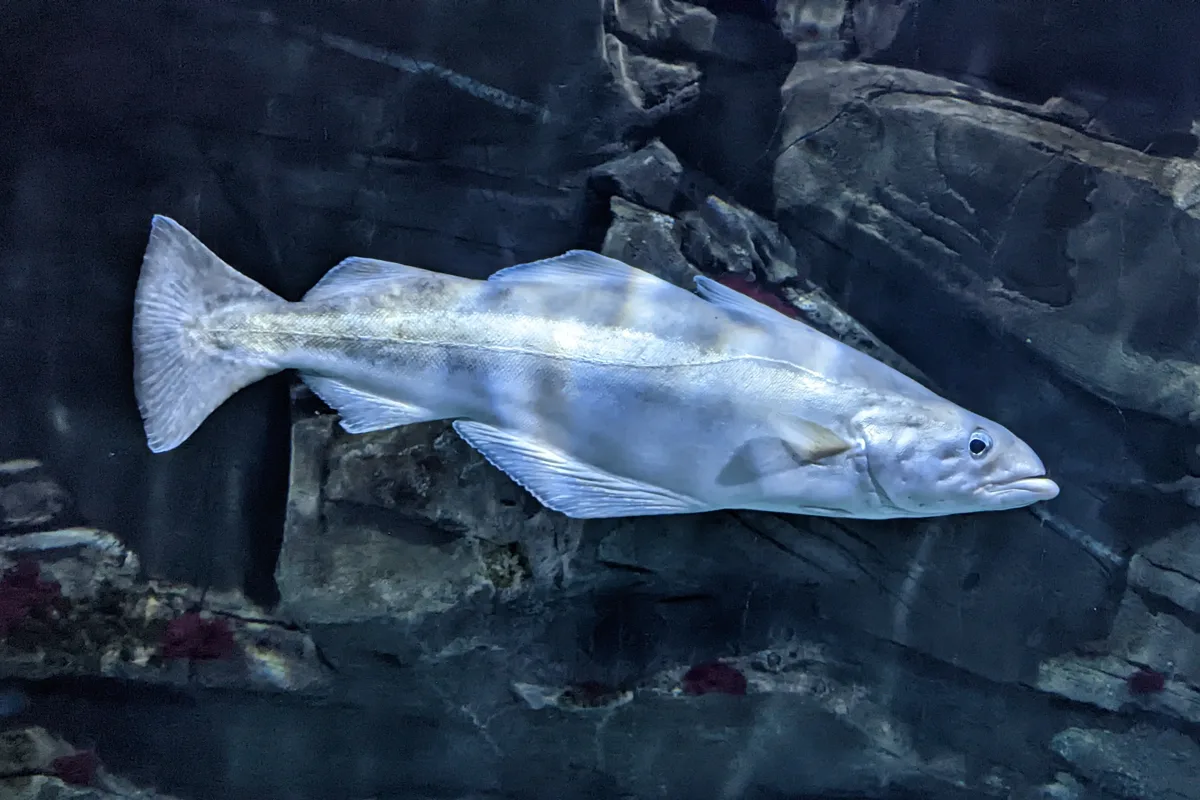
Pollack, Pollachius pollachius, have three dorsal fins, two anal fins, a projecting lower jaw and no chin barbel. Their dark lateral line curves strongly behind the head. Coalfish have a much straighter lateral line; cod have a chin barbel. Brown or green colour alone is unreliable.
Pollack feed on other fish around rough ground, and younger fish use inshore kelp. That gives a fish-shaped soft plastic a clear purpose. A slim strip of legally obtained fish bait can explore a similar feeding layer more slowly.
Do not assume every fish is tight to bottom. A follow halfway up the retrieve suggests you should repeat that swimming level. Equally, a shallow fast retrieve over deep water may pass above fish that are willing to feed but not willing to travel far.
Choose a venue with a landing route
Inland Fisheries Ireland's Donegal Bay guide lists pollack opportunities around Creevy Pier, Bundoran Pier and several rough-ground coast sections. These are established venue references, not guarantees of current public access or safe conditions.
A sheltered legal pier position can offer a more manageable first session than an exposed headland. Check local signs, working-harbour restrictions, other users and the ability to net a fish. Do not plan to lift a substantial fish vertically on the fishing line.
The same official guide warns that swell can swamp parts of the rocky coast. If waves wash over the route or the landing position, omit that mark. “Deep water close in” is not a sufficient reason to accept an insecure platform.
Search the water in lanes
Watch the near edge first. Note weed, visible rocks, current direction and where a retrieve would finish. A cast that reaches attractive water but must cross an impassable weed shelf on the way back is an incomplete plan.
Start with a shallow pass, then lengthen the sink gradually. Use a consistent count and lure weight. Counts let you repeat a depth-related presentation; they do not tell you an exact number of metres because current and line tension change the fall.
Look for a controllable moving-water edge rather than the strongest flow available. Low light may be worth testing, but short winter daylight and access safety can make a daylight session the better choice. Do not invent a precise tide window for a mark you have not observed.
| Situation | Starting method | Presentation goal | Change after trouble |
|---|---|---|---|
| Clean water above kelp | Swimming soft plastic | Pass just clear of the weed | Shorter sink count |
| Mixed weed and gaps | Weedless plastic | Swim across openings | Recast along the edge |
| Deep clear lane beside structure | Slightly heavier jig | Reach a repeatable lower level | Reduce lift height |
| Fish following but not taking | Smaller slower lure | Keep it in view longer | Change angle before colour |
| Rough bottom with manageable drift | Float-fished strip | Suspend bait above snags | Shorten or redirect drift |
Match the outfit to cover
A 8–10 ft spinning rod rated around 10–40 g, a 3000–4000 reel and 15–20 lb braid provide a useful starting combination for many pier and moderate rough-ground situations. Add roughly 1.5–2 m of 15–25 lb leader, adjusted for actual abrasion and fish size.
A lighter outfit can be enjoyable in clean sheltered water, but it should still let you steer a hooked fish away from cover. Inspect the final metre of leader after every contact with rock or a rough fish.
Use a drag that yields smoothly under a strong run while retaining steering pressure. Locking it completely can snap the leader during the first dive. Conversely, an excessively loose drag can give the fish an immediate route into kelp.
Carry pliers, spare jigheads and a suitable net that reaches the water from the chosen platform. Landing equipment should determine where you fish, not become a problem discovered after hooking up.
Rig one: a straight swimming plastic
Thread a 75–110 mm paddle-tail or slim shad onto a suitable roughly 1/0–3/0 jig hook, matching the hook gap to the body. Start with a 7–14 g head where depth and current allow. Use more only when necessary and within the rod's complete casting load.
Push the hook through the nose, keep the body aligned and bring the point out centrally. A crooked body can spin, tumble or fall differently on each cast. Check it beside the edge before searching deeper water.
Cast across or slightly up-current of the desired lane. Let the lure sink on controlled line, then retrieve smoothly enough to keep it swimming. A short pause can be useful, but a long uncontrolled fall beside kelp invites a snag.
When a fish loads the rod, wind into pressure and lift smoothly. Continue steering toward clear water through the initial dive. Pumping the rod high immediately can sacrifice the low sideways control you need.
Rig two: a weedless alternative
Fit a similar plastic to an offset weedless hook with suitable built-in weight, or use a compatible weighted weedless jig system. A hook around 2/0–4/0 is a starting range for these body sizes, but the actual gap must allow the plastic to collapse.
Thread the nose, slide it into position and set the point flush with or lightly beneath the surface. Keep the body straight. Do not bury the point so deeply that no ordinary bite can expose it.
Use this rig to swim beside the weed rather than plough through its thickest part. Cast along the edge, let it settle briefly and retrieve with small speed changes. A concealed point usually needs a firmer sweeping hook-set after slack is removed.
If you feel repeated bites without connecting, check hook exposure, body thickness and lure length. If every cast still hangs up, raise the presentation or change the lane. Weedless tackle reduces one kind of snagging; it does not eliminate rock cracks or lost line.
Rig three: suspend a bait under a sliding float
Thread a stop knot, bead and sliding sea float onto the main line. Add the float's appropriate loading below it and tie to a small swivel. Attach a 0.6–1 m hooklength of suitable abrasion-resistant line and one size 1/0–2/0 J-hook carrying a slim fish strip.
Choose a float and loading that let you cast and control the drift without exceeding the rod rating. Plumb or otherwise establish the obstruction level carefully, then set the bait to travel above it. A float is useful because you can change that depth without dragging bait across the bottom.
Cast slightly up-current into a clear lane and allow the rig to settle. Follow it with manageable slack, ending the drift before it reaches boats, other anglers or weed. A sustained disappearance or sideways movement warrants winding down and a controlled lift.
Do not wait for a fish to swallow a large bait. If strips are repeatedly nipped, shorten them and expose the point. If drift is too fast to manage, shorten the cast or choose shelter rather than simply adding ever more weight.
A worked short-day session
An illustrative visit starts with one sheltered legal pier and a second permitted alternative identified. Observe the water and landing route before assembling the rod. Begin with the swimming plastic at a short count along the near lane.
Test a slightly longer count on the next passes while keeping the lure unchanged. If a pollack follows, repeat the level and reduce abrupt movements near the edge. If the lure collects weed, raise it before moving farther out.
Compare the weedless plastic where isolated vegetation prevents a clean exposed-hook retrieve. Use the float only if current and space let you present a controlled drift. These are method choices for a particular lane, not three rigs that must all be used regardless of conditions.
After several properly tested lanes without a follow or bite, relocate within the safe plan. Do not end a blank session by climbing to an exposed platform merely to reach deeper water. Record count, direction, obstruction level and the stage of the retrieve that produced any response.
Brief local rules and care
Checked 28 October 2026: Inland Fisheries Ireland confirms the adopted Pollack Fishing Conservation Bye-Law 1028 of 2026, with a daily retention limit of three pollack per angler; further fish must be released. Check the current rule and local access restrictions before fishing. Limits from other Atlantic jurisdictions must not be substituted for the Irish rule.
Wear suitable flotation near deep water, avoid wave-washed ground and net fish from a secure position. Keep handling brief and release unwanted fish promptly. A controlled lure path above cover should remain the centre of the fishing plan.