Winter chub fishing rewards a clear plan more than a heavy bag of bait. For November and December on English rivers, build that plan around fishable flow, shelter and a presentation you can control. A short, well-chosen session can teach more than an entire day spent waiting beside an unsuitable torrent. This is preparation for the approaching winter window, not a report of current catches or a promise that chub feed on every cold day.
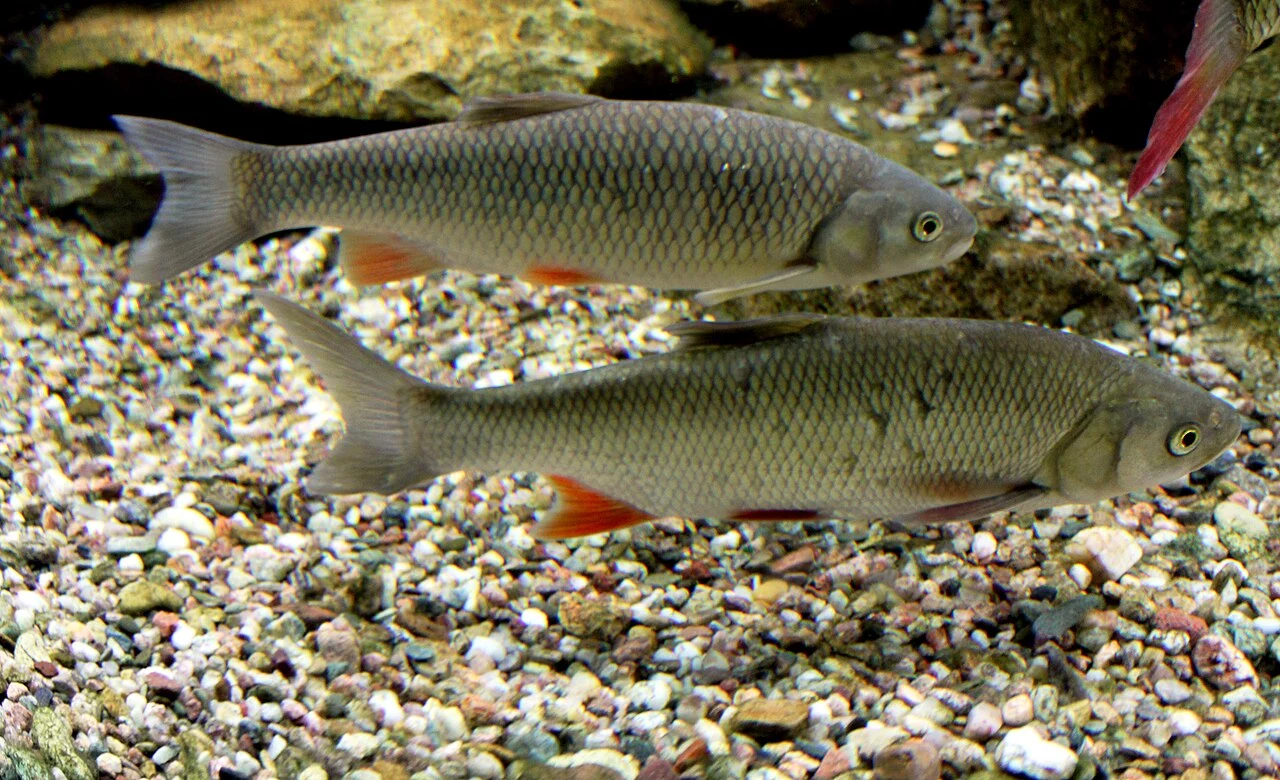
The cover is Karelj’s public-domain photograph of European chub (Squalius cephalus) at the Subaqueous Vltava exhibition in Prague. It is a representative species photograph, not a photograph of an English river. The tackle sizes below are editorial starting points for modest rivers, to be adapted to the fishery, snags and your experience.
Choose a manageable river and lawful access
Start on a club-controlled small or medium river with confirmed chub, clear boundaries and banks you can reach safely. A day ticket is useful only if it covers your intended bank and date. Ask the operator about parking, permitted baits, hook rules, opening hours, temporary closures and whether nearby pools are on a different ticket. A public footpath gives access along its route; it is not evidence that you have fishing rights.
Check the Environment Agency's current licensing service. In the English waters covered by its licence system, anglers aged 13 or older need the appropriate rod licence, including on private fisheries; junior licences for ages 13–16 are free. Children under 13 do not need one. The rod licence and permission from the fishery owner are separate requirements. This guide concerns England and does not transfer its rules to Scotland or Northern Ireland.
Chub are coarse fish. The statutory river coarse-fishing close season runs from 15 March through 15 June inclusive, so November and December lie outside that national closure. That does not override a fishery closure or other restriction. Read the relevant Environment Agency area byelaws as well as the national rules; border catchments and individual obstacles can have particular provisions. Recheck the linked official pages before travelling rather than treating this review, dated 20 October 2026, as permanent permission.
Find shelter beside the food route
Before unpacking, walk the permitted stretch quietly. Look for a slow strip beside a faster run, the downstream edge of a root mass, a deeper bend or a smooth crease behind an obstruction. The aim is a feeding position with access to drifting food and less current pressure than the centre of the channel. Do not automatically cast to the fastest water because it looks lively.
Chub have varied diets and use cover; Canal & River Trust identifies roots and overhanging vegetation as useful features and lists bread and worms among suitable baits. On a winter river, use those clues to choose an initial station, then test them. A bush is not proof of fish. Watch where bubbles travel, whether leaves settle or spin, and whether your intended landing point remains usable.
In clear, low water, stay back from the skyline and approach before placing gear on the bank. In higher water, reassess the entire swim: the summer gravel margin might now be fast and deep. Avoid fishing into submerged branches simply because they offer cover. Choose a nearby clear lane where a hooked fish can be steered toward the net without pulling it through timber.
Pack one controlled leger setup
For bread or worm on a modest river, a soft-tipped specialist or feeder rod around 11–12 feet and a 3000–4000 fixed-spool reel make a useful starting outfit. Around 6–8 lb monofilament main line gives a practical balance of handling and abrasion resistance; use stronger tackle or choose a different swim if cover demands it. Check the entire line path, knots and rod rating rather than treating a breaking-strain label as a guarantee.
Carry a few hooklengths around 45–90 cm, typically 5–6 lb mono for relatively clear swims, and strong single hooks around size 8–12 for bread or worm. Hook sizes vary by pattern. Match the gape to the bait and leave the point clear. Use the fishery's required barbless or micro-barbed pattern; do not make that decision from habit.
A simple running leger keeps the weight sliding freely on the main line above a protective bead and small swivel, with the hooklength below. Check that the sliding component can leave the broken main line rather than becoming trapped behind an upper stop. Ask an experienced angler to check the arrangement if unsure. A feeder can replace the plain weight when a small amount of feed needs to reach a precise spot.
Use the lightest weight that holds or moves predictably in the chosen lane. For gentle close-range work, trial weights around 10–20 g; faster water may need more, within the rod's casting rating. Use compliant non-lead weights and check all weight materials against the national byelaws and venue rules. If progressively heavier tackle still cannot give control, choose a gentler swim instead of escalating indefinitely.
Make bread a presentation, not just a bait
Take fresh sliced bread for hook bait and a modest amount of bread feed. Pinch a piece around the hook shank firmly enough to survive a gentle cast, leaving the rest soft and the point exposed. Test a bait in the margin to see how it behaves. A dense, hard pellet of squeezed bread behaves differently from fluffy flake; neither should be assumed to remain on indefinitely.
Begin with a small offering rather than saturating the swim. In cold conditions, make each addition answer a question: does another small feeder produce a bite, or does disturbance merely interrupt a settled presentation? A little colour and stable conditions can suit bread, but this is a useful option rather than a universal rule. Drennan's published bread guidance describes both float and bottom presentations, including how excess flow and line pressure can spoil bite registration.
Cast close enough that you can control the rig. After it settles, tighten only until you can see a modest bend in the tip. A deeply loaded tip may be showing current pressure rather than an effective fishing position. Hold the rod or stay immediately beside it, ready for either a positive pull or the tip dropping back. Do not leave a baited rod unattended while exploring another swim.
If the tip repeatedly springs back without fish, inspect for leaves on the line, a rolling feeder, a damaged hook point or missing bait before changing flavours. If bread consistently washes off, shorten the cast, adjust how you pinch it or use a small feeder presentation suitable for that water. Check the bait after a reasonable interval, then base subsequent checks on what you find.
Use a float when the lane allows it
A float lets you search a long, clean glide without repeatedly dropping a weight beside cover. For a manageable river, a 13-foot float rod, small fixed-spool reel, roughly 4–6 lb main line and appropriately matched hooklength are starting points. Use enough float capacity to control the actual flow, not the tiniest float you can see. Roughly 3–6 g river patterns cover some modest glides; they are not prescriptions for every river.
Plumb the depth carefully away from snags, then begin with the bait close to the bottom. Arrange shot so the rig settles without tangling and can be adjusted. Feed a few maggots or a little bread where permitted, then follow the same lane. Keep enough line off conflicting currents to avoid dragging the float sideways. A controlled drift is more informative than a long uncontrolled journey.
Work through a small number of deliberate changes: shift the lane, alter depth slightly, then vary how much the float is checked. Change one thing at a time. Worm pieces or a small bunch of maggots offer alternatives when bread is unconvincing. If nuisance bites dominate, try a larger suitable bait rather than simply feeding more. Lure fishing can catch chub, but winter bait and float methods offer a straightforward first learning plan without introducing additional predator-handling demands.
Move with a reason
For a first trip, identify three safe swims within an easy walk. Give the first enough time to establish that the rig is working, then move if you have no evidence to justify staying. Twenty to forty minutes can be a useful planning allowance for a small-river trial, not a biological deadline. A missed bite, visible fish or a clear feeding response may justify longer; continual leaf fouling may justify leaving sooner.
Record the location, river level trend, clarity, method, bait and time of any response. Compare like with like on the next visit. A blank on a rising muddy river does not establish that a bait is poor. Likewise, one fish beside a tree does not establish that every tree holds a fish. The valuable result is a repeatable decision you can test again.
Make winter safety the first selection rule
Check the Environment Agency flood service for alerts and river-level trends, plus a current local forecast. A gauge reading describes a monitoring site, not the footing under your boots. Do not enter flooded access paths or fish where rising water could cut off your return. For a first winter visit, bank fishing in daylight with a companion is a better plan than wading an unfamiliar channel.
Wear footwear with reliable grip, warm layers and waterproof outer clothing. Keep spare clothing dry, carry a charged phone and tell someone your route and return time. A suitable lifejacket adds protection near deep or fast water but does not make an unstable bank safe. Leave before dusk if darkness would hide the route. Keep rods away from overhead electrical lines and give fallen trees and undercut edges a wide margin.
Prepare the release before casting
Assemble a generously sized soft, knotless landing net with a handle that reaches from your safe position. Keep forceps or a disgorger and a wet unhooking mat ready. Plan to return chub promptly to the same water. Fishery permissions and legal retention rules are separate from this voluntary catch-and-release plan.
Wet your hands, minimise handling and unhook in the water when practical. If a fish must come out, support it low over the wet mat; do not stand for a photograph or squeeze the body. Keep air exposure brief and allow recovery in clean water with the fish upright and facing gentle flow until it swims away under its own power. Angling Trust's freshwater guide provides further handling and biosecurity guidance. Clean and dry wet nets, footwear and mats between waters.
A simple first winter itinerary
The evening before, confirm permission, licence, byelaws, weather and a backup plan. Pack one main method plus essential float or leger alternatives, rather than every bait you own. Arrive with enough daylight to inspect access and choose a landing place before fishing. Start in the easiest controllable lane, feed cautiously and note what the rig tells you. Try the next safe swim if evidence supports moving. Finish with time to pack carefully, remove discarded line and leave by the agreed route. The objective is a lawful, repeatable session that improves your next decision, whether or not a chub reaches the net.