
A successful first family boat-fishing trip is not measured by the largest fish. It is a short, controlled session in which every person knows where to stand, hooks move in predictable directions, life jackets fit, the operator can concentrate, and the crew returns before hunger, heat, cold or weather erodes judgment.
This North American guide uses U.S. Coast Guard, National Weather Service and Florida FWC guidance for the safety framework. State age rules, boating-education rules, fishing licenses, seasons and species limits vary. Check the authority for the exact water and date; do not treat the U.S. examples as worldwide rules.
Choose water for the people, not the target
Start with a sheltered lake, slow river reach, protected bay or broad canal where the operator already understands navigation. Avoid a narrow inlet, surf bar, strong tidal pass, crowded channel or exposed offshore run on the first outing. The best location offers a short route, reliable mobile or radio coverage, a nearby ramp or dock, toilets, shade options and a simple return if anyone becomes uncomfortable.
Structure should simplify the fishing rather than complicate boat control. A freshwater dock edge or weed line can hold sunfish, crappie or bass where those species occur because cover concentrates insects, small crustaceans and baitfish. A protected saltwater grass edge or channel shoulder may hold pinfish, croakers, small jacks or seatrout where locally present because current moves prey past depth changes. Those are regional examples, not promises that every water contains each fish.
Avoid anchoring where wind and current can push the boat into wood, rocks, swimmers or another vessel. If the operator must constantly correct position, move to simpler water.
Fit life jackets before loading rods
U.S. federal guidance requires children under 13 to wear an appropriate Coast Guard-approved life jacket while a recreational vessel is underway, except when below deck or in an enclosed cabin; state rules can differ and control on state waters. A jacket must match the child’s size and intended activity. Do not buy one to “grow into.” Check the label, closures, condition and fit before launch.
A practical family rule is that everyone wears a correctly fitted life jacket from dock departure to return. That removes the need to predict when a fall, wake, hook distraction or sudden gust will happen. Inflatable models are not suitable for every wearer or activity; follow their approval label and state rules.
The adult operator wears the engine cut-off link when the vessel and law require it. FWC notes that operators of many recreational boats under 26 feet equipped with an engine cut-off device must use it. Verify the exact federal and state requirements for the vessel.
Create zones and roles
Divide the boat into visible zones:
- Operator zone: helm, throttle, kill-switch lanyard and a clear sight line. No tackle boxes or children underfoot.
- Casting zone: one angler at a time with a defined arc away from people and canopy.
- Hook-control zone: pliers, line cutters, dehooker, small net and measuring board in one tray.
- Rest zone: seated passenger with water, shade and no loose hooks.
- Fish zone: either an in-water release position or a separate lawful cooler for retained fish.
Assign one adult as operator and another as fishing helper whenever possible. The helper manages hooks, bait, photos and children so the operator watches water and weather. A young angler can rotate through jobs: spot a float, count down a cast, hold the net handle with supervision, record a fish, or close the cooler. Participation does not have to mean constant casting.
Two starter rigs
For a sheltered freshwater outing targeting small sunfish or crappie where legal and present, start with a 5- to 6.5-foot light spinning or spincast rod, 4- to 8-pound monofilament, a small fixed float, enough split shot to cock the float, and a small single hook matched to the bait. Set the bait initially one to three feet deep along the outer edge of shade, dock posts or sparse weeds. This is a starting range, not a universal depth. If no bites follow several clean presentations, change depth six to twelve inches at a time before changing locations.
For a protected inshore saltwater outing where small croakers, pinfish or similar fish are lawful targets, a 6- to 7-foot light or medium-light spinning rod with 8- to 12-pound line, a 10- to 20-pound leader and one small single hook can keep the system manageable. Use a light sinker only heavy enough to maintain occasional bottom contact, often about 1/4 to 1 ounce in shallow sheltered water. Current, depth and bait size determine the actual weight. Cast slightly up-current so the bait travels toward a channel edge rather than dragging straight under the boat.
Circle hooks may reduce deep hooking when used correctly with natural bait for suitable species. Use non-offset, non-stainless circle hooks where required or recommended, and teach the angler to reel steadily rather than make a hard hook-set. Check local hook rules before the trip.
Match conditions to a presentation
| Condition and structure | Likely opportunity | Simple starting presentation | Change after no response |
|---|---|---|---|
| Freshwater shade beside a dock or sparse weeds | Sunfish or crappie where present, feeding on insects and small prey | Small bait below a fixed float, held just outside cover | Change depth, then move to the next shade edge |
| Slow current seam below a point | Mixed river fish using the slower side to intercept drifting food | Cast slightly upstream and let the rig cross the seam | Reduce sinker if snagging; add only enough weight to regain control |
| Protected saltwater channel shoulder | Croakers, pinfish or other small bottom feeders where present | Single-hook bait rig with light bottom contact | Shorten casts, adjust weight, then move along the depth break |
| Calm grass edge with visible bait | Small predators may patrol the outside edge | Small 2- to 3-inch soft plastic on a light jighead, slow steady swim | Change retrieve depth and speed before changing color |
| Increasing wind, wake or lightning risk | Fishing value is lower than operating risk | Stop casting and secure gear | Return to shelter or shore; do not “try one more spot” |
The table supplies tactical starting suggestions. It does not establish that a listed species occurs in a particular lake or bay.
Teach a safe cast
Begin with no hook. Use a practice plug at home or at the dock in a clear area. The child says “behind clear,” looks over the casting shoulder, then makes a short controlled cast. On the boat, only the designated casting zone is active. Everyone else keeps rods vertical or secured.
Pinch barbs only when lawful and appropriate, and use single hooks for the first outing. Cover or remove hooks before moving the boat at speed. Do not leave a baited rod on the deck. The helper, not the child, handles fish with teeth, large spines or uncertain identity.
A short underhand pitch can be safer and more accurate than an overhead cast near people. Keep lure weight modest: often 1/16 to 1/4 ounce for light freshwater floats or small soft plastics, increasing only when current or depth requires control. The point is a visible, repeatable path, not maximum distance.
Search from safe water outward
An ordered first-hour search keeps the boat predictable:
1. Stop outside the structure and watch wind, current, wakes and boat traffic for five minutes. 2. Make the first presentations on the open-water side, not tight against posts or wood. 3. If bites occur, repeat the same depth and casting angle so the child can learn cause and effect. 4. If there are no bites after ten to fifteen clean presentations, adjust depth or sinker once. 5. Move a short distance to the next edge rather than running far. 6. Enter tighter cover only when the operator can hold position and the angler can cast without snagging people or structure.
This progression protects confidence. A beginner who spends the first half hour breaking off inside branches learns frustration, not fishing.
Weather and comfort are fishing decisions
The National Weather Service advises monitoring official marine forecasts and warnings. Thunderstorms can bring gusty wind, lightning, heavy rain and rapidly changing water. If thunder is heard or lightning is seen, head for a safe landing or substantial shelter according to local guidance; a small open boat is not a safe lightning shelter.
Set numeric family triggers before launch: a return time, maximum wind or wave appropriate to the boat and operator, minimum fuel reserve, water and snack intervals, and a temperature or wind-chill comfort limit. The exact numbers depend on the vessel, water and crew. Do not invent capability because a forecast sits just below a generic threshold.
Bring sun protection, drinking water, warm or rain layers as conditions require, motion-sickness planning, a first-aid kit and communication equipment suited to coverage. File a float plan with a responsible person listing vessel, crew, route and overdue action. The Coast Guard recommends float plans for craft from kayaks to larger boats.
Fish handling and the photograph
Decide release or lawful retention before fishing. Prepare the dehooker, cutters and wet hands. Keep a fish in the water when possible, use tackle heavy enough to land it without an unnecessarily long fight, and support a lifted fish horizontally when appropriate. The adult makes the species and regulation decision.
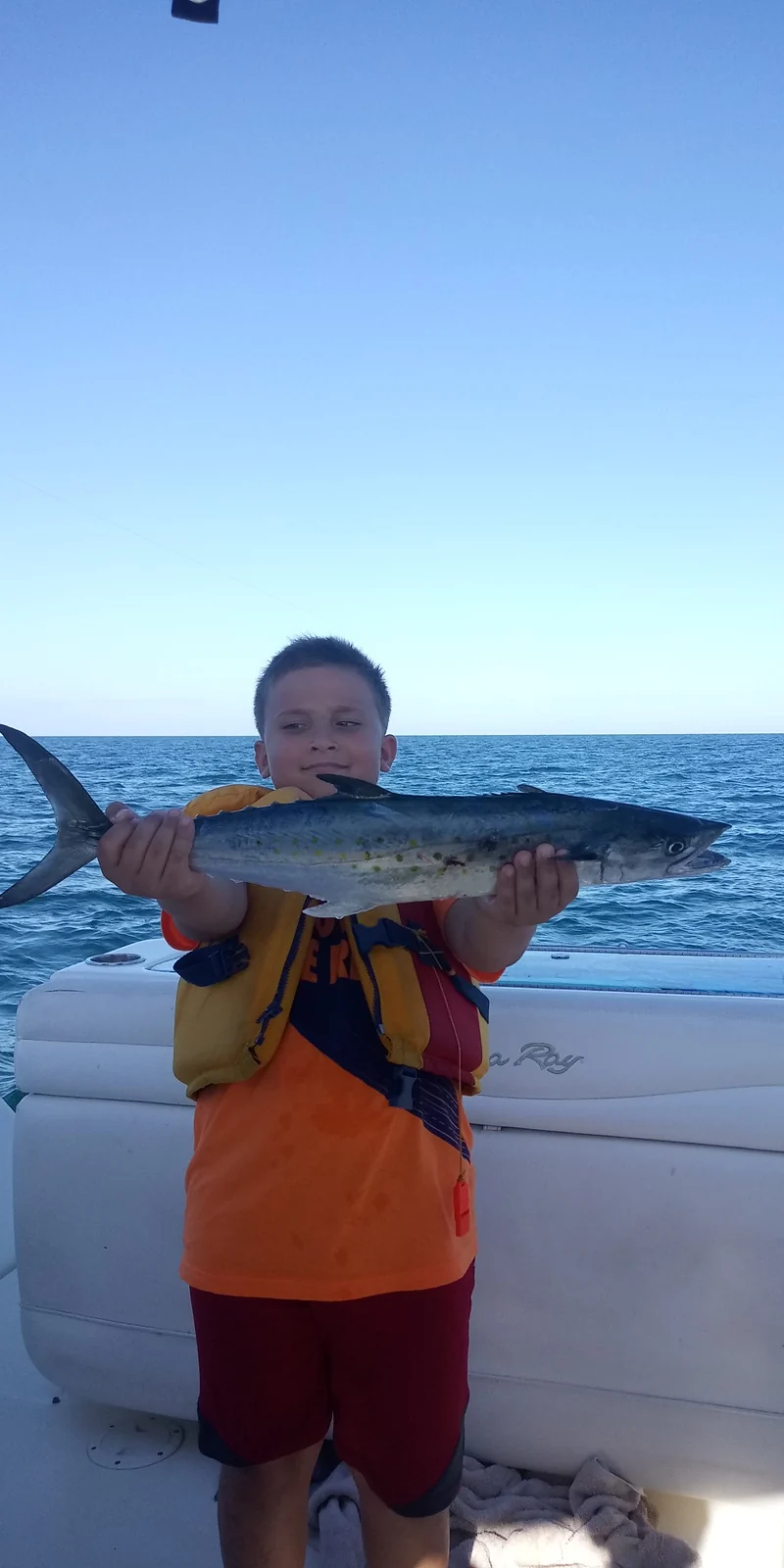
The registered cover shows a young angler in a life jacket holding a silver fish horizontally aboard a boat. It is relevant to a family boat-fishing article, but the fish species, place, date, retention legality and release outcome are unconfirmed. Readers should not use the image as an identification source.
One photograph is enough. Position the camera first, lift only when safe, support the fish and return or cool it promptly. If the child is nervous, skip the hold and photograph the fish in the net or water.
A three-hour first trip
At home, fit life jackets, practice one casting motion and show the child where hooks live. The adults check weather, local boating requirements, fishing licenses and target rules. They file a float plan and choose one sheltered route with a backup landing.
At the ramp, the operator launches while the helper keeps the child in the rest zone. Rods remain unhooked until the boat is secure at the first spot. The first 45 minutes use the simplest float rig along an open shade edge. The child casts for ten minutes, then rotates to watching the float or recording depth.
After a water and snack break, the crew tries one nearby current seam or channel shoulder. If there are no bites, it changes presentation depth before location. At two hours, the operator reassesses weather, energy and the route home. The trip ends at the planned time even if fish begin biting. A good first trip leaves enough attention to dock safely.
Common mistakes
Too many rods create crossing lines and loose hooks. One active rod per learning angler is enough. Chasing a species miles away sacrifices the sheltered-water plan. Adults who fish simultaneously leave no one managing the learning or the hooks. A life jacket stored under a seat cannot help during an unexpected fall. A fish held for repeated pictures turns success into stress.
The subtler mistake is making the child wait through adult goals. Shorten the session, rotate jobs and count observations as success: a bird, baitfish, a clean cast or a safely released catch.
Prepublication checklist
- Geography: pass — U.S. federal guidance and Florida examples are bounded; state rules are flagged.
- Habitat and structure: pass — dock shade, weeds, seams, channel shoulders and grass edges are compared.
- Forage: pass — insects, small crustaceans and baitfish explain the starter locations.
- Methods: pass — float, bottom and small-lure options include an ordered search plan.
- Lures and presentation: pass — rod, line, leader, hook, sinker, lure-size, depth, angle and adjustment ranges are labelled starting suggestions.
- Examples and table: pass — freshwater and protected saltwater examples plus a condition table are included.
- Sources: pass — USCG, NWS and FWC primary guidance was checked on 26 October 2026.
- Local rules: pass — child PFD, engine cut-off, license, species and hook rules are directed to current authorities.
- Image match: pass — the distinct registered owner photo visibly shows a young angler in a life jacket holding a fish on a boat; no species or location claim is made.
- Ethical handling: pass — adults control identification, release or retention, and the photo step remains optional and short.