
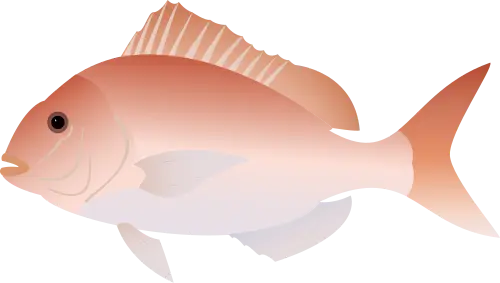
Early summer can bring more people, more boat traffic and rapidly changing conditions to the Hauraki Gulf. Snapper or tāmure remain a central recreational species, but a responsible trip is not measured only by how many fish reach the bin. Location choice, depth, hook type, handling and the decision to stop can affect both fishing quality and released fish. This guide provides a method for November and December without claiming current local catches or guaranteed seasonal movement. The cover is a licensed scientific illustration of Pagrus auratus, not a photograph of a Hauraki Gulf fish.
Use the live MPI rule source
Fisheries New Zealand maintains a current Auckland and Kermadec rules page and the NZ Fishing Rules app. Use one of those immediately before fishing to confirm the applicable area, snapper minimum size, daily limit, combined finfish limit, closed areas and gear restrictions. Rules can vary across boundaries and can change; do not rely on a remembered number, an old ramp sign or a social-media post. The app can help determine location, but the skipper remains responsible for knowing where the boat is. Measure fish correctly with a rigid device and stop fishing for retention once the lawful limit is reached. Local marine-protection rules and cable, reserve or navigation restrictions must also be checked.
Choose depth with release outcome in mind
Snapper can be caught from shallow reefs, sand and shell edges, channels and deeper open ground. Depth is not merely a catch-rate decision. Fish brought rapidly from depth may suffer barotrauma, and Fisheries New Zealand’s 2026 SNA 1 work estimates substantial release mortality in private-boat and charter fisheries. The study is a fishery-wide estimate, not a prediction for every released fish, but it supports planning that avoids unnecessary deep-water catch-and-release. If undersized fish repeatedly come from a deep mark, do not keep dropping through them. Move shallower, change location, alter hook or bait size, or stop. Select a depth where the crew can control rigs and handle fish efficiently.
Read the Gulf rather than chase reports
Begin with charted structure and observable conditions: a reef edge, current line, shell or sand transition, working birds at a safe distance, bait marks or a channel that carries moving water. A report from yesterday may be irrelevant under a new wind and tide. Make a short drift and log direction, speed, depth and bites. If the boat races over the area, use a drogue where lawful and safe or select a more sheltered line. If there is no movement, lighter tackle may be needed to present naturally. Avoid anchoring in a traffic lane or over sensitive habitat. Keep clear of commercial gear and other boats, and do not treat a cluster of vessels as proof of legal or productive fishing.
Soft-bait setup
A seven-foot class spinning rod, balanced reel, braid and fluorocarbon leader form a versatile soft-bait outfit. Select jig-head weight by depth and drift, using the lightest weight that still lets the angler understand where the lure is. Cast ahead of the drift, allow the lure to sink under control, then work it with lifts and pauses while maintaining contact. A lure that trails far behind the boat may be too light or the drift too fast. Natural baitfish colours are a sensible starting point, but profile and presentation usually matter more than frequent colour changes. Use a landing net where appropriate and keep the deck clear so a hooked fish can be handled without delay.
Bait and strayline plan
In shallower water, an unweighted or lightly weighted bait can move naturally down a berley trail. In deeper or faster water, a ledger rig gives better depth control. Circle hooks can reduce deep hooking when allowed to load rather than being struck hard. Match hook and bait to the size of fish expected, and stop feeding small hooks into a school of undersized fish. Berley should be used sparingly and secured so no plastic or mesh is lost. Assign one person to track drift and one to monitor nearby vessels. A bait method is not automatically easier than lure fishing; it requires organisation to prevent crossed lines, swallowed hooks and unnecessary sorting through juvenile fish.
Fight and handling
Use tackle strong enough to bring a fish in without an exhausted fight. Have the measure, pliers and camera ready. Support the fish horizontally with wet hands, keep fingers out of the gills and minimise time out of water. Never hold a snapper only by the jaw with its body hanging. If the fish is under the current legal size, release it promptly; if it shows pressure injury, follow current Fisheries New Zealand guidance rather than improvising. Avoid puncturing fish or using a descending device unless the method is lawful, understood and appropriate. The best release intervention is often prevention: fish shallower, stop when small fish dominate and do not continue catching once the crew no longer intends to retain fish.
Boat safety and weather
The Hauraki Gulf can change quickly under wind against tide. Check the marine forecast, tides, notices and ramp conditions. Carry legally required safety equipment, reliable communications and enough fuel for detours. Tell someone the destination and return time. Each person should have suitable flotation and sun protection. A forecast that is marginal for the boat or crew should move the trip to a sheltered area or another day. Secure knives, sinkers and spare hooks. Before anchoring, confirm depth, bottom, swing room and the ability to retrieve the anchor. When drifting, maintain a lookout; fishing concentration does not remove collision responsibilities.
Habitat and respectful fishing
Snapper depend on a functioning Gulf ecosystem, including nursery and feeding habitats. Do not drag anchors through avoidable sensitive areas, discard line or leave bait packaging aboard to blow away. Retrieve snagged tackle when safe. Give seabirds space and carry cutters for line incidents. The NIWA survey record shows that recruitment and abundance can vary among years and areas; one good session does not establish a stock trend, and one poor session does not disprove the fishery. Report tagged fish as instructed. Keep only fish that are legal and will be used, chill them promptly and stop once the planned meal or lawful limit has been reached.
Common mistakes
A frequent mistake is fishing deep because the sounder shows the strongest mark, then releasing many small or unwanted fish from that depth. Another is using too much weight and presenting a stiff rig that tangles on each drift. A third is continuing a drift after the boat has left the productive contour. A fourth is measuring on a soft or curved surface. A fifth is believing the legal limit is a target. Finally, anglers often change lures without recording tide stage, drift direction or depth. Keep the variables visible. The objective is not to make every technique work; it is to identify one safe, repeatable combination.
A four-hour early-summer plan
Before launching, open the current MPI Auckland/Kermadec page or app and screenshot only for backup, not as a permanent rule source. Select one shallow reef edge and one sand or channel option. Run a twenty-minute observation drift without berley. Fish the second drift with soft baits and log depth and speed. If bites are scarce, test a controlled bait rig; if undersized fish dominate, move rather than sorting. Revisit the best line once the tide changes. Reserve time to clean the boat and gear, note release outcomes and report any tagged fish. That process yields a useful trip even when catch numbers are modest, and it keeps release risk part of the decision rather than an afterthought.