
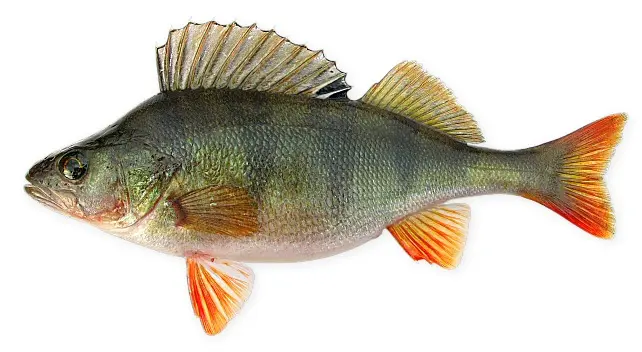
The Grand Canal is not one uniform venue. Urban reaches, lock cuts, bridge shadows, turning bays and quiet rural pounds can fish differently on the same day. European perch remain an attractive cold-weather target because a short, mobile lure session can cover several pieces of structure without heavy equipment. This guide focuses on late autumn and early winter, when daylight is limited and water may be coloured or cold. It does not promise a feeding spell or describe a firsthand catch. The cover is a separately licensed photograph of Perca fluviatilis from Ukraine, used only as a species reference.
Confirm the rules and access first
Perch are coarse fish under Irish fisheries law. Inland Fisheries Ireland states that the Coarse Fish Bye-Law No. 806 of 2006 limits an angler to four coarse fish in a day and prohibits killing a coarse fish longer than 25 centimetres. IFI also states that anglers may not fish with more than two rods and that live bait is prohibited. Those national provisions do not grant access to every bank. Waterways Ireland, local clubs, landowners, construction works and navigation notices may affect where a person can stand, park or fish. Check the current IFI bye-law page and Waterways Ireland information before leaving, obey signs and closures, and never climb a lock gate, mooring barrier or private fence to reach apparently attractive water.
Why canal perch are a structure problem
Perch use edges that concentrate small fish and offer an ambush position. On a canal those edges can be the base of a wall, a reed line, a bridge abutment, the downstream side of a lock, a moored-boat shadow, a culvert, a shelf beside the central channel or a small change in depth. Winter fish may group tightly, so two metres can separate repeated bites from silence. The 2026 official Irish angling report records perch among the Grand Canal’s coarse fish, but a report from one event does not predict your reach or date. Approach each feature as a hypothesis. Fish the near edge before stepping onto it, then the middle line, then the far shelf. Avoid casting around vessels, ropes or active lock operations.
A compact light-lure outfit
A light spinning rod around 1.8 to 2.2 metres with a small reel is adequate for most canal presentations. Thin braid improves contact with a small jig, while a modest fluorocarbon or nylon leader provides abrasion resistance and a little stiffness around stone and timber. Carry several lure classes rather than many colours: 4–7 centimetre soft plastics, light jig heads, a small suspending minnow, one shallow crankbait and a compact metal or blade lure for deeper lock approaches. A short wire or bite-resistant trace may be sensible where pike are likely, but it can change a tiny lure’s action. Select components that still let the lure work properly. Bring forceps, cutters, a soft knotless net and a damp handling mat.
Search before slowing down
Begin with a lure that can be counted down and retrieved at different depths. Make three casts along the near margin, three at forty-five degrees and three toward the centre or opposite shelf. On the first pass use a steady retrieve; on the second add pauses; on the third work close to the bottom without dragging through debris. If one perch follows or strikes, repeat the precise angle before changing. Perch can travel in groups, and a quick second cast may be productive. If nothing happens after a disciplined set, move to the next feature rather than repeatedly changing colour in empty water. A slow walking pace with frequent short stops usually samples more useful habitat than remaining beside the first bridge.
Cold-water presentation
Cold water does not always demand the slowest possible retrieve. It calls for control. A small shad can be lifted a few centimetres, allowed to settle and then held still. A suspending minnow can be twitched twice and paused, but the pause must be long enough to test the idea without turning the session into motionless waiting. Watch the line where it enters the water; bites may appear as a slight jump or slackening rather than a pull. In coloured water, a lure that displaces more water or carries a modest flash can help fish locate it. In clear water, natural colours and a finer leader may improve presentation. Change depth before changing every other variable.
Bridges, locks and moorings
These features concentrate people and hazards as well as fish. At bridges, stay clear of traffic and pedestrians, and avoid blind back-casts. At locks, never stand on operating equipment or cast where line could foul a gate or boat. Around legal moorings, give vessels and their occupants space; do not bounce lures off hulls or run line across ropes. The most obvious shadow is not worth conflict or damage. Look for secondary structure: the first drop beyond a lock approach, a quieter seam away from propeller wash, a reed pocket downstream of a bridge, or the deeper edge of a turning bay. Fish can use these less pressured positions while remaining close to cover.
Handling perch safely
IFI’s species profile warns that perch have a spiny dorsal fin, sharp gill covers and spines in the pelvic and anal fins. Net the fish when possible, wet your hands and fold the dorsal fin gently from front to back rather than squeezing the body. Keep fingers away from the gill cover and never suspend a larger fish by the jaw. Prepare the camera and unhooking tools before lifting the fish. If retaining any coarse fish is lawful and intended, apply the current limit and size rule precisely; otherwise release it promptly to the same waterbody. Do not transfer live fish between waters. A small barbless or de-barbed hook and single-hook lure can reduce handling time, especially during a short winter session.
Weather, light and water condition
A mild overcast period may extend feeding beyond the brief dawn window, while bright low sun can push fish deeper into shade. Heavy rain can alter colour and introduce debris; frost can make towpaths, locks and stone edges dangerous. Wind along the canal may create a surprisingly strong surface drift that bows thin braid. Use the bank and vegetation for shelter, shorten casts and increase jig-head weight only enough to regain contact. Polarised glasses help with glare even in winter. Carry warm waterproof clothing, a headlamp for packing up rather than for extending into unsafe darkness, and a charged phone. Tell someone which reach you intend to walk and when you expect to return.
Common mistakes
The first mistake is fishing only the centre. Canal perch often sit against a vertical edge or beneath your own bank. The second is using a jig too heavy for the depth, causing it to bury in silt or weed. The third is moving the lure continuously when a pause would reveal a following fish. The fourth is changing lures without recording where a touch occurred. The fifth is assuming a historical report establishes today’s stock or access. Finally, do not overlook biosecurity. Clean mud and plant material from boots, nets and mats, dry equipment between catchments and never empty bait or water into another venue.
A two-and-a-half-hour plan
Spend the first twenty minutes checking access and observing three features. Fish each with the same small shad so location, not lure choice, is the first test. During the next hour, rotate through bridge shade, a lock approach and a quiet reed or wall edge. Mark any contact on the phone map. Use the following forty minutes to revisit the best feature with a slower soft plastic and a suspending minnow. Reserve the final thirty minutes for the nearest safe exit route, not the farthest point of the walk. Log water colour, wind, lure depth and exact structure. Even without a catch, the session identifies which reaches are worth returning to and keeps the next trip focused rather than random.