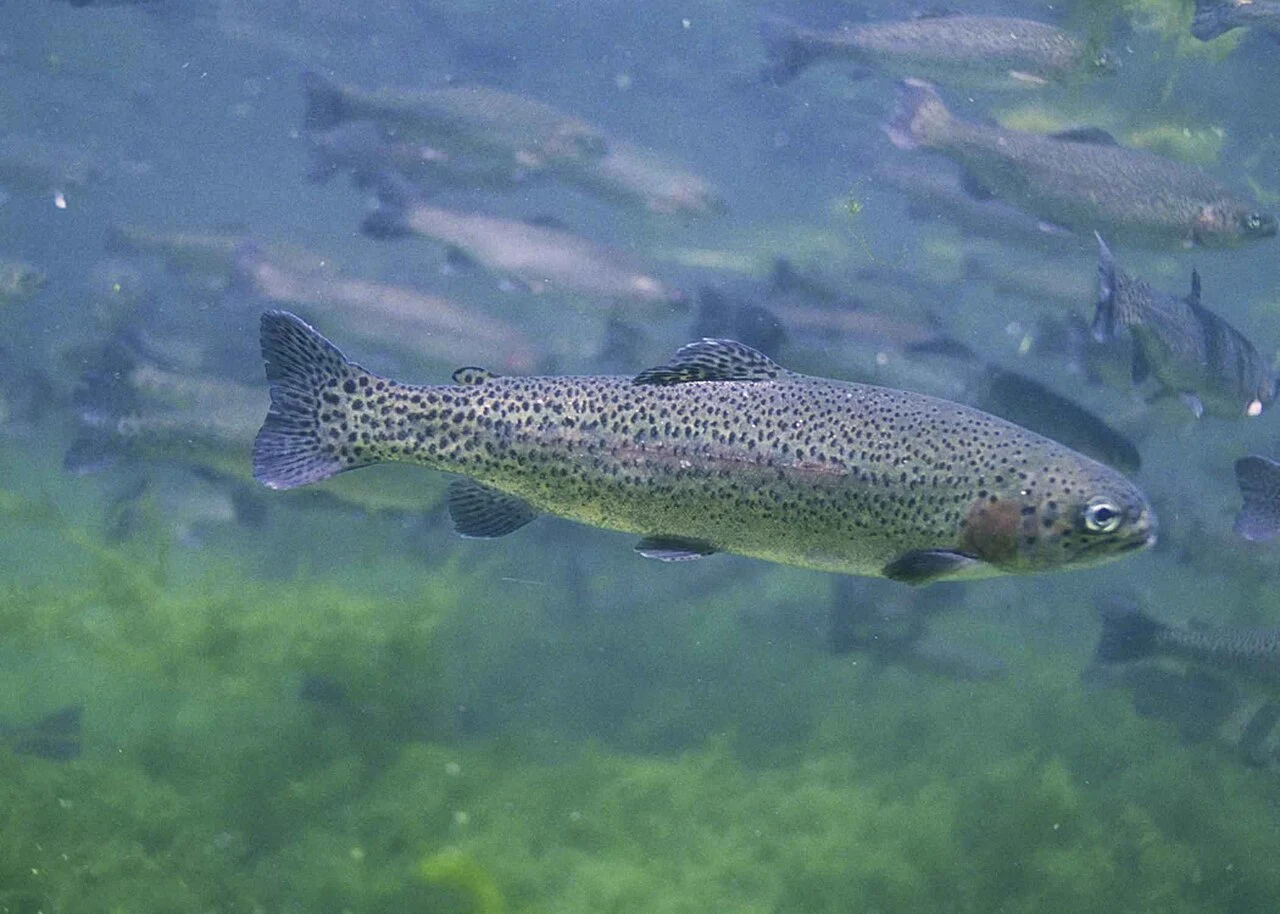
Winter area trout in Japan offers an unusually useful learning trip: you can practise light-lure fishing, compare depth and retrieve speed, and stop for a warm break without committing to a remote river. BerryPark in FISH ON! Shishidome, in Tsuru, Yamanashi Prefecture, provides a concrete example. This guide focuses on rainbow trout in its main Shishidome lure area, not the separately regulated Pine Lake or nearby public rivers.
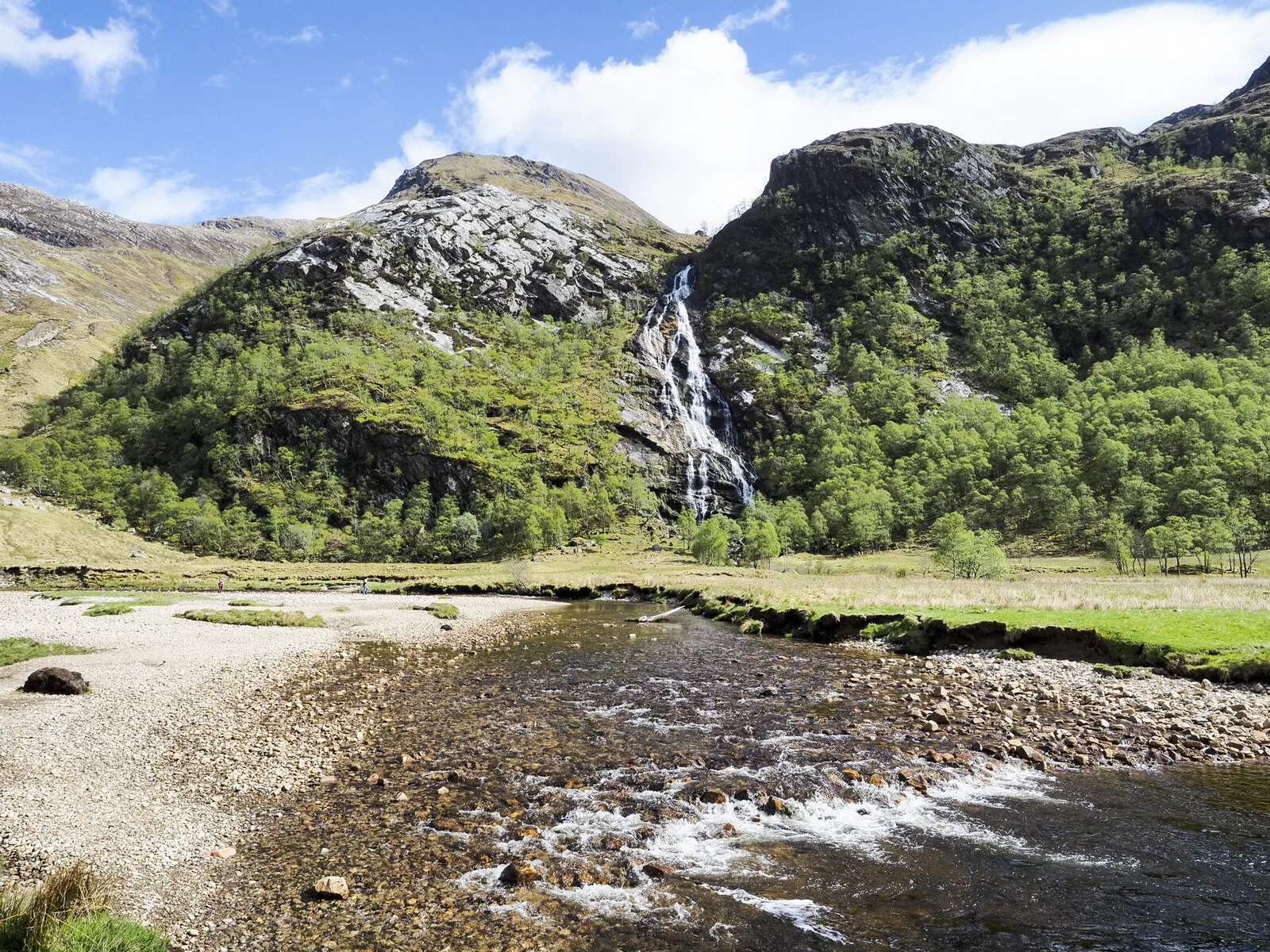
Late November and December are sensible months to prepare for. Shimano's area-trout guidance describes December–March as a typical high season, while stressing that severe cold can reduce activity. That is a general seasonal pattern, not a promise about Shishidome's fish, stocking or the weather on your date. The opening image is an AI-generated freshwater illustration, not a photograph of the venue or a species-identification reference.
Choose the correct water before buying tackle
The most important distinction is between a managed pond session and wild-trout fishing. Here, success begins with the operator's ticket, the particular fishing area and the currently posted conditions. A river licence, permission at a different fishery or an online tackle recommendation does not replace those requirements.
For a first visit, keep the plan narrow: buy the appropriate Shishidome lure ticket, fish the authorised pond area and ask staff to explain its boundaries. Do not move into Pine Lake because it looks attractive; the operator explicitly says the ordinary Shishidome-area ticket does not cover it. Likewise, do not assume permission extends upstream or downstream outside the facility.
Think of the pond as a series of casting lanes rather than one undifferentiated bowl. Look for visible cruising fish, changes in light, usable bank space and any permitted flow influence. These are observation points, not guaranteed hotspots. A comfortable position where you can cast safely and land fish in the water is preferable to squeezing into a crowded corner.
Rules checked on 20 October 2026
Read the operator's current basic rules together with its Shishidome-area notice updated 30 September 2026. For the main lure area, the basic rules specify dedicated lure tackle, rods no longer than 8 feet, lures weighing no more than 7 g and measuring no more than 10 cm, and single barbless hooks. Trebles and soft baits are prohibited. Pond restrictions also prohibit lures shorter than 2 cm, feather hooks or jigs, and trailers; the river-area exceptions must not be transferred to the pond. The dated notice prohibits front hooks on lures other than plugs. Ask staff to inspect unfamiliar plug configurations before using them. Use only one rod at a time.
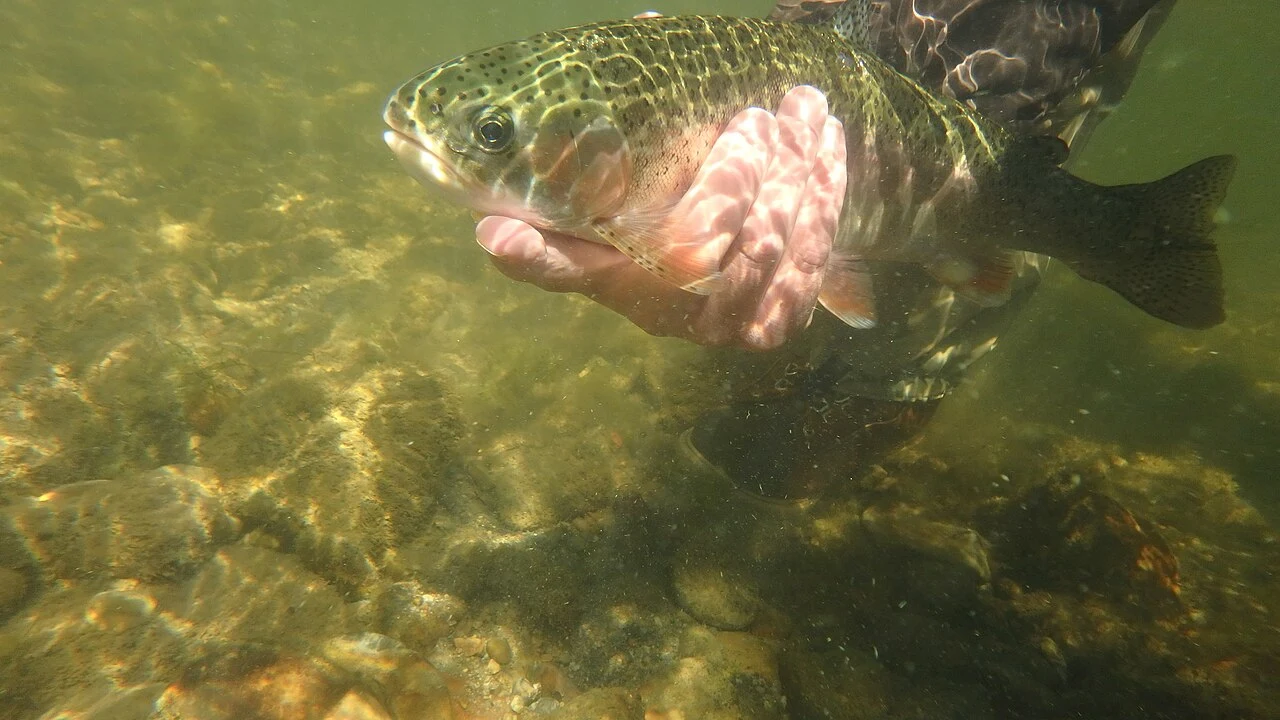
The dated notice defines fish lifted out of the water as kept. Release fish gently while submerged. Its retention alternatives are one fish at least 40 cm, or the ticket allowance of smaller fish: ten for a day, six for six hours and four for three hours. Non-rainbow species count differently. Confirm identification, measurements and any injured-fish payment with staff before retaining anything. Never assume catch-and-release means an unlimited out-of-water photo session.
These are venue conditions, not national fishing regulations. Other Japanese managed fisheries may have different hooks, lure dimensions, retention limits and photographic rules. Recheck immediately before travelling and follow staff directions if notices change.
A compact, workable tackle outfit
A useful starting outfit is a soft-tipped 5½–6½-foot area-trout spinning rod and a small, smooth-drag reel. Check its printed casting range rather than buying by the word ultralight alone. Daiwa's area-trout rod range illustrates how different lengths and powers cover everything from ponds to flowing managed waters; an existing suitable rod can do the job without a premium purchase.
Shimano recommends 1000–2000-size spinning reels, manageable nylon for beginners and tiny area-trout snaps. As an editorial starting point, consider fresh 3–4 lb nylon and a small snap sized to the lure's eye. A size 000–0 snap is the manufacturer's suggested scale, but nominal sizing varies among brands. Test every connection with steady pressure and inspect the first metre of line whenever it touches an edge or a fish rolls on it.
Set the drag to give line before a sustained pull threatens the knot. Do this by pulling through the rod with a smooth bend, keeping hooks covered and away from people. Do not use the rod like a crane to lift a trout. Thin line is useful only when the whole outfit protects it.
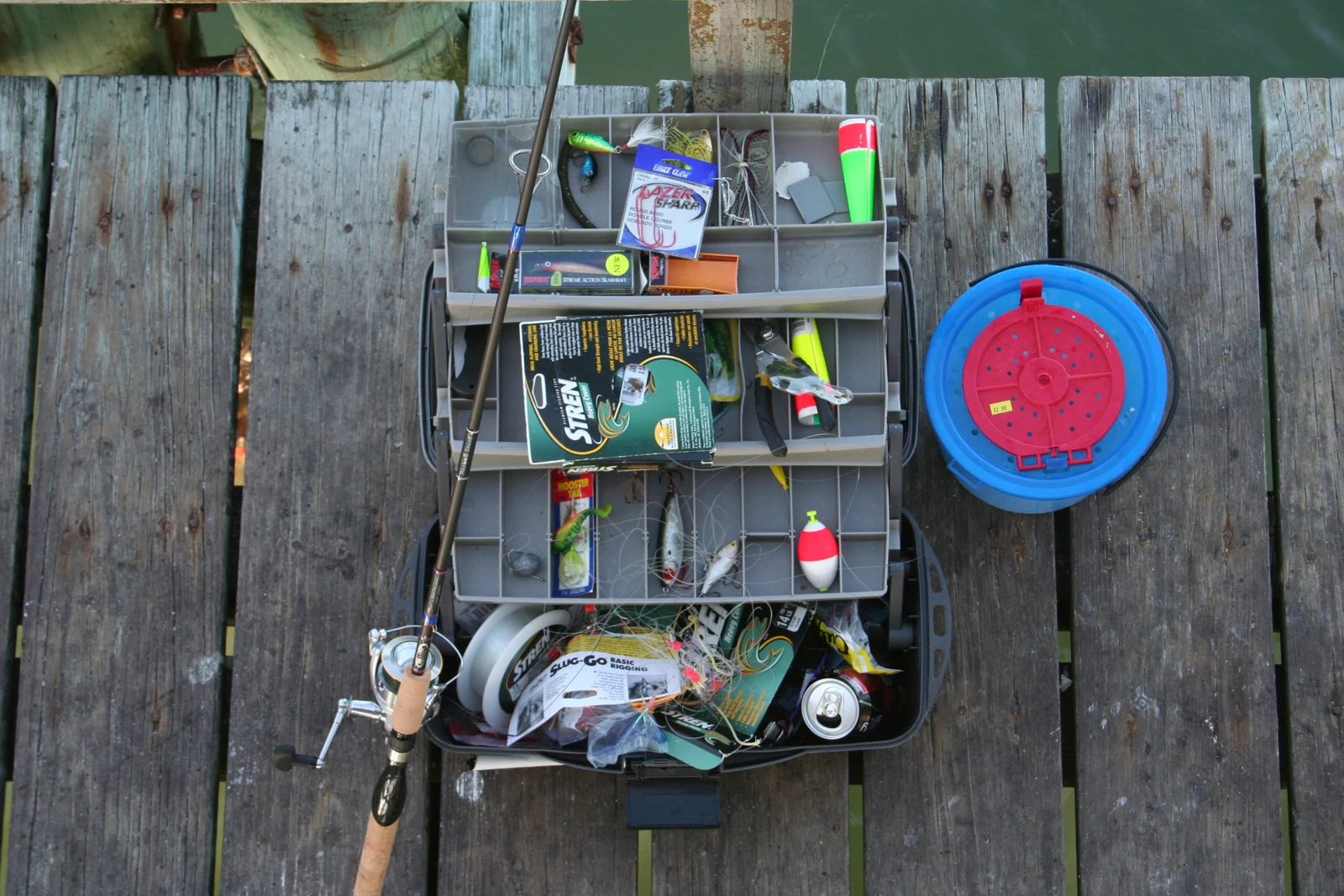
Pack a shallow rubberised landing net, a hook-release tool, forceps, spare compliant hooks, line cutters, polarised glasses and a hat. Keep the net beside you before the first cast. The point is to make landing and underwater release routine, rather than improvising while a fish is attached.
Build a small legal lure box
Start with a few conventional area-trout spoons around 1.5–2.5 g, selecting bodies at least 2 cm long. A lightweight spoon is not automatically legal: some micro models fall below the venue's length minimum. Measure them at home and ask reception how an unusual shape is assessed.
Carry three contrasting finishes rather than twenty near-identical colours: a bright metallic option, a subdued olive or brown, and a dark silhouette. Add one shallow and one deeper-running small hard crankbait, roughly 25–40 mm long, already fitted with suitable single barbless hooks. Have staff approve them if their hook positions are ambiguous. Do not bring a normal river lure with trebles and expect to convert it beside a hooked fish.
These are starting selections, not claims that a named colour is currently producing. Shimano's beginner material supports approximately 2 g as a manageable spoon starting point and small crankbaits as a straightforward alternative. Heavier spoons can help casting, but slowing them excessively may simply drag them along the bottom.
Find the swimming layer with a controlled experiment
Daiwa's beginner method puts depth discovery ahead of random lure changes. A sinking spoon can sample different layers by varying the pause after it lands. In practice, select one safe casting direction and begin with a short, repeatable cast. Close the bail under control, recover loose line and retrieve immediately for an upper-water trial.
On subsequent casts, count briefly before winding: for example, two seconds, then four, then six, while watching line behaviour and avoiding prolonged bottom contact. The numbers are a personal reference, not a conversion into metres. Wind, lure shape, line diameter and current change the sinking path. Reset the experiment when you change lure weight or casting distance.
Write down where follows, touches or takes occur. A single follow is information, not proof of a feeding pattern. Repeat the promising depth several times before deciding. If the spoon repeatedly collects debris, shorten the countdown or use a lighter model instead of dragging through the same obstruction.
When a fish takes, maintain contact and lift smoothly rather than making a violent overhead strike. Guide it away from adjacent lines with steady side pressure. A barbless hook rewards consistent tension; pumping hard and then dropping slack creates unnecessary lost fish.
Adjust speed before buying another colour
Shimano's more detailed area-trout guidance prioritises position, fish layer and retrieve speed before action and colour. Apply that as a simple decision order. If fish are present but ignoring the lure, keep the casting lane and countdown steady while trying a slightly slower or faster retrieve. Change only one important variable at a time.
Watch the spoon beside the bank before casting: it should work cleanly at your chosen speed, not spin uncontrollably. If a slow retrieve makes it sink out of the useful layer, substitute a lighter spoon. If you need more casting control in wind, use a modestly heavier model and shorten the casting lane rather than forcing a delicate outfit beyond its range.
A small crankbait offers a different experiment. Retrieve just quickly enough to make it work, then compare a steady approach with brief pauses where the model's buoyancy and venue rules permit. Know whether it floats or sinks. Do not assume a lure marked deep automatically reaches the same depth on every cast; line, distance and speed all matter.
If nothing improves, check the basics before changing tackle: damaged line, a bent or blunt hook, an open snap, unsafe crowding, or fish travelling outside your lane. Asking staff which accessible areas are currently suitable can be more useful than a large purchase.
Cold weather changes the human plan too
Dress for standing still: insulating layers, wind protection, waterproof footwear with dependable grip and gloves that still allow safe hook handling. Carry a spare dry layer and a warm drink. A short session with good concentration teaches more than a long one spent shivering and making poor casts.
Check the local weather and road conditions before departure, especially if driving unfamiliar roads early or returning after dark. Do not assume a managed venue eliminates frost, slippery banks or weather closures. Stop casting in lightning, retreat from unsafe edges and never enter the pond to recover a lure. If a guide begins icing, stop and deal with it gently; forcing line through obstructed rings can damage fine tackle.
Avoid placing tackle where visitors walk. Look behind before every cast, and lower the rod when someone passes. Give neighbouring anglers time to retrieve before crossing a casting lane. Keep spare hooks closed in a box instead of loose in clothing.
Plan a realistic first visit
The operator lists 1543 Shishidome, Tsuru City, Yamanashi as its address. Its access page describes the drive from Tsuru interchange via Route 139 and the Shishidome entrance junction. Use the current official map; do not treat a rough driving description as a travel-time guarantee. If arriving by rail, confirm the final transfer and return transport in advance instead of assuming a convenient connecting bus or taxi.
The published operating table lists the main area from 06:00–19:30 in March–November and 06:00–17:00 in December–February, with different Pine Lake hours and a warning that pond arrangements can vary. For a beginner, a daytime three-hour or six-hour ticket is usually a more manageable plan than an opening-to-close marathon. Check current prices, rental availability and accepted payment directly; no fee is assumed here.
Before travelling, send staff a short checklist: intended date, exact area, ticket duration, rental needs and any unfamiliar lures. On arrival, buy the correct ticket and request a current rules sheet. Spend the first fifteen minutes checking tackle and release arrangements, then work one method systematically. Take a break, review what changed and finish with enough time to return equipment and resolve any retention questions.
At the end, record lure weight, countdown, approximate casting lane, retrieve changes and fish responses, including a blank session. Those observations are transferable skills. Stocking is controlled by the operator and fish responses remain variable; neither a winter calendar nor a full pond guarantees a catch.