
Choose a path before choosing a weight
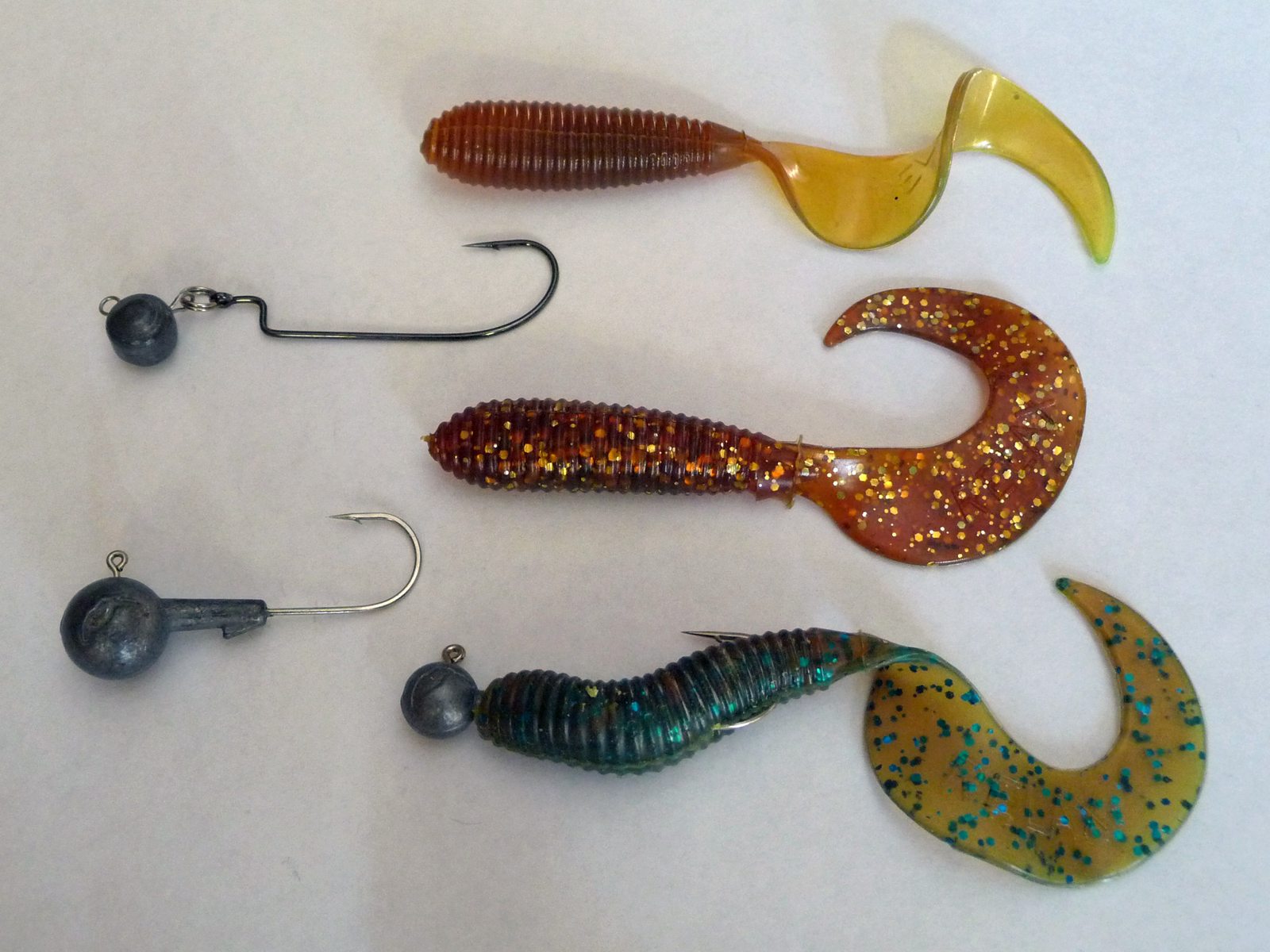
A jighead is a weighted hook, not an instruction to drag the bottom. Its weight helps place a soft plastic at a chosen depth, while current, line angle, body shape and retrieve speed determine the path it actually follows. The useful question is therefore: can this rig pass through the selected lane at a controlled speed?
This guide uses small freshwater streams and modest river margins as examples, with fish examples from Kentucky and Indiana. It concerns accessible bank fishing and gentle current, not dam tailraces, floodwater or offshore jigging. The weights and tackle ranges are editorial starting suggestions. No fixed chart can convert a river's depth into the correct jighead without accounting for flow, line and lure resistance.
Identify a target lane and likely food
A seam is the boundary between water moving at different speeds. An eddy is a circulating or relatively sheltered pocket beside the main flow. A pool offers depth, but its entrance, middle and exit can behave differently. Choose a small, visible section of one feature rather than casting indiscriminately across the whole river.
Kentucky Fish and Wildlife's stream guidance associates smallmouth bass with rocky banks, gravel shoals and current, and suggests small crayfish-shaped plastics, tubes and grubs. It identifies rock bass around chunk rock and woody cover, and crappie around wood in slow or still water. These are regional examples, not a claim that all those fish inhabit your stream or share the same feeding position.
Before casting, look for small fish, insects at the surface or crayfish in accessible shallows without disturbing habitat. A compact tube or craw-style plastic can test a bottom-oriented presentation; a small grub or paddle tail can test swimming prey. Lure shape is a practical experiment, not evidence that a fish is eating that exact animal today.
| Feature to investigate | Regional fish example | Food or holding reason to investigate | Initial presentation | Important limitation |
|---|---|---|---|---|
| Gravel-shoal edge beside deeper water | Smallmouth bass in suitable Kentucky streams | Current and adjacent depth; investigate crayfish or small fish | Short controlled drift with a 2–3 inch tube or grub | Do not assume the fastest water holds the fish |
| Rocky bank with a slower strip | Smallmouth bass where present | Rock cover and a manageable feeding lane | Swim a small plastic along the strip, then test near bottom | Constant bottom contact can wedge the head |
| Chunk rock beside wood in a quiet pool | Rock bass in the Kentucky examples | Shelter and access to invertebrates or small fish | Short cast with a compact grub, allowing a controlled fall | Exposed hooks readily snag branches |
| Current break around debris or riprap | White bass where locally present | Current deflection can concentrate an accessible feeding lane | Swim a grub through the edge of moving water | Occurrence and seasonal availability need local confirmation |
| Slow pocket with submerged brush | Crappie in appropriate Kentucky waters | Sheltered cover and possible small-fish prey | Suspend or swim a small plastic beside, rather than through, brush | A heavy bottom-hopping jig may miss suspended fish |
The table narrows a search. It does not replace local species information. If the water has a different fish community, retain the method of testing a current lane but change the lure size and tackle to suit the actual target.
Build a small weight ladder
For 2–3 inch plastics in modest current, carry 1/16-, 1/8- and 1/4-ounce heads, approximately 1.8, 3.5 and 7 grams. Kentucky's guide includes 1/16- and 1/8-ounce grub jigs for particular stream applications. The heavier option here is an editorial control experiment, not an agency recommendation for every stream.
A light or medium-light spinning outfit may handle the smaller combinations, provided its actual lure rating includes the combined head and plastic weight. A medium outfit may be more appropriate for larger fish, heavier heads or cover. Choose line and leader for abrasion and the intended fish. On unobstructed water, roughly 6–10-pound monofilament can be a starting range for small lures; sharp rock, larger fish and different rod ratings can change that decision.
Within the same head material and pattern, additional weight usually increases the tendency to sink. A bulky plastic, thick line or a long bow of line in the current can oppose that effect. Changing all of them together makes diagnosis difficult. Start with one body and line setup, then compare adjacent head weights on the same short cast.
Choose an appropriate hook size as well as a weight. A heavier head need not require an enormous hook, and a long hook shank can stiffen a small plastic. Leave room between the body and point. Rig the lure straight, with the hook emerging on its centerline, and check the tail moves when you draw it slowly beside the bank.
Learn what contact feels like close to shore
Pick a clear, manageable patch near your position. Make a short cast and allow a controlled sink while watching the line. In a place where bottom contact is appropriate, a brief settling of the line or change in tension can provide a reference. Do not repeatedly drag through vegetation, spawning areas or snag-filled habitat merely to measure depth.
Count the sink time for that particular cast and rig, then start the retrieve slightly earlier on the next cast. This is a local repeatability tool, not a universal feet-per-second calculation. Moving several meters, changing the current angle or fitting a different plastic can invalidate the count.
Keep enough contact to notice changes while allowing the intended fall. A completely tight line can pull the jig toward you and lift it away from the target; uncontrolled slack makes its path difficult to interpret. Recover excess line with the reel while following the drift with the rod. If the lure crosses the lane before reaching the intended depth, first try a shorter cast or a more upstream starting point, then consider more weight.
Nebraska Game and Parks explains that jig shape and body design vary: a curly tail moves in the water, while a tube has a different falling action. Observe your own lure rather than assuming every soft plastic of the same length sinks or swims alike. A straight tail may need a different retrieve from a paddle tail that creates more drag.
Use cast angle as a control
An upstream or quartering-upstream cast gives the lure time to sink before it approaches your position. Recover slack as the current brings it closer. If you reel too slowly, a bow can hide contact; if you retrieve too quickly, you can pull the lure above the intended lane. Begin with short casts where those changes are visible.
A cross-current cast usually develops a downstream swing. As the line comes under tension, the lure's path can lift and curve toward your bank. That may be useful for swimming a grub across a seam, but it is different from drifting beside the bottom. Do not interpret every swing as proof the jig is too light.
A downstream-quartering cast puts more immediate current pressure on the line and lure. A slow retrieve or a brief hold can keep a moving-tail lure working in a suitable lane. Depending on speed and geometry, that same pressure may lift it. Repositioning along the bank can solve a presentation problem more effectively than continually adding weight.
Select one of three deliberate retrieves
For a swim, begin reeling before the jig reaches snaggy bottom. Maintain a steady speed that keeps the tail moving and the lure in the chosen layer. Make a second pass slightly deeper by lengthening the initial sink. This works as a search method when fish could be suspended or following small swimming prey.
For a controlled drift, cast slightly upstream of the target and let flow move the lure through it while recovering slack. Use small rod adjustments rather than repeated large jerks. The aim is a visible, repeatable path. Occasional contact can be informative; continuous grinding generally calls for less weight, more lift or a different lane.
For a short lift-and-fall, use a small rod movement to raise the jig from a clear bottom, then follow the fall under control. Large snaps can move a small lure out of the feeding lane and create unnecessary slack. If wood makes an exposed hook impractical, change to a suitable protected-point rig or work beside the cover. A weedguard reduces some snags; it does not make a jig snag-proof.
Diagnose the rig with one change at a time
| Observation | What to test first | Next controlled change |
|---|---|---|
| Lure leaves the target lane before reaching depth | Cast length and upstream starting position | Increase one head-weight step if the path remains too high |
| Head wedges repeatedly between rocks | Excess bottom time or too much weight | Begin retrieving earlier, then try one lighter head |
| Large line bow hides the lure | Too much line exposed to cross-current or wind | Shorten the cast and reposition along the bank |
| Lure rolls, spins or tracks sideways | Crooked or damaged plastic | Rerig before changing head weight |
| Lure reaches depth but rushes past fish | Retrieve speed and cast geometry | Try a shorter drift through the same lane |
| Sharp taps appear but fish do not connect | Hook gap, point condition and slack | Inspect the rig and improve contact rather than waiting for swallowing |
A bite can feel like a tap, unexpected weight or sideways line movement. Rocks and stems can also create changes in tension. When the line moves unnaturally, recover slack and use a controlled lift appropriate to the hook and tackle. A huge strike against a stationary snag risks breakage and a flying lure. Keep the rod within its working angle and never wrap line around a hand to pull free.
A seventy-five-minute practice session
Assume a locally confirmed smallmouth stream with a safe bank position, a moderate seam and scattered rock. Spend ten minutes identifying a short lane and a landing place. Start with one 2–3 inch plastic and a 1/8-ounce head if that combination fits your outfit. The choice is a baseline, not a prediction.
Use fifteen minutes to compare a high swim with a slightly longer sink along the same lane. If the jig repeatedly catches bottom, test the lighter head or begin the retrieve earlier. If current prevents it reaching the lane at depth, shorten the cast and try a more upstream angle before increasing weight. Keep the plastic unchanged.
Spend the next twenty minutes repeating the most controllable path beside two similar features. Record where contact, follows or strikes occur relative to the rock and seam. Then use fifteen minutes to compare a swimming pass with a small lift-and-fall only where the bottom allows it. If neither produces evidence of fish, use the remaining time on another accessible feature rather than buying certainty through heavier tackle.
Before the trip, check current rules for the exact water, including access, closures, hook or bait restrictions and permitted tackle materials. Collect damaged plastics and discarded line. Finish with a note of head weight, body size, cast angle and successful depth. Those details explain a repeatable presentation far better than a record that says only “caught on a jig.”