
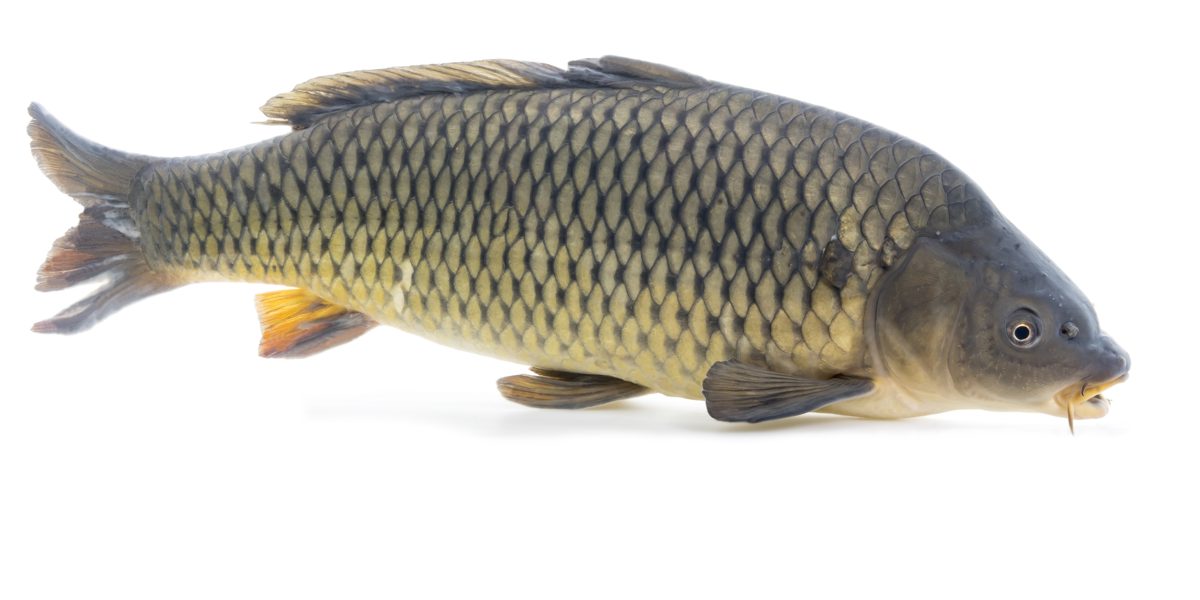
Common carp turn an ordinary Austin bank into a worthwhile fishing destination. The challenge is putting a small, accessible bait on a feeding route and leaving it undisturbed long enough for a fish to find it. At Lady Bird Lake, start with a clean shoreline shelf, a little corn and one well-controlled rod. Long casts and elaborate tackle come later.
Texas Parks and Wildlife Department identifies this downtown Colorado River reservoir as a recognized large-carp fishery. Its access guide names Auditorium Shores, Festival Beach Park and Red Bud Island as bank options. These are places to begin scouting, not marked swims that guarantee a bite. This guide combines those verified local facts with practical rig and search suggestions; the suggested weights, depths and waiting times are starting points to adjust on the bank.
Know which carp you are targeting
The target is common carp, Cyprinus carpio. Look for the fleshy, protrusible mouth with barbels, a long dorsal fin and a heavy scaled body. Mirror carp and koi are varieties of the same species; unusual scales or color alone do not make a different target.
Goldfish lack the mouth barbels. Grass carp have a more elongated body and lack those barbels too. Texas buffalo fishes can be deep-bodied and bronze, but also lack carp’s barbels. Do not identify a fish solely by its color, size or willingness to eat corn. Check the mouth and fin arrangement against an agency identification guide when uncertain.
Common carp are introduced and widespread in Texas lakes and streams. Lady Bird Lake offers a specific urban fishery rather than a reason to assume every Austin pond has the same population or access. The cover is a USFWS hatchery species photograph, not a fish caught at Lady Bird Lake.
Find a feeding surface before selecting a rig
A carp can feed above bottom, but bottom-sifting is central to its feeding behavior. Invertebrates, plant material and seeds are among its foods. FWC describes the removal of insect larvae, small crustaceans and snails from sucked-up sediment. A bait presented beside a productive feeding surface therefore makes more sense than one dropped at random into the deepest available water.
Young fish and adults need different amounts and sizes of food, but the sources checked do not establish a Lady Bird Lake seasonal diet breakdown. Treat the following locations as habitat-based search hypotheses, not surveyed concentrations of carp.
Walk quietly and look for repeated clouds of sediment, tails tipping upward, feeding bubbles that move along a line, or fish rolling beside a shelf. Bubbles alone may be decomposing vegetation. Combine signs with depth and bottom texture before committing a session.
At a clear margin, begin by testing roughly 3–6 feet of water if accessible, then the first deeper edge. Those depths are suggestions, not measured hot spots. A short cast can keep the hook bait on a firm patch while a longer cast buries it in weed or loose silt.
Three access areas to scout
Auditorium Shores offers a south-bank starting area. Look for room to land a fish and a line path that does not cross the busy trail or paddling traffic. Choose a manageable margin and adjacent depth change rather than assuming the most distant water is best.
Festival Beach Park provides another bank-access option farther east. Scout for a clean bottom patch outside shoreline growth. If repeated casts return with weed wrapped around the hook, move along the bank or shorten the cast before adding sinker weight.
Red Bud Island provides access toward the upper end. Inspect how water moves around points and obstructions. A slow inside edge can hold a bait more naturally than the strongest visible flow. Do not cast into current you cannot control or into wood that prevents a hooked fish from reaching open water.
TPWD’s lake description records shoreline wood, roots, emergent vegetation and submerged plants, plus Barton Creek entering from the south. Those features offer edges to investigate. They do not establish unrestricted fishing access at every section, especially within the creek itself.
Turn structure into a presentation
| Feature or condition | Feeding or holding reason | Starting rig and bait | Presentation and change |
|---|---|---|---|
| Firm shelf beside soft sediment | A reachable route beside bottom food | Sliding sinker with two or three corn kernels | Settle on the firm edge; move if the bait returns buried |
| Open pocket beside vegetation | Food and cover meet without a buried hook | Light float rig with corn or worm | Fish just touching bottom; shorten distance if weed fouls the hook |
| Gentle current seam | Drifting food meets slower water | Running sinker with a short hooklength | Cast a little upstream of the target; add weight only if it creeps |
| Clean bottom with nuisance bait theft | Small fish quickly strip soft bait | Small boilie or durable corn on a hair | Keep the hook exposed; inspect after unexplained taps |
| Wood or root edge | Shelter close to feeding ground | Bait on the open side, with abrasion-resistant line | Leave a clear fight lane; relocate if a carp can immediately enter wood |
Choose a manageable rod and reel
For open-bank fishing, a practical starting outfit is a 7–9-foot medium or medium-heavy rod, a 4000–5000-size spinning reel and 12–15-pound monofilament. Reel numbering varies by maker, so judge line capacity, drag smoothness and balance rather than the number alone. TPWD’s older carp brochure recommends a seven-foot rod, 15-pound line and small sliding sinkers as an entry setup.
Use more abrasion resistance around rough edges, but do not use heavier line to justify casting into impossible snags. A 15–20-pound hooklength can be a starting option when abrasion warrants it, provided the whole rig can shed the sinker after a main-line break. Avoid arrangements that tether a fish to a fixed weight.
Set the rod securely and allow controlled line release while waiting. A carp’s sustained run can pull an unsecured rod into the lake. Stay beside the tackle; a baitrunner or loose drag requires attention, not absence.
Rig one: sliding sinker with corn
Thread a 1/4-ounce sliding sinker onto the main line, followed by a protective bead. Tie the line to a small swivel and attach an 18–24-inch monofilament hooklength ending in a size 6 or 8 single hook. Begin with two or three sweetcorn kernels threaded so the point and gape remain clear.
Use this on clean bottom with little current. The sliding weight holds the bait while allowing a fish to move line without immediately lifting all the sinker mass. Increase to about 1/2 ounce only when flow or wind prevents the bait remaining where placed. A heavier sinker that disappears into soft mud solves the wrong problem.
Make a gentle lob just beyond the chosen patch. Feather the line before splashdown to help straighten the hooklength, let the rig settle, then take up loose line without dragging the bait. Watch for a continuing pull or steady line movement. With an ordinary J-hook, lift smoothly into contact; a violent strike can tear bait away or break a short, tight line.
Rig two: hair rig for exposed-hook presentation
A hair holds the bait beside the hook rather than covering its bend. Start with a commercially tied size 6 carp hair rig and a 6–10-inch supple hooklength if learning the arrangement. Alternatively, form a small loop at the end of suitable hooklength material, leave that loop beyond the hook bend as the hair, secure the hook with a correctly tied knotless knot, and connect the other end to the swivel. Test the knot and rig before casting.
Thread a small 10–12 mm boilie or a few durable corn kernels onto the hair with a baiting needle and hold them with a bait stop. Leave a small gap between bait and hook bend so the bait does not obstruct the point. Use it with the freely running sinker arrangement rather than improvising a fixed bolt rig.
The exposed hook can enter with the sucked-in bait instead of being masked by a dough ball. Select this approach when soft hook baits are repeatedly stolen or when you want a more durable presentation. It is not automatically better than direct-hooked corn. If tangles appear, shorten or straighten the hooklength and soften the cast before changing bait.
Rig three: float fishing close to shore
A float makes short-range feeding visible and helps fish above soft sediment or low weed. Attach a small fixed float suitable for the depth, place enough split shot below it to show a sensitive tip, and finish with a size 8 single hook. Keep the lowest shot about 8–12 inches above the hook as a starting spacing.
Plumb the depth and begin with the bait just touching bottom. Add only a few inches of depth if the bait is being carried off the patch. Too much line on bottom creates delayed bite indication and snags; too little can suspend corn above fish that are sifting sediment.
Cast beyond the patch and draw the float gently into place. Watch for sustained travel, a disappearing tip or a clear lift rather than striking every tremble. Wind-driven float movement should be distinguishable from a fish changing direction. When the float repeatedly drifts into weed, reposition upstream or move the rig closer.
Bait, color and feeding quantity
Sweetcorn, dough and worms are supported carp baits; boilies offer durability and convenient hair mounting. Start with a small amount. Where local rules permit loose feeding, a few kernels around the hook bait provide a compact search area. Repeated handfuls can leave a slowly feeding fish with many options besides the hook.
Yellow corn is an accessible starting bait, not proof that yellow always wins. A darker boilie or a pale bread bait may provide different contrast, but scent, texture, durability and placement also change. Test one variable at a time. Do not interpret one bite as evidence for a universal color rule.
For this bottom-bait plan, lures are not the default. Carp can be targeted by other sporting methods, but a moving predator lure does not reproduce a settled food patch. Learn the feeding route and a simple bait rig before adding specialist approaches.
Late-autumn and winter adjustments
As water cools, use actual signs to locate feeding rather than maintaining a rigid dawn schedule. A settled, sunny afternoon is a reasonable session to test a warming margin; an early start may suit other conditions. Neither is a guaranteed peak bite. No source checked establishes a reliable hour-by-hour winter bite window for this lake.
Begin with small baits, modest loose feed and a clean presentation. If the shallow shelf remains lifeless, investigate the adjacent deeper edge. If fish appear in the margin, stop recasting across them. Record temperature when measured, cloud, depth and bite times so later visits can test a pattern rather than repeat a guess.
A worked three-hour bank session
Spend the first twenty minutes scouting a lawful bank section at Festival Beach or Auditorium Shores. Select one clean close shelf and a second slightly deeper target, each with an open landing route. Assemble the sliding-sinker rig with 15-pound main line, an 18-inch hooklength, a size 6 hook and two corn kernels.
Make one soft cast and watch for thirty minutes while observing the bank. If the line moves steadily, lift into contact and keep the fish away from cover with controlled side pressure. If only repeated taps occur, retrieve once and inspect the bait. Replace stolen corn with a small hair-mounted boilie while retaining the same target.
After another quiet interval, inspect the hook for weed or mud. A fouled hook calls for a cleaner patch, not a stronger flavor. If the rig is clean but there are no feeding signs, move to the second depth. For the final hour, concentrate on whichever location supplied actual evidence. One deliberate move teaches more than changing bait, distance and rig together.
Short local note
Recheck TPWD’s current lake rules and City of Austin access before fishing. As checked on 27 October 2026, Lady Bird Lake permits retention of only one common carp 33 inches or longer per day, with no daily bag limit on smaller carp; license and other requirements still apply. TPWD also states that outboard motors are not allowed, while electric trolling motors may be used. Keep lines clear of other lake users, use a suitable landing net, handle fish with care and clean, drain and dry equipment before visiting another water.