
A cool-weather bank session with realistic expectations
Lake Bastrop is a possible November–December destination for anglers who want a straightforward channel-catfish session within reach of established park access. The attraction is a manageable plan: find a safe bank or pier, present a small bait near useful structure and adjust methodically. It is not a claim that winter is the lake's best catfish season. Texas Parks and Wildlife describes channel catfish as abundant there but identifies spring and early summer as the strongest period before vegetation interferes with bottom fishing.
That distinction matters when planning a trip four to eight weeks ahead. Choose the day around weather, access and your ability to fish effectively, rather than expecting a seasonal guarantee. This guide does not contain firsthand catch reports. Its practical tackle choices are editorial suggestions informed by the agency sources below, checked on 23 October 2026.
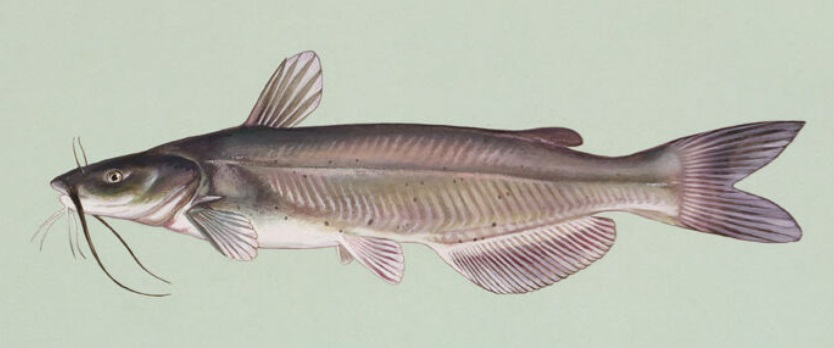
The cover is Duane Raver's scientific illustration of a channel catfish, credited to the U.S. Fish and Wildlife Service. It is clearly labelled as an illustration, not a photograph of a Bastrop catch or a substitute for identifying an actual fish. Research, writing and review were AI-assisted.
Choose an access point before choosing a bait
LCRA's South Shore Park page identifies fishing piers and gives the address as 375 South Shore Road, Bastrop. At the time checked, it lists daily sunrise-to-sunset park access and a five-dollar adult entry fee, with separate concession categories. The page also carries a restroom-construction notice. Confirm current opening arrangements, facilities and fees directly before travel rather than assuming a dated guide overrides a temporary restriction.
A pier offers a simple starting place, but it is shared space. Keep rods, hooks and bait containers out of the walking route. Check where a hooked fish can be netted without leaning over a rail or lifting it by the line. If the available landing position is unsafe, select another spot before casting.
Bank fishing requires the same attention. Choose stable footing and enough room behind you for a controlled cast. Do not step into vegetation or down a steep edge simply to gain a few metres. Avoid launch lanes, swimming areas and any posted exclusion. Park entry does not authorize access to every part of the shoreline or to power infrastructure.
Check the lake-specific rules
The current TPWD Bastrop regulations page lists a combined daily bag of 25 channel and blue catfish, including hybrids and subspecies, with only ten of that combined bag allowed to be 20 inches or longer. Flathead catfish have separate rules: an 18-inch minimum and a daily bag of five. Do not apply one catfish category's rules to another.
Check your Texas fishing licence and freshwater endorsement or applicable exemption before fishing. TPWD distinguishes resident and non-resident requirements and lists exceptions, including anglers under 17. Use the official licence page for your circumstances. Entry to this LCRA park should not be treated as a licence exemption.
This article describes supervised rod-and-line fishing, not jug lines, trotlines or unattended devices. Those methods have their own requirements. Recheck the current lake page, general fishing rules and any posted park restrictions before the trip. Decide whether you intend to keep fish before starting; the legal bag is a ceiling, not a target.
Recognize the fish without relying on one feature
TPWD identifies channel catfish as Ictalurus punctatus. Several catfish species occur at Bastrop, so an angler should be prepared to distinguish channel, blue and flathead catfish before retaining one. A forked tail alone does not resolve channel versus blue catfish. Consult TPWD's identification material and examine the whole fish rather than deciding from colour or size.
The scientific cover helps introduce the intended species but is not field-identification proof. Actual fish vary in appearance, and a hurried view in poor light can be misleading. If identification is uncertain, do not retain the fish while hoping to settle the question later. Keep handling brief and use the applicable official guidance.
Carry a measuring board that can be used safely at the chosen landing point. Read the current measurement instructions before relying on a marginal measurement. Organize the equipment so that a fish does not remain out of water while you search through the tackle bag.
Find a controllable area of bottom
TPWD describes Bastrop as a reservoir with creek channels, humps, drop-offs and substantial submerged vegetation. From shore, you will not necessarily reach the deepest structure, and you should not pretend to know the bottom from surface appearance alone. Start with a reachable transition: the outside edge of vegetation, a point, or a change in bottom firmness that can be sampled without constant snagging.
Make a few exploratory casts with a modest sinker and retrieve slowly enough to feel whether the rig is crossing weed, soft bottom or harder material. Avoid dragging repeatedly through a snag. If every retrieve returns heavily fouled, shift the angle or move rather than burying more bait in the same unworkable area.
The lake's use as a cooling reservoir is not a promise of a warm-water plume at a particular time. Plant operation, weather and mixing can change conditions. Do not seek restricted discharge areas or build a trip around unverified claims about active generation. A safe, accessible bank with a clean presentation is the useful starting point.
A simple sliding-sinker rig
For ordinary bank fishing, begin with a seven-foot medium or medium-heavy rod, a reliable reel and approximately 12–20-pound monofilament. Choose the heavier end where abrasion or structure warrants it. A sliding egg sinker above a swivel, followed by roughly 45–60 centimetres of leader and a single circle hook, gives a simple setup that is easy to inspect.
A sinker around half an ounce to one ounce is a practical starting range for modest conditions. Use the least weight that keeps the bait where intended, within the rod's casting rating. A 2/0–4/0 circle hook can suit a compact bait, but hook sizes vary considerably by manufacturer. Match the hook to the bait and leave the point and gap unobstructed.
Use knots you can tie consistently and test each connection with a steady pull. The leader should suit the expected abrasion rather than being chosen solely to create a delicate-looking rig. Keep a spare pre-tied leader in a closed container so a damaged one can be replaced without rushing.
Bait choice and presentation
A small portion of a lawful bait is easier to cast and inspect than a large bundle that hides the hook. Worms are a simple starting option; TPWD's channel-catfish account describes a broad diet, and the Minnesota DNR's technique guide also discusses common bait approaches. Minnesota's regulations do not apply here: its source is used only for general method, while Texas rules govern the trip.
Buy or obtain bait through a lawful route and verify any restrictions before collecting or using fish as bait. Do not transfer live aquatic organisms or water between locations. Keep bait cool, contained and out of direct sun. Spoiled or disintegrating bait is not made effective by leaving it in the water longer.
After casting, allow the sinker to settle and take up slack until the line is readable without hauling the bait across the bottom. Rest the rod securely where it remains under your control. With a circle hook, respond to a sustained pull by winding steadily and allowing the rod to load rather than delivering a sharp overhead strike.
Work a small area systematically
Start with one rod until the cast, bite indication and landing route are under control. More rods add tangles and divided attention without necessarily teaching more about the water. Give the first position a fair trial, then inspect the bait and rig. A missing bait, a buried hook and a clean untouched bait are different observations and should lead to different adjustments.
Change one thing at a time. Recast slightly shorter, try the edge of the same feature or reduce bait size. If the rig repeatedly snags, change position rather than increasing line strength indefinitely. Record which casts returned cleanly; that information helps identify a usable presentation lane.
When a fish is hooked, use steady pressure and guide it away from obstructions. Keep the rod within a comfortable fighting angle, and use the net once the fish is ready. Do not swing a fish onto concrete or lift it over a high rail on the leader.
Weather, handling and an early finish
This is an inland reservoir, so tide tables are not the relevant planning tool. Check wind, rain, lightning risk and the temperature trend. A pleasant departure can become an uncomfortable bank session after a front. Carry a windproof layer, drinking water, sun protection and a means of contacting help.
Catfish dorsal and pectoral spines require care. Have pliers and an appropriate net ready, keep hands away from sharp fin edges and avoid improvised grips that risk dropping the fish. Keep air exposure brief. If retaining fish, use humane dispatch and adequate ice; if releasing, support the fish and return it promptly when it is ready.
Stop well before the park closes. A last-minute bite is not a reason to ignore access hours or attempt hurried unhooking in poor light. Leave enough time to check the bank for discarded hooks, line and bait packaging.
A repeatable half-day itinerary
Before leaving home, verify the park notice, weather, lake-specific limits and licence. On arrival, spend fifteen minutes checking casting space and landing access. Use the first hour to find one clean lane with the simple sliding rig. Inspect the bait regularly enough to know whether the presentation remains intact.
At the midpoint, take a short break, check abrasion and decide whether a nearby safe position offers a meaningful improvement. Avoid changing every piece of tackle simply because the session is quiet. For the final hour, work the best controlled presentation and begin packing nonessential equipment early.
A useful trip log distinguishes facts from explanations: record access, weather, approximate casting direction and what happened to the bait. Do not turn an unsuccessful session into an invented theory about the entire lake. A lawful, safe visit with a clear record is worthwhile preparation for the next one, whether or not fish are caught.