Lake Fork is a worthwhile place to plan a late-autumn or winter largemouth-bass trip, provided the plan includes a safe route and a willingness to work slowly. Texas Parks and Wildlife identifies fall and winter among the reservoir's productive periods. That is a seasonal reason to prepare for November and December, not a promise about tomorrow's bite or the size of fish you will catch.
This guide is for an angler fishing from a properly equipped boat, ideally with someone who knows the lake. Its practical tackle ranges are starting suggestions, not regulations or a guarantee that one outfit suits every patch of timber. A newcomer should build a short, sheltered route before considering distant water.
Understand the lake before choosing a lure
Lake Fork lies on the Sabine River northwest of Quitman in East Texas. TPWD highlights submerged timber as a navigation hazard even though marked boat lanes exist. Its habitat guidance identifies points, vegetation, docks, bridge pilings and artificial brush as useful features. In winter the agency recommends considering spoons, jigs and crankbaits.
Turn that information into a small set of questions. Where can you fish safely in the expected wind? Which reachable feature offers a change in depth? Can you make a controlled presentation there without losing contact with the lure? A place that answers all three is more useful for a first visit than a distant waypoint with an exciting reputation.
Use current charts and local advice, but do not treat a downloaded track as clearance over submerged obstacles. Water levels change what is exposed and what sits just below the surface. Start in daylight, travel cautiously and reduce the fishing route when visibility or conditions deteriorate.
Check Lake Fork's special bass rules
Rules were reviewed on 21 October 2026. The TPWD Lake Fork regulation page lists a protected 16–24-inch slot for largemouth bass: fish longer than 16 inches but shorter than 24 inches cannot be retained. Its wording allows fish 16 inches or less, or 24 inches or greater, subject to the other limits. Only one largemouth bass at least 24 inches long may be retained daily. The daily black-bass limit is five in combination across the listed black-bass species.
Carry a suitable measuring board and check the current lake-specific rules before fishing. Do not substitute the statewide default for Lake Fork's exception. Release a fish if identification or legal measurement is uncertain; a visual estimate beside a rod handle is inadequate.
There is a separate seasonal rule for incidental crappie: from 1 December through the last day of February, the lake page says all crappie caught must be retained, with no minimum length and a daily limit of 25 black and white crappie combined. Read that rule before adding crappie fishing to a bass trip; the bass release plan does not automatically apply to every species.
Arrange licences, access and the day's limits
Unless exempt, obtain the appropriate Texas resident or non-resident fishing licence and freshwater endorsement. TPWD explains the exemptions and packages separately. A guided booking does not itself demonstrate that your individual requirements have been covered; ask before departure and keep the required documentation available.
The TPWD access directory lists public ramps and private facilities. Confirm the chosen ramp's current condition, operating hours, parking arrangements and fees with its operator. An entry in a directory is not a real-time opening notice. If fishing from a private pier or bank, obtain permission rather than assuming a boat launch also grants shoreline access.
For a guided trip, discuss the intended fishing style, boat capacity, cold-weather cancellation policy and tackle before paying. Explain whether you want to learn boat positioning, work artificial lures or simply experience the lake. Ask whether the day can stay within sheltered water when conditions change. A flexible itinerary is more valuable than a promise to visit a particular spot.
Pack two purposeful outfits
A practical first outfit is a roughly 7-foot medium-heavy casting rod, compatible reel and 15–20-pound abrasion-resistant line for modest jigs around manageable cover. Choose rod power, hook strength and line together. This is not a recommendation to pull a large fish through the thickest standing timber; select more open edges until your equipment and experience justify more demanding cover.
A second outfit can be a medium-power spinning or casting rod with 10–14-pound line for smaller moving lures and relatively open water. Use the rod's printed lure range, including the weight of any trailer. Lighter line may help a lure work naturally, but it is a poor trade if it repeatedly rubs against wood and breaks.
Set the drag with a deliberate pull before launching. Inspect the final few feet of line and retie after abrasion, a difficult snag or a damaged knot. Carry spare hooks, cutters, long pliers, a lure retriever suitable for your boat, a landing net and an accessible measuring board. Keep loose trebles away from seats, clothing and the landing area.
Work a jig along an edge
For a first controlled presentation, try a compact 3/8-ounce jig with a modest soft-plastic trailer; move toward 1/2 ounce only when depth or wind makes it necessary. These are starting examples, not lake-specific requirements. The best weight lets you feel the presentation without repeatedly wedging it into branches.
Cast beyond the intended contact point where it is safe to do so. Let the lure settle while watching the line, then retrieve with short pulls and pauses. Compare the feel of clean bottom, vegetation and hard contact. If the line unexpectedly moves sideways, or the lure feels heavier before it should reach bottom, remove slack and make a controlled hook-set appropriate to the tackle.
Work the outside of a timber edge first. Pitching into its centre may produce more snags than useful casts. After a catch or clear bite, repeat the angle and approximate depth before changing anything. After several careful passes without evidence, test another feature rather than assuming that a slower retrieve alone must solve the problem.
Use a spoon only where you can control it
A compact jigging spoon around 1/2–3/4 ounce is an illustrative option when fish or forage are located beneath the boat in sufficiently open water. Match its weight to the rod and the conditions. Keep the line close to vertical so you can understand where the lure is relative to the boat and nearby wood.
Begin with short lifts and controlled drops. Maintain enough contact to notice an interruption during the fall without preventing the spoon from moving. Large, repeated overhead sweeps are unnecessary and can make a treble-hooked lure difficult to control. If wind prevents steady positioning, change the location or presentation.
Depth is a decision, not a target to maximize. Avoid deliberately pursuing fish from increasingly deep water without an appropriate release plan and understanding of pressure-related injury. If fish are struggling to return after release, stop repeating that approach and seek shallower opportunities or qualified local guidance. Do not improvise invasive treatments.
Make a crankbait answer a specific question
A crankbait is useful when you want to compare a stretch of water at a reasonably consistent running depth. Pick a model whose working depth fits the feature and whose weight suits the rod. There is little benefit in choosing a deep diver simply because the calendar says winter.
Make a short cast first to check action and clearance. Retrieve steadily, then compare a slower pass along the same edge. When the lure touches cover, avoid a reflexively violent pull; keep people clear and manage the snag with the boat stationary and under control. Never point a heavily loaded rod at a companion or pull a stuck lure toward someone's face.
On a broad point, work a few distinct casting angles rather than repeatedly sending the lure through one track. Record whether any bite came near the shallower end, along the slope or away from bottom. Those observations help choose the next presentation even if you cannot name the exact underwater feature.
Adjust to weather without predicting a feeding frenzy
A front is a reason to reassess travel, shelter and presentation. It is not proof that every bass has moved to one depth or that a particular pressure reading guarantees a bite. Compare the forecast with what you observe at the ramp, and leave enough time to return before wind or visibility worsens.
The National Weather Service warns that cold-water immersion can be dangerous even when the air feels comfortable. Wear a properly fitted life jacket, carry protected communications and dry clothing, and tell someone your launch point, route and return time. Choose clothing and flotation appropriate to the water and activity; waterproof outerwear alone is not an immersion plan.
A sheltered start does not guarantee a sheltered return. Check the forecast wind direction as well as speed. Do not use this guide as clearance to cross exposed water in a particular boat: the operator must assess the vessel, crew, local conditions and safe alternatives.
Land fish with the release already organized
Prepare the net, pliers and measuring board before casting. Land fish efficiently rather than extending the fight for entertainment. Wet your hands before handling, avoid gills and eyes, and support a lifted bass beneath the body as well as controlling the lower jaw. Keep photographs brief and return protected-slot fish promptly.
TPWD's release guidance emphasizes careful handling and minimizing unnecessary injury. If a fish is deeply hooked, do not turn a quick release into prolonged surgery merely to recover inexpensive tackle. Consult the agency's current handling guidance and prepare appropriate tools before the trip.
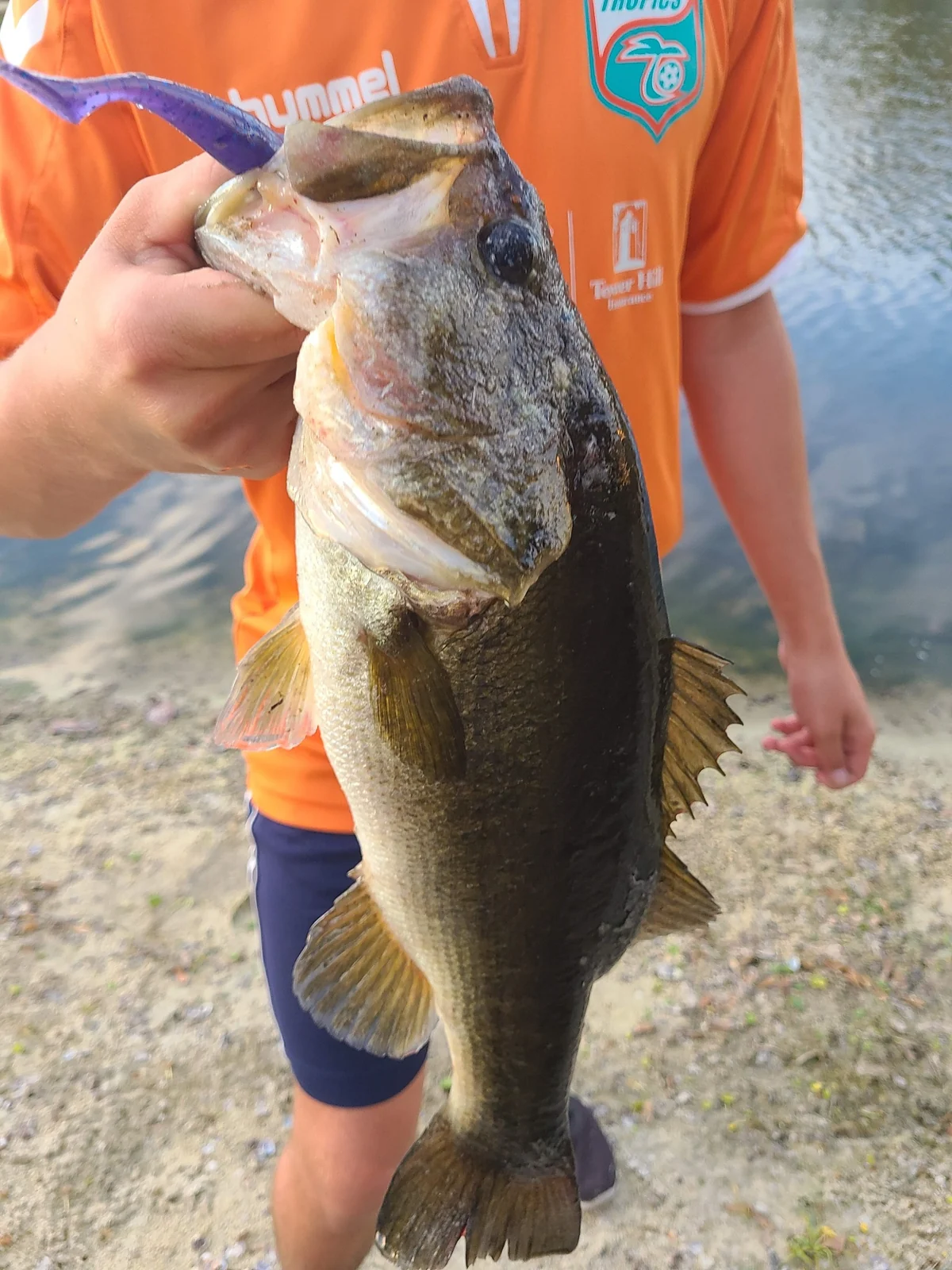
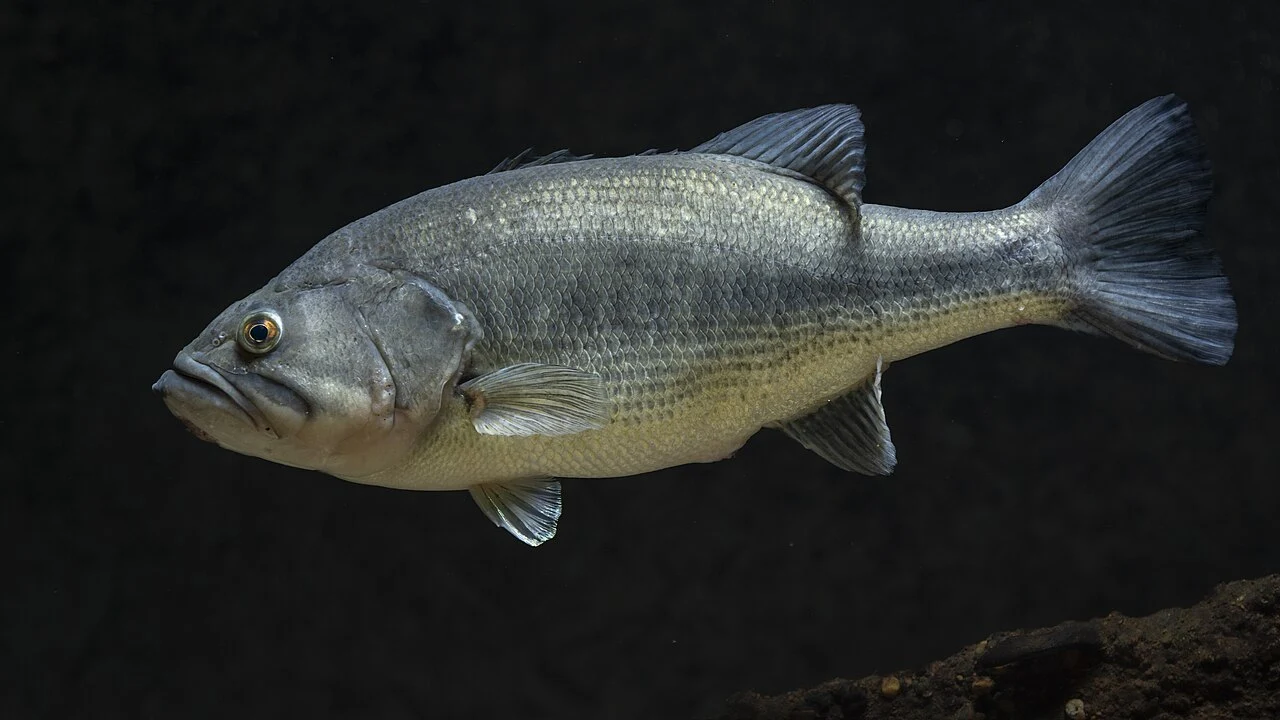
The opening photograph is a representative largemouth bass photographed by Sam Stukel for USFWS at Gavins Point National Fish Hatchery in South Dakota. It is not a Lake Fork catch and does not establish the ancestry of fish in this reservoir.
Finish with a useful record and a clean boat
Plan a first session around one safe launch and two or three reachable features. Begin with a presentation you can feel, change one variable at a time and stop early enough to retrieve the boat in good light. Keep a brief record of actual water conditions, location type, lure, running depth and results, including unsuccessful tests. Do not turn one catch into a lake-wide claim.
Before moving to another water body, follow Texas requirements for draining vessels and onboard receptacles. Remove attached vegetation and inspect the hull, trailer and equipment. The state's invasive-species rules include specific provisions for live bait and fish transport; taking lake water home in a livewell is not a harmless shortcut.
A successful first winter visit can be a safe route learned, several useful presentations compared and fish handled well. Build the next trip from those observations and current local rules, rather than from a trophy photograph or an assumed seasonal guarantee.