
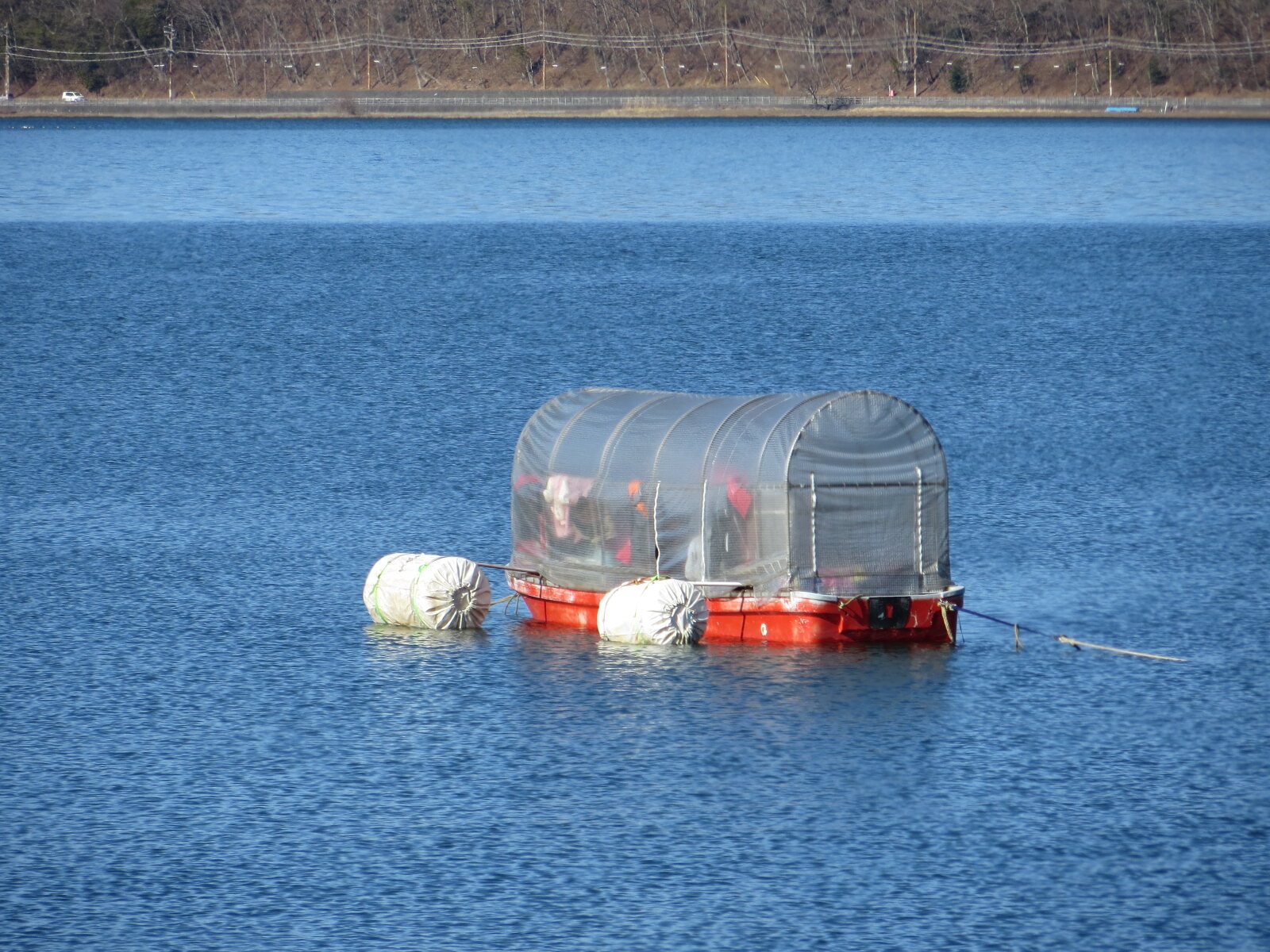
Lake Yamanaka sits at roughly 1,000 metres elevation beside Mount Fuji, and its winter fishery is unusual: anglers can fish from enclosed, heated “dome” boats while the lake itself usually remains open rather than freezing solid. The target is wakasagi, the Japanese smelt Hypomesus nipponensis, but this guide is deliberately about planning and executing the dome-boat experience rather than presenting a species-identification article. The registered cover therefore shows the actual Lake Yamanaka dome-boat setting, not a fish.
Japan’s national tourism organization describes a September-to-June boat-fishing season and notes that the lake does not normally freeze. Yamanashi Prefecture’s biodiversity strategy adds important context: complete freezing of Yamanaka, Kawaguchi and Shoji lakes has become uncommon, so traditional hole fishing is now rare. Those are planning facts, not a promise that every operator runs every day. Wind, visibility, ice around docks and the operator’s own safety decision can cancel or shorten a departure.
Book the operation before buying tackle
Choose an operator first, then ask four precise questions: departure and return times, whether the fishing permit is included, what rod and reel are supplied, and whether bait and terminal tackle are part of the package. Operators differ. Some sell a full beginner package; others expect the angler to buy the local fishing permit separately with cash. A 2026 booking listing specifically warns that the permit price changed from 1 April 2026 and that weather can prevent departure or force an early return. Treat the operator’s current written confirmation as authoritative for that booking.
Ask whether the boat has assigned seats, a toilet, heat and a place to store a small bag. Confirm whether food may be brought aboard and whether caught fish can be cleaned or cooked. A dome boat protects anglers from much of the wind, but the walk to the dock and boarding surface can still be cold or slippery. Wear thin warm layers, a hat and non-slip footwear rather than a bulky coat that interferes with the short rod.
Do not assume a foreign visitor is exempt from local rules. Buy the required recreational permit through the operator or the channel the operator identifies, retain it during the trip, and follow that day’s instructions on hooks, bait, fishing area and catch treatment. Prices and detailed conditions should be reconfirmed locally because the fishery cooperative and operators can change them.
Understand the small vertical system
Dome-boat smelt fishing is a depth-control problem. The boat places anglers over water where fish may pass beneath the hull; the short rod and small reel allow a compact multi-hook rig to work vertically. A sinker below the branch hooks keeps the rig nearly straight. The working depth is the distance from the sinker to the lake bottom, not simply the amount of line released.
A practical beginner starting range is a short, sensitive rod around 25–40 centimetres, light line appropriate to the operator’s tackle, a commercially tied wakasagi rig with tiny hooks and a sinker heavy enough to reach bottom without swinging into the neighbour’s line. These are tactical starting suggestions, not universal rules. Use the operator’s recommended sinker weight because depth, wind, boat movement and line diameter alter what is controllable. If the sinker drifts sideways or the line will not stay near vertical, increase weight one step. If bites are difficult to see and the rig remains controlled, try one step lighter.
Wakasagi rigs may carry several hooks. More hooks can cover a wider slice of water, but they also tangle more easily and take longer to rebait. A first-timer often fishes better with fewer active hooks and clean bait than with a full rig in a knot. Pinch a very small piece of the supplied bait onto each hook. Oversized bait masks the point and dampens movement.
Establish bottom and search upward
Lower the sinker under control. When it touches bottom, the line briefly slackens. Wind the reel just enough to remove slack, then lift the sinker a few centimetres. That establishes a repeatable reference. Begin close to bottom unless the crew reports a suspended school.
Use a modest movement: lift the rod tip 5–15 centimetres, pause, then let the sinker settle without dropping uncontrolled slack. The lift attracts attention; the pause creates the moment when a fish can take a small bait. Watch the soft tip for an extra tremble, a slight load, or movement that does not match the boat. Set by lifting smoothly, not by striking hard. Wakasagi have small mouths and tiny hooks tear free under an exaggerated hook-set.
If there is no response after several clean cycles, change one variable. First refresh bait. Second, move the rig 20–50 centimetres above bottom. Third, adjust the pause from roughly two seconds to five or six. Fourth, change sinker weight only if control is poor. Do not change bait size, depth, cadence and weight simultaneously; you will not learn which adjustment mattered.
When the crew reports fish higher in the water, wind a measured number of reel turns from the bottom reference. Note that number. If one full turn retrieves about a metre, five turns is a useful repeatable estimate, but reel retrieve varies, so ask the operator or measure before the trip. Return to the productive count after landing a fish.
Read bites without crowding the seat
Keep the rod above your own opening and the line as vertical as possible. A sweeping side movement crosses adjacent lines. Lay spare rigs, scissors and bait in the same locations every time. When a fish is hooked, reel steadily and stop the sinker from swinging. Bring the rig to hand, unhook the fish over a container, then inspect every branch before lowering again.
A suddenly lifeless tip can mean the sinker is lying on bottom, the line is wrapped around a branch, or debris is on the rig. A constant sideways bend suggests boat swing or excess current rather than a bite. Re-establish bottom after the boat shifts. If neighbouring anglers are catching while your rig is quiet, first compare depth and bait freshness before copying their rod motion.
A worked first-session plan
Arrive 30–45 minutes before the stated departure. Buy or confirm the permit, listen to the safety briefing and photograph the operator’s rig arrangement for your own reference. At the seat, rig one rod only. Keep a complete spare rig ready rather than trying to untie a fine knot during a short feeding window.
For the first 20 minutes, fish just off bottom with a small lift and three-second pause. Refresh bait after repeated missed taps or about ten quiet minutes. During the next 20 minutes, test two slightly higher levels while keeping the same cadence. Record the depth or reel-turn count of every definite bite.
After a catch, return to the same depth immediately. After three bites at one level, stop experimenting until activity fades. If no bites occur for 30 minutes, ask the crew whether the school is suspended or whether your tackle differs materially from the boat’s standard. Their sonar and daily experience are more useful than an internet “magic depth.”
At mid-session, replace any twisted rig. Eat and drink before concentration drops. In the final hour, use the pattern that produced the clearest bites rather than chasing every rumour around the cabin. Finish early enough to pack hooks safely and follow the crew’s instructions for the catch.
Common mistakes and corrections
The most common error is too much movement. Large lifts pull the bait away from small fish and tangle adjacent rigs. Shorten the lift and lengthen the pause. The second error is fishing an unknown depth. Touch bottom deliberately and count turns. The third is leaving old bait on the hook because it still looks present. Replace it when bites fade.
Another error is buying an elaborate electric reel before learning basic depth control. Rental equipment is the better first test. A fifth mistake is assuming the warm cabin eliminates cold exposure. Dress for the dock, not the heater. Finally, do not promise yourself a large catch. School movement, weather and angler timing vary; the useful goal is a controlled rig and a repeatable method.
Handling, food and lake care
Follow the operator’s instructions for keeping, storing and preparing wakasagi. Keep the catch cool and clean. Do not release unused live bait or water from another waterbody. Keep clipped line and damaged rigs in a container; tiny hooks are a hazard to people and wildlife. The lake lies within Fuji-Hakone-Izu National Park, and careful waste handling matters even inside a commercial boat.
Before travel, reconfirm the sailing status, permit arrangement, equipment package, payment method and weather policy. This article’s reviewed facts describe sources checked on 26 October 2026; they do not replace the operator’s same-day decision or the local permit conditions.
Prepublication check
Geography: Lake Yamanaka in Yamanashi Prefecture and its high-elevation setting were verified. Habitat and structure: this is a boat-and-depth guide, so bottom reference and suspended schools are explained without inventing a specific contour. Forage: not used as a central claim because the article is not a species-biology guide. Methods and presentation: vertical rig, weight control, bait size, cadence and depth changes are explicit. Examples: a timed first-session plan is included. Sources and rules: tourism, prefectural and booking sources were checked; current permit details must be confirmed with the operator. Image match: the cover is a verified Lake Yamanaka dome boat and the article is framed as a destination-and-technique guide.