
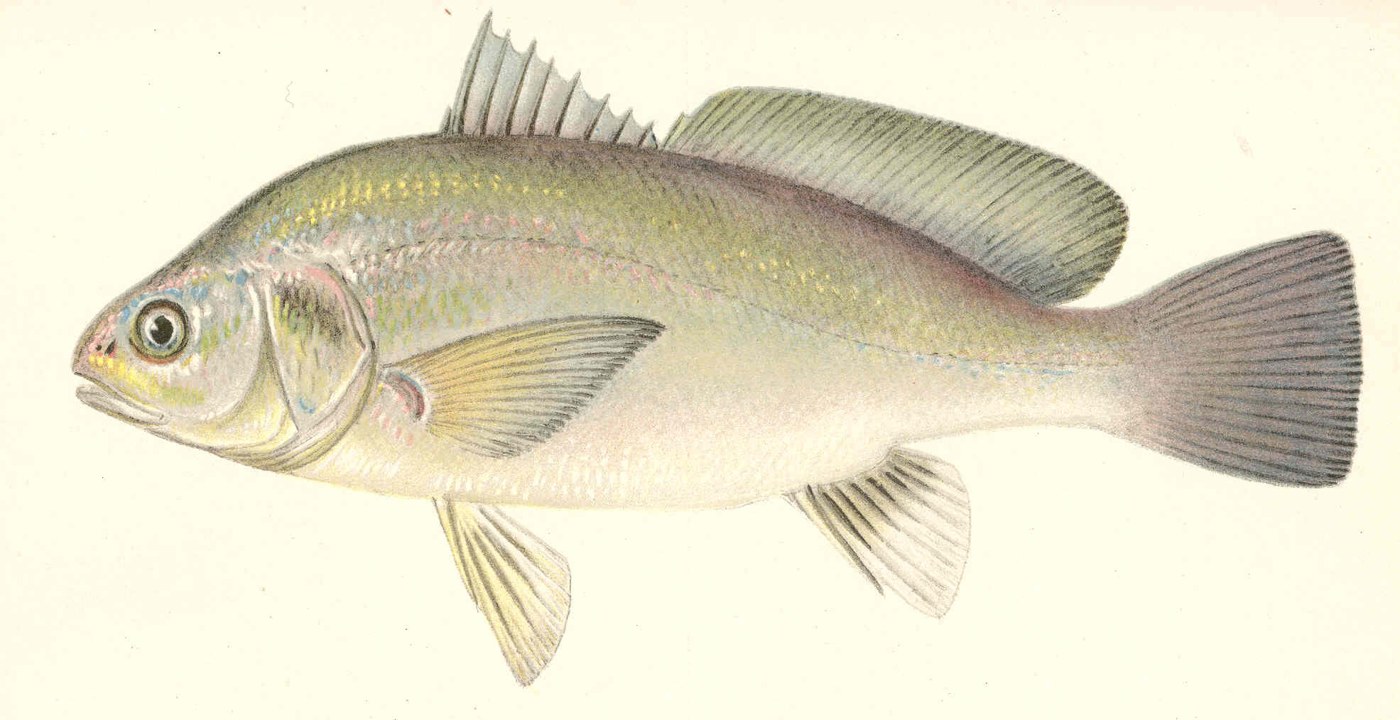
Freshwater drum reward an angler who can keep a modest bait close to a changing bottom. At Lewisville Lake, that means looking for a fishable meeting of firm ground, softer sediment and reachable depth, then learning whether the bait is actually resting there. A long cast into unknown snags is less useful than a short cast you can repeat and interpret.
This is a practical bank-fishing plan for late autumn and the approach to winter, not a report of current catches or a claim that November is the lake's peak drum month. The named access points and species occurrence come from official records. The rig dimensions and search intervals below are starting suggestions to adjust to the bank, wind and bites.
Know which drum you are seeking
Freshwater drum, Aplodinotus grunniens, are deep-bodied, silvery fish with a long dorsal fin divided into spiny and soft sections. They lack the characteristic tail-base spot of red drum. The local names gaspergou and gou refer to this freshwater species; the nickname sheepshead does not make it the striped marine fish of that name.
The species occupies a broad North American range and occurs widely in Texas. Lewisville's official records include freshwater drum, establishing a real local target rather than assuming presence from a map. Those historical records do not establish today's abundance, size distribution or a reliable fishing location.
Drum feed near the bed on immature insects, crayfish and fish, with molluscs also available to their crushing throat teeth. A worm offers a compact animal bait; a short soft plastic can suggest mobile prey. Neither requires you to assert that a particular Lewisville bank has a documented concentration of mussels or crayfish.
Choose accessible water before choosing distance
Lewisville lies on the Elm Fork of the Trinity River in Denton County. Its normal description is stained water, but visibility and water level vary. The public-access directory includes Lewisville City Park, Tower Bay and other facilities. Start with a currently open, permitted bank there, confirming park hours and any temporary restrictions. A listed launch does not mean every adjacent shoreline or private dock is available to fish.
Walk the permitted bank in daylight. Look for a clear landing space, a gradual point or a visible change from rock to finer bottom. Avoid launching lanes, swimming areas and banks where a hooked fish could only be dragged over sharp riprap. A shoreline that allows several safe casting angles gives you more information than a single cramped opening.
Use the first few casts to map the reachable bed. A sinker that taps distinctly may be crossing firm material; a soft, dragging resistance suggests mud or vegetation. Repeated hard stops suggest that the route is too snaggy for a bottom bait. These are clues, not a precise substrate survey. Note how long the rig takes to settle and where resistance changes.
As water cools, test a nearby deeper edge as well as the shallow flat. A calm afternoon can be easier to fish accurately than a windy dawn. Do not treat a weather front, moon phase or exact clock time as a guaranteed feeding trigger. Your most useful evidence is a bite at a known depth and distance.
An outfit that shows the bottom
A 6½–7½-foot medium-light or medium spinning rod with a forgiving tip, a 2500–3000 reel and 8–12-pound nylon is a practical starting outfit for open banks. If using 10–15-pound braid, add roughly 1–1½ metres of 10–15-pound abrasion-resistant leader. Choose the stronger end around rocks, but move away from severe cover rather than expecting light tackle to extract a fish from it.
Check the rod's casting rating against the complete baited rig. A soft tip helps reveal small taps; sufficient reserve power helps turn a drum before it reaches a snag. Set the drag to give line under a firm pull, and keep a landing net within reach. Thin line improves contact but offers little margin once scraped across a sharp edge.
Carry a small selection of ¼–½-ounce running sinkers, size 4–2 single hooks, swivels, beads, and 1/16–1/8-ounce jigheads. Add a few 2–3-inch grubs or minnow-shaped plastics. These weights are trial ranges for sheltered water, not instructions to force a light rig through every wind.
Rig one: a running worm bait
Slide a smooth-bore sinker onto the mainline, add a bead to protect the knot, and tie on a small swivel. Tie 30–50 centimetres of 8–12-pound hooklength to the other end, finishing with a size 4 or 2 single bait hook. Thread a short worm section onto the bend and shank while leaving the point clear. Avoid a bulky ball that masks the hook.
The sinker rests on the bottom while the line can slide through it. The short hooklength keeps the worm near the bed and limits tangling. Start with the lightest weight that settles and stays reasonably still. If every ripple moves it across your intended lane, increase one size or shorten the cast rather than accepting a constantly wandering bait.
Make a gentle cast beyond the near edge of your chosen patch. Let the sinker settle, close the bail, and retrieve slack until the tip just begins to load. Rest the rod where you can watch it continuously. Excess tension can drag the bait into a crack; a huge slack bow hides bites.
Distinguish an isolated vibration from purposeful movement. A persistent pull or a line that steadily slackens deserves attention. Wind down to contact and lift smoothly with this conventional hook. Do not leave a biting fish to swallow the worm while waiting for a dramatic run. If the hook returns bare after repeated tiny taps, shorten the worm and check the point before changing location.
Rig two: a compact bottom-search jig
Tie a 1/16–1/8-ounce jighead with a size 4–1 hook to the leader, matching hook length to the plastic. Push the hook centrally through the nose, bring it out at the measured point, and slide the body straight to the head. A crooked plastic spirals and wastes the slow, controlled presentation you want.
Choose a modest brown or olive body as one starting option, and a lighter pearl body as a comparison when visibility is poor. Colour is a test of visibility and response, not a rule that drum always prefer a particular shade. A small profile and a working depth near the bed matter more than cycling through a full box.
Cast diagonally across a clean patch, allow the jig to touch down, then raise it with a short 10–20-centimetre lift. Retrieve only the slack and let it settle again. Add pauses of a few seconds. In very slow fishing, replace the hop with a short crawl interrupted by a lift over obstacles.
Watch the line during the fall. A premature stop, sideways movement or an unexpected weight can be a fish. Reel into contact and make a restrained upward sweep. If the jig snags on every cast, shorten the bottom pause, fish a higher path or abandon that lane. Repeatedly breaking off jigs is not a productive method of locating fish.
Match the presentation to the patch
| Reachable feature | Why test it | Starting method | Adjustment |
|---|---|---|---|
| Clear firm patch beside softer bed | A boundary to search for feeding fish | Running worm rig | Shift the cast a few metres after a quiet spell |
| Gentle slope with few snags | Several depths reachable from one bank | Small jig with brief bottom touches | Vary the countdown before changing colour |
| Clean pocket beside rock | Food and cover may be close together | Short worm cast outside the rock | Shorten hooklength if it tangles |
| Wind pushing line across the bank | Contact becomes unreliable | Shorter cast and slightly heavier sinker | Relocate if you still cannot hold the lane |
A worked ninety-minute session
Begin at an open section of Lewisville City Park or another confirmed public access, selecting the exact casting area on arrival. Spend ten minutes checking the bottom and landing route. Imagine the near lane settles quickly and feels firm, while a longer cast takes several seconds more and returns with soft sediment. These observations give you two different places to test.
Fish the worm rig near first, then at the deeper distance, allowing roughly ten minutes of attentive fishing at each. Renew damaged bait when inspecting it. A bite at the second distance is a reason to repeat that cast, not immediately to cast farther. If both lanes remain quiet, move along the legal bank to create a new angle.
Use the jig for the next search. Work three short casts at one countdown, then repeat slightly deeper if the lane permits. If the worm drew taps but the jig does not, return to the bait near the successful depth. If both methods collect debris, the important change is position or depth, not a different flavour.
For the final half hour, concentrate on the best-defined clean lane. Record approximate distance, sinker weight, bottom feel and actual bites. A blank session can still identify which banks allow a controllable presentation; it cannot prove that the lake lacks drum.
Rules, handling and the return trip
Texas Parks and Wildlife requires the appropriate fishing licence and freshwater endorsement unless an exemption applies. Its current statewide rules give unlisted freshwater species no statewide bag or length limit; check the linked Lewisville exceptions and current advisories before retaining drum. A permissive limit is not a reason to keep more than you can use. Follow the lake's zebra-mussel clean, drain and dry requirements, including bait containers.
Land fish in a net, support the body with wet hands and remove the hook promptly. Do not lift a fish by the line over rocks. Leave before worsening wind or a closing gate compromises the return, and finish by checking the final metre of leader: the abrasion found there is useful information for the next visit.