Plan a yellowfin trip with room for the ocean to disagree
November and December are useful months to investigate a yellowfin tuna charter from Los Cabos, at the southern end of Mexico's Baja California peninsula. The destination tourism board places yellowfin within a broad September–January fishing window. That is seasonal tourism guidance, not a forecast for a particular boat or date. This article prepares a visitor for a realistic offshore day in late 2026; it does not report a recent catch or promise that a distant school will be reachable.
Choose the actual departure harbour before booking accommodation or transport. Cabo San Lucas and the San José del Cabo area are different starting points, and a boat's intended fishing ground may change with conditions. Ask the operator to explain the likely travel time, fishing time and fallback plan. A price described simply as a full day does not answer those questions.
For a first tuna trip, a competent local crew and a manageable objective matter more than the ambition to catch a record fish. Explain your experience honestly. Agree whether you want to learn live-bait presentation, use supplied trolling tackle or spend time casting if suitable fish appear. A mixed group should agree its priorities before the boat leaves.
Identify the species and the limits of a seasonal guide
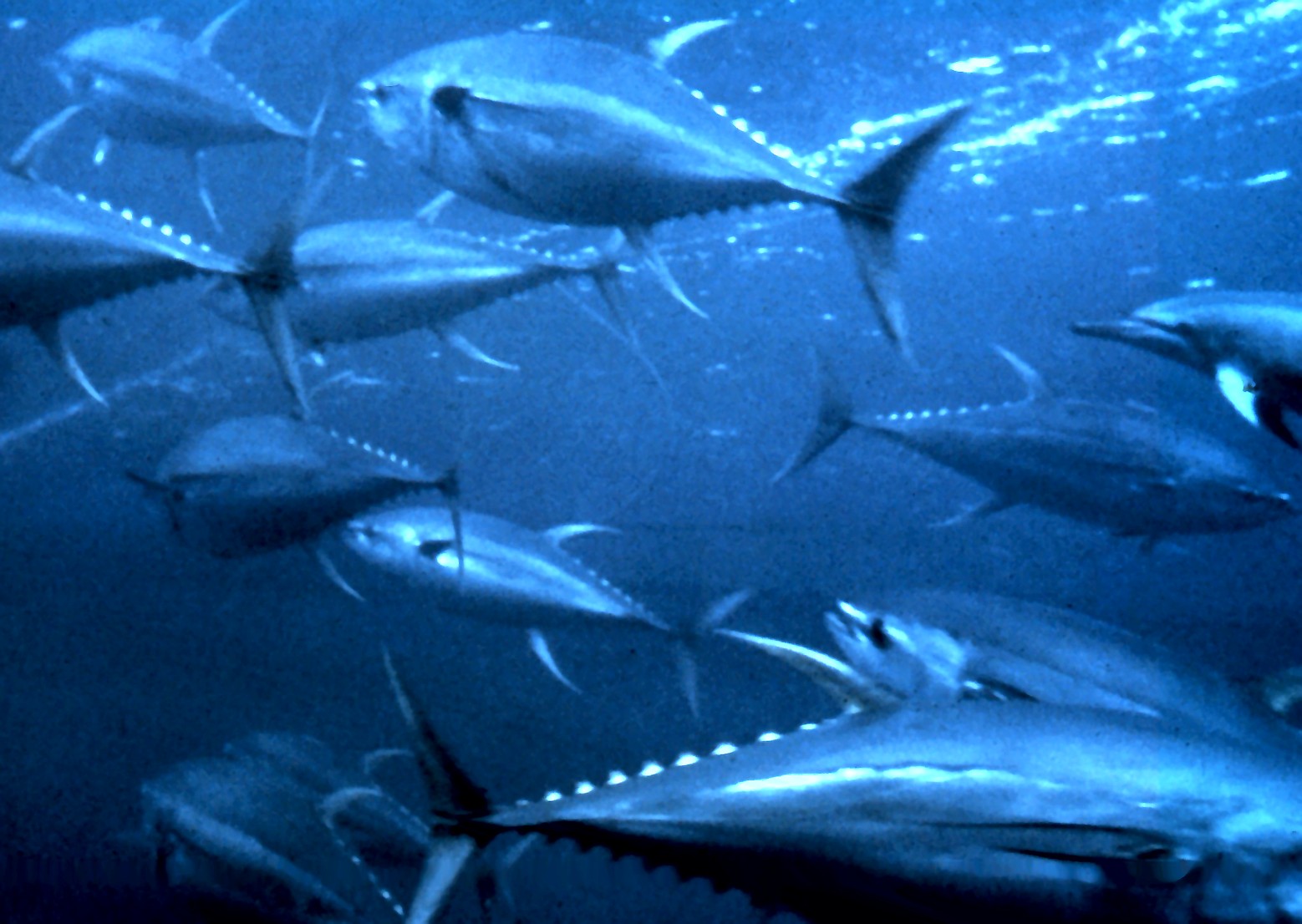
Yellowfin tuna are Thunnus albacares. NOAA's species account describes a streamlined body, dark upper surface, yellow fins and finlets, and conspicuously extended rear fins in adults. Small tuna and poorly lit photographs can be harder to identify. Let the crew make a careful identification before a retention decision; a flash of yellow or a generic tuna shape is not enough by itself.
The same biological account describes a highly mobile fish associated with warm ocean water, prey concentrations and sometimes floating material or other marine animals. Those associations help explain why a skipper searches, but none guarantees a bite. A patch of debris can be empty, a bird aggregation can disperse, and visible tuna may ignore the available bait.
Do not turn the seasonal window into a fixed itinerary to a named bank. Ask for recent observations from the operator close to departure and distinguish those observations from advertising photographs. If the available grounds are too distant or rough for the agreed trip, a shorter alternative or cancellation can be the sound decision.
Check the Mexican rules, including the amended standard
Rules were checked on 23 October 2026. Mexico's official standards catalogue lists NOM-017-PESC-1994 as in force and links its adopted amendments. The amended federal text gives marine recreational anglers a general daily allowance of ten fish, with no more than five of one species; special species count differently. Yellowfin does not create a separate unlimited allowance. Confirm any additional current measures for the exact trip.
The amended text also bars sale of recreational catches and landing them as fillets. Do not agree to an onboard processing plan that would make the landing unlawful. Closed areas and protected-area conditions still apply; a recreational permit is not blanket permission to fish every offshore location.
Baja California Sur's official permit service states that fishing from a boat requires a personal, nontransferable permit. Arrange the appropriate dates for each participating angler and keep the permit available. Ask whether the operator handles the application or expects you to do so, then verify that it was actually issued.
An older summary can miss amendments. Use the adopted text linked below and the official permit service rather than a copied holiday checklist. This guide does not cover tournament regulations, cross-border transport of fish or every protected area. Resolve those separately before including them in your plans.
Book around a practical fishing day
Ask what tackle, bait, fuel, ice and fish handling are included. Confirm the boat's capacity, toilet arrangements, shade and how the crew assists an inexperienced angler during a hard fight. These are useful questions even when a vessel looks impressive in photographs. Equipment suitable for casual coastal casting may not suit the tuna the operator expects to encounter.
Discuss weather cancellation terms and who makes the final departure decision. Ask for the meeting place in writing and allow time for transport, permits and the safety briefing. Do not schedule the boat's return so tightly against an international flight that the crew feels pressure to rush offshore or return through worsening conditions.
Agree on retention before fishing. A group that wants a modest amount for a meal has different handling needs from a group intending to retain several large fish. The legal maximum is not a target. Suitable chilling capacity and a lawful landing plan should limit what you decide to keep.
Start with tackle that matches the expected fish
For a general first-day discussion with the skipper, a conventional outfit carrying roughly 50–80 pound braid, a suitable monofilament top shot or leader and a rod rated for the intended load is a reasonable starting point. Smaller fish in clear conditions may call for a lighter presentation; much larger fish may require substantially heavier specialist equipment. These are editorial setup ranges, not a claim that one outfit handles every Los Cabos tuna.
A leader around 40–80 pounds and an appropriately sized hook might suit some ordinary bait presentations. Let the crew match strength and hook size to the actual bait, fish and tackle. A nominal 2/0–6/0 circle-hook range is a discussion point rather than a universal prescription, because hook dimensions vary among manufacturers.
Have the crew demonstrate drag settings under a controlled load and explain which lever or knob you should use. Learn the difference between free spool and the fighting position before a bait goes overboard. Do not increase drag simply because a fish is taking line; first follow the skipper's instructions and assess the angle, available line and other boats.
A fighting belt or harness needs proper fit and a release procedure. Never attach yourself to unfamiliar equipment without understanding how to get free. Keep loose straps, clothing and fingers away from a turning spool and moving line. Let crew members handle leaders and landing tools.
Make the first live-bait presentation simple
If bait fishing is the agreed method, start with one active presentation and learn how the bait behaves. Let the crew select a suitable bait and demonstrate a hooking position that keeps it swimming. Handle it briefly with wet hands or the boat's appropriate transfer equipment. Repeatedly dropping or squeezing bait can undermine a careful rig.
Before lowering or casting, identify where the other lines run. Ask which side of the boat to use and how to move if the bait swims across another angler. A short, controlled placement is better than a long cast that injures the bait or tangles several outfits.
Feed line under control so the bait can move without creating loose coils around the reel or your feet. Watch the line's direction and listen to the crew. With a circle hook, the usual approach is to let pressure build steadily rather than deliver a violent strike; follow the demonstration for the actual rig.
If the bait becomes tired or fouled, retrieve and reassess. Do not leave it out indefinitely while assuming depth or distance alone will produce a tuna. A fresh, properly presented bait and a clean line path give the crew something useful to work with, even when the fish do not cooperate.
Treat trolling, casting and jigging as different jobs
Trolling can help a boat search, but the spread belongs to the crew's coordinated plan. Keep clear of moving tackle and know which rod you should take after a strike. Do not seize a second rod or change a lure's position without checking what the crew is doing.
For casting opportunities, a rod and reel capable of managing the intended tuna are more important than casting distance alone. Compact metal lures or small stickbaits around 40–80 grams can be a starting discussion for modest surface presentations, provided the rod rating and conditions suit them. Larger fish or different bait sizes may demand a completely different setup.
Jigging adds depth, current and physical effort. Ask whether the operator actually expects a useful jigging opportunity and has suitable tackle. Carrying a few heavy jigs does not establish that they can be worked safely or effectively on that trip. If the crew recommends staying with bait, learn that method rather than trying to force every technique into one day.
Manage the fight without creating a deck emergency
Keep steady pressure and use controlled movements that match the rod's working range. Avoid lifting the rod into an extreme angle while the fish is close below the boat. Recover line when the tackle allows it, and tell the crew promptly if you are tiring, losing balance or unsure what to do.
Move around the boat only as directed, watching rails, cleats and other anglers. Never wrap line or leader around a hand. If another fish crosses your line, stop improvising and let the crew coordinate the movement. A brief, clear instruction is more valuable than several people pulling in opposite directions.
Before the fish reaches the boat, confirm whether it is to be retained or released. Keep cameras and coolers out of the landing space. The crew should select a handling method consistent with that decision; a photograph does not justify an avoidable injury or a prolonged struggle at the surface.
Weather and access outrank a tide prediction
An offshore tuna day is not organized like a beach session around one stage of the tide. Local current, wind, swell, visibility and the distance to the working area all affect the plan. Ask the skipper how the expected return conditions differ from the calm water visible at the dock.
SEMAR's port-status service provides an official route to operational information and the relevant port captaincy. Check it close to departure and follow current port restrictions. A screenshot from booking day is not evidence that the port will be open weeks later. This article makes no claim about a future day's operational status.
Wear appropriate sun protection, bring drinking water and keep essential items secured. Take any personal health or motion-sickness questions to a qualified professional before the trip. Know where the lifejackets are and follow the crew's safety briefing. If conditions worsen, accept an early return without treating it as a failure to meet a catch promise.
A useful day ends with reliable notes
The evening before, confirm the meeting point, permit dates, forecast, port advice and retention plan. At the dock, check the supplied outfit, learn the controls and agree how the crew will signal a bite or a move. Begin with one method and concentrate on presenting it well.
During the day, record definite observations: travel time, bait used, approximate presentation depth when known, and what the crew actually confirmed. Do not turn a distant splash into a verified school or estimate a fish's weight from excitement. After landing, follow the lawful processing arrangements and remove your line, packaging and other waste.
The cover is a historical NOAA National Undersea Research Program photograph of identified yellowfin in the Gulf Stream. Its central fish remains complete, and the image is used as species context, not evidence of a Los Cabos catch. This AI-assisted guide combines verified source material with clearly identified editorial tackle and trip-planning suggestions. Recheck the rules and conditions for your actual departure.