
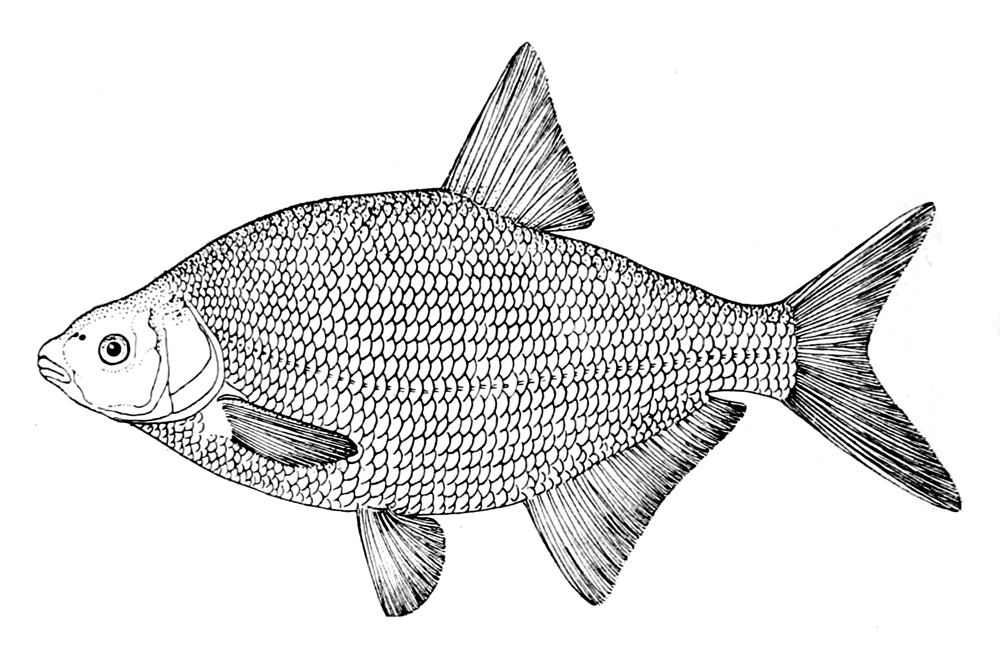
Bream fishing on a large lough begins with placing food and hookbait in the same small area. Casting farther is useful only if it reaches a better feature and remains repeatable. At Lough Gowna, start by finding a safe shore position, a clean patch of bottom and a distance you can hit repeatedly; then choose between a feeder that carries bait to that patch and a float that keeps the presentation visible.
Dernaferst provides a documented access starting point in the Gowna system. The following plan is for a bank session, with a particular emphasis on adjusting effort and feed as autumn gives way to colder water. It is not a current catch report. Tackle sizes, feed quantities and trial times are practical starting suggestions to refine from what you observe.
The fish and its food
Common bream occurs across much of western and central Europe into Russia and was introduced to Ireland. In Irish waters it uses lakes, canals and slower rivers rather than every stream. Common bream, Abramis brama, has a deep, flattened body and a long anal fin. Young fish are silver; larger adults often become bronze. Dark fins and the downward-projecting mouth help distinguish a bream, but colour alone is unreliable. Roach-bream hybrids occur in Irish waters and can make an apparently straightforward identification less certain.
Avoid labelling every broad silver fish a pure bream. Roach and hybrids also take the same small baits, so use the species references when identification matters. A mixed catch is useful information about the swim, not evidence that each fish is the featured species.
Bream feed on bottom-dwelling invertebrates and gather in shoals. Their protruding mouth suits picking food from the bed. That is the reason for measuring depth, presenting bait at bottom level and building a compact feeding area. It does not mean burying the hookbait in soft silt or covering it with a large pile of feed.
Irish bream are generally more active in warmer months. A late-autumn or winter outing should therefore begin with modest expectations and little feed. A mild spell does not guarantee a shoal will move onto your chosen bank, and an impressive summer account cannot establish present-day activity.
Gowna access and the first search
Lough Gowna lies around the upper Erne system near the Cavan–Longford border. The published angling guide identifies Dernaferst parking between the north and south lakes and fishing shores on both sides. Church Lake and Cloone are other documented bank-fishing access areas in the system.
The venue description dates from 2018. Use it to select an access area, then confirm the present condition of paths, parking, fishing positions and any permissions or events before setting up. Peg counts in an older guide are not a promise that every position is usable today. High water can remove a comfortable bank shelf.
At Dernaferst, compare the two sides for wind exposure and a safe landing position. Choose a stretch where you can cast without crossing another angler and bring a fish to the net without stepping down an unstable bank. A sheltered position with controllable tackle is often a better learning swim than an exposed one that forces constant line correction.
Make exploratory casts with an empty feeder or a suitable plummet, using a modest distance first. Note the sink time and how the tackle feels when lifted. A clean release is more useful than repeated weed or heavy silt on the hooklength. This is a rough assessment, not a substitute for measured depth or a map.
Build a running feeder rig
For a manageable starting outfit, use an 11–12 ft feeder rod rated for the total casting load, a 3000–4000 fixed-spool reel and 6–8 lb monofilament. A 20–40 g empty cage feeder often offers a useful trial range on sheltered water, but its filled weight must remain within the rod's rating. Increase weight only when wind or undertow prevents the feeder staying in place.
Pass the main line through a free-running feeder link, add a protective bead and tie to a small swivel. Attach a 45–75 cm hooklength of roughly 4–6 lb line to the other eye, finishing with a size 12–16 hook. The feeder must run freely and be able to shed from the main line if it breaks; do not trap it between fixed stops.
The lighter hooklength gives a deliberate weak point and can help a small bait move naturally, but choose abrasion resistance to suit the bottom. Inspect it after retrieving through rough ground. If it is repeatedly damaged, move the rig onto cleaner ground rather than accepting regular breakages as normal.
Start with two or three maggots, a caster or a small worm section, matching hook size to the bait. A larger size 12 may suit a worm piece; a size 16 can suit a smaller maggot offering. Leave the point exposed. Use locally obtained bait, and carry it cool enough to remain in good condition.
Put the feeder in the same place
Choose a fixed landmark on the opposite shore and a comfortable distance. Use a line marker or carefully managed reel clip to repeat it, cushioning the cast with the rod as it reaches range. Release line from a clip promptly when a fish needs to run; never leave a fish locked against a hard stop.
Dampen groundbait gradually so it survives the cast but releases from the cage after reaching the bottom. Test a loaded feeder in shallow water where possible. A solid plug that returns unchanged delivers little useful feed; a mixture that explodes at the surface spreads the bait far from the hook.
Begin with a few small feeder loads rather than a large initial carpet of bait. In cold conditions, use a small feeder with little loose food and lengthen the interval between casts. Increase feed only when repeated bites suggest fish are actually arriving and feeding.
After the cast, let the feeder settle, sink the line and draw just enough tension into the quivertip to show movement. Excessive tightening can pull the feeder away from the feed patch. Watch for a progressive pull or a deliberate drop-back, when the tip straightens as a fish moves towards you. Reel up slack and lift smoothly rather than striking violently against the feeder's weight.
Float fishing when the bank allows it
A 12–13 ft float rod, 2500–3000 reel and 4–6 lb monofilament make a useful alternative for close, sheltered water. Use a waggler suited to approximately 2–4 g of loading, fixed by its bottom attachment. Place most shot near the float, with a few smaller shot down the line and the lightest near a 30–45 cm hooklength.
Plumb the depth with the actual rig before adding feed. Start with the hookbait touching bottom or lying a few centimetres overdepth. If wind tows the float rapidly, sink the line and try a little more overdepth; if that simply drags the hook into weed, change position or return to the feeder.
Cast just beyond the fed patch, sink the rod tip briefly and draw the float back into place. Introduce small amounts of feed accurately rather than throwing loose bait over a broad area. A float lets you see a slow sink, sideways movement or lift as the weight below it changes.
Lift smoothly into a sustained bite. If the bait returns crushed without a visible indication, shorten the distance between the final small shot and the hook or reduce the bait size. If every wave buries the tip, choose a more visible float and rebalance it rather than striking repeatedly at wave action.
Match method to the actual swim
| Conditions observed | Likely fishing problem | Starting method | Presentation | Adjustment |
|---|---|---|---|---|
| Sheltered close shore with clean bottom | Holding bait precisely at bed level | Plumbed waggler | Small hookbait just touching bottom | Add slight overdepth if it tows |
| Fishable distance beyond comfortable float control | Delivering feed beside the hook | Running cage feeder | Repeated casts to one landmark | Reduce range before increasing weight |
| Cold water and few indications | Too much food for limited activity | Small feeder | Sparse feed and longer waits | Try a smaller hookbait |
| Repeated weed or silt on retrieval | Hookbait obscured or rig dragging | Repositioned feeder or float | Fish a cleaner lane | Change location before adding feed |
Artificial lures are not the principal method in this bream plan. A natural-bait feeder and a float rig address the fish's bottom-feeding behaviour more directly. Switching to a jig would create a different mixed-species search, rather than being a necessary next step for bream.
A worked half-day at Dernaferst
An illustrative session starts with the 12 ft feeder rod, 8 lb main line, 5 lb hooklength, size 14 hook and a 30 g cage. First find a clean patch at a comfortable range, then test the groundbait's release. Introduce three small loads to the same line and begin with two maggots.
For the first thirty minutes, focus on whether the rig remains where it lands and whether the bait returns clean. If the feeder creeps, shorten the line angle or increase weight slightly within the rod rating. If the hooklength tangles, smooth the casting stroke and shorten it modestly; more feed will not repair a tangled presentation.
After a bite, repeat the same distance and bait before changing anything. Several fish in succession justify a little more feed. A single fish followed by silence does not automatically justify doubling it. If small roach or hybrids intercept every bait, try a slightly larger worm section or one grain of sweetcorn on an appropriately sized hook, while recognising that bait size does not guarantee species selection.
After a genuinely quiet hour with clean, controlled presentations, test a nearby distance or the sheltered float line. Keep the change deliberate: a new distance should have its own clear landmark and modest feed. Avoid spreading several large bait beds and then being unable to tell which produced a response.
Brief rules and handling note
Checked 2 November 2026: Inland Fisheries Ireland states that coarse fishing generally needs no state licence, but local permission or permits may be required. National rules allow at most two rods, prohibit live fish as bait and prohibit killing coarse fish over 25 cm fork length; the daily kill limit for smaller coarse fish is four. This plan favours release. Consult the linked rules before travel, use local bait suppliers and observe access notices. Net fish, support them with wet hands and release them promptly; do not lay a catch on dry ground for a group photograph.