
Put the bait where you can read it
Look for a strip of gravel where the current carries food but still lets you hold or guide a bait close to bottom. A running feeder can keep a small offering in that strip; a trotting float can search along it. Choose between them by how the water behaves, rather than setting out to use one method everywhere.
This guide concerns common barbel on the lower Azergues in France's Rhône department. It is a practical late-autumn plan for legal, accessible second-category reaches, not a report of current catches. The dimensions, weights and timings below are starting suggestions to adjust to the swim, tackle rating and observed flow.
Know the fish and the reach
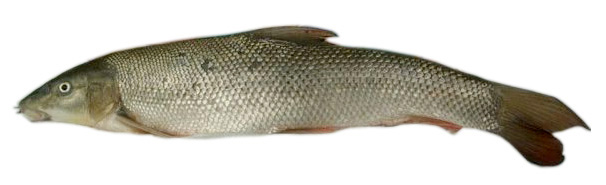
Common barbel, Barbus barbus, has a long, powerful body, an underslung mouth with thick lips and four barbels. The southern barbel, Barbus meridionalis, is generally smaller and more mottled, with a longer anal fin and no serrations on its first stout dorsal ray. Size alone does not identify either species. Check unfamiliar fish carefully without prolonged handling.
Common barbel is widespread through much of mainland France. The Rhône federation's historical distribution atlas records it in the lower Azergues, lower Brévenne and other larger local rivers. That establishes local occurrence, not today's abundance or a guaranteed fishing mark.
For trip planning, start with the Lozanne–L'Arbresle association's documented Azergues fishery and the downstream valley toward Chazay and Anse. The local access listing distinguishes the first-category Azergues above the Brévenne confluence from the second-category river below it. This distinction matters for a November outing: do not transfer the downstream plan to an upstream trout reach simply because it looks attractive.
Use the federation's basin map and the association to confirm the exact bank, fishing rights, parking and any reserve before travelling. A road beside the river does not establish a public right to fish from every adjoining field. One particularly important exclusion for the bait rigs below is the fly-only no-kill reach between the Civrieux-d'Azergues pond and the former SIEVA waterworks dam at the Civrieux–Lozanne boundary.
Read bottom and current together
Barbel feed on bottom-dwelling invertebrates and can search among gravel and sand with their downward-facing mouth. Think of insect larvae, worms and other small bottom organisms rather than a fish that must chase a fast lure. Their schooling behaviour means an empty presentation lane can remain empty even when suitable fish are somewhere nearby.
Walk the permitted bank before feeding. First inspect the near-bank seam, then the edge of the main current, and finally a deeper glide or pool entrance. Look for a change in surface speed and a practical landing place. Cast short initially: there is little value in feeding a distant channel that a drifting feeder cannot hold.
A riffle is shallow, broken water; a run below it is usually more uniform and offers a longer presentation. Test the run's edge before its fastest centre. In a pool, distinguish the moving entrance from the quiet bowl. The first may carry food across a firm bed; the second may collect soft sediment and leaves. Neither appearance alone proves barbel are present.
An eddy reverses direction and can return your float toward you. Fish the stable boundary before dropping into its rotating centre. Undercut banks, wood and rock can offer shelter, but put the bait beside a clear exit lane rather than into branches. Weed edges can catch drifting debris; move to the clean side if the hook returns covered. At a tributary mouth, inspect the mixing seam from a permitted bank without assuming it is always a feeding hotspot.
Season, light and a manageable depth
For a first search, compare water roughly 0.8–2 m deep with a slightly deeper glide nearby, where these features exist. These are working depths for presentation, not a measured depth map of the Azergues. Plumb the float lane or explore with a light weight before committing feed.
In cooling weather, test the more sheltered, deeper edge as well as the obvious fast run. That is a search hypothesis, not a promise that every barbel has moved into a winter pool. A modest change in flow may make a previously awkward lane fishable; a rising flood full of branches makes this bank plan unsuitable.
A daylight session lets you watch debris, line angle and the bottom where visible. There is no verified universal afternoon bite window here. Keep a note of water colour, changes in level and which lane produced a touch. If you return, compare similar conditions rather than assigning success to the clock alone.
Rig one: a free-running cage feeder
Start with a 3.3–3.6 m feeder rod rated to cast the loaded feeder, commonly in the 40–100 g range, and a 3000–4000 reel with 8–12 lb monofilament. Choose a quivertip firm enough to show a stable curve in the flow.
Thread a free-running feeder link onto the main line, then a protective bead and swivel. Attach a 60–100 cm hooklength of 6–10 lb mono and a strong size 10–8 hook. Clip on a 30–60 g cage feeder as an initial range, counting groundbait in the total casting load. The feeder must slide freely; do not trap it between fixed stops. Check knots and the hooklength after contact with rough stones.
Put a small bunch of maggots or a short worm section on the hook, leaving the point clear. Use a modest amount of damp groundbait in the cage, with a few matching loose offerings. Aim for a feeder that releases its contents on the bed rather than returning tightly packed. Start with small deliveries: feeding heavily before locating fish can spread attention over an unproductive patch.
Cast slightly downstream, perhaps 20–40 degrees below straight across, toward a fixed bank reference. Let the feeder settle, then gently take up slack until the tip bends without pulling the feeder out of position. Raise or lower the rod to reduce the line being dragged by current. The best angle depends on bank height and flow; the objective is a stationary, readable rig.
If the feeder rolls continuously, shorten the cast or choose a slower lane before simply adding weight. If it holds, allow a short settled spell and watch for a sustained pull or a sudden drop-back. Wind down and lift smoothly into contact. Do not strike violently at every single tremor: debris and line touching the bed can imitate a bite. Recast to the same reference while testing one variable at a time.
Rig two: trot a float through the lane
A float is useful when you can guide a bait along a reasonably even bed. Start with a 3.6–4.2 m float rod, a 2500–3000 reel, 6–8 lb mono and a 3–6 g river float. Use a 50–70 cm hooklength of 5–7 lb mono with a strong size 12–10 hook. This lighter arrangement suits open water; use the feeder outfit or leave the swim if a hooked fish would immediately reach heavy snags.
Set most of the split shot around 50 cm above the hook, with one or two small droppers beneath it. Keep the shot on the main line above the hooklength connection where practical. Plumb several points in the drift and begin with the bait just above bottom. Add depth a few centimetres at a time if the float runs cleanly.
Cast slightly upstream of the feeding lane and allow the float to settle before it reaches the target. Lift and mend loose line upstream so it does not drag the float sideways. Briefly restrain the float to slow the bait, then release it; excessive holding-back can lift the offering well away from bottom. A small pinch of maggots upstream can accompany successive drifts, but stop adding feed if nothing responds.
Strike with a controlled upward lift when the float stops unnaturally, dips or moves against the flow. Repeated dips at exactly the same point usually justify checking depth and bottom obstruction before assuming missed bites. Shorten the depth or move the lane slightly rather than dragging the hook through the same stone gap.
Match the method to what happens
| Structure or condition | Why inspect it | Starting method | Presentation | Change or caveat |
|---|---|---|---|---|
| Firm run below a riffle | Moving water carries small food across the bed | Running feeder | Hold a small bait on the slower edge | Shorten the cast if the feeder rolls |
| Even glide with open bank | A float can search a long bottom lane | Trotting float | Guide the bait just clear of bottom | Alter depth before adding more feed |
| Deep pool entrance | Offers a transition between current and shelter | Feeder | Test the moving entrance separately from the bowl | Leaves or soft silt may foul the hook |
| Eddy beside faster water | A defined boundary is easier to read than rotating water | Float on the seam | Keep the drift outside the reverse flow | Move if line repeatedly circles back |
| Wood, undercut or weed edge | Shelter may sit beside a feeding lane | Feeder outside cover | Keep a clear route for playing the fish | Leave a swim that cannot be fished and landed safely |
Artificial lures are a secondary option for this bottom-feeding target. Where fly tackle is permitted, an experienced angler can try a single weighted nymph on a 9–10 ft, 5–6 weight rod, a roughly 3 m tapered leader and 5–7 lb tippet. A size 10–14 nymph with a 3–4 mm bead is a starting choice. Cast upstream, allow it to sink, then track the drift with minimal slack and lift into an unexpected stop. Reduce weight if it wedges repeatedly. Olive, brown or black are modest starting colours; depth and drift deserve testing before any supposed colour rule. Check special-reach hook conditions separately.
A three-hour session you can adjust
Choose an accessible open reach outside reserves and fly-only sections. Spend the first twenty minutes walking, checking the landing route and measuring two lanes. Set the feeder with a 40 g cage, 80 cm hooklength, size 10 hook and a small worm piece. Fish the nearer clean run first, using restrained feed and a consistent casting reference.
After several clean presentations without a touch, change the distance or move to the pool entrance. If the feeder repeatedly snags, retrieve promptly and shift away from the obstruction; sacrificing tackle is not a way to search. If fish touch the bait but do not connect, check the point, reduce bait bulk and try a slightly longer hooklength.
Use the middle hour to trot the even glide with a 4 g float, size 12 hook and maggots. Compare a free drift with brief restraint. If the float rig catches bottom every pass, reduce depth and feed less while you locate a clean track. Return to the better lane for the final hour rather than changing bait, depth and position simultaneously.
Local rules and a short handling note
For 2026, the Rhône prefecture's annual notice gives a year-round general season in second-category waters, subject to species exceptions, reserves and special reaches. Obtain the appropriate fishing card and association rights. The Civrieux–Lozanne section identified above is fly-only and no-kill, so these bait rigs do not apply there. The federation limits ordinary fishing hours to half an hour before sunrise through half an hour after sunset; night-carp permissions do not extend to barbel. Consult the linked current rules again for a 2027 visit.
Fish from stable ground and leave rising or debris-laden water. Use a landing net, wet hands and minimal air exposure. Support a released barbel in the water facing a gentle current until it can swim away strongly; do not drag it backwards through the water or release it exhausted into the fastest flow.