
Put the lure beside cover, then keep it there
Common snakehead fishing rewards a controlled pass along a small piece of cover more than an impressive cast across empty water. At Lower Peirce, begin with the margin you can legally reach: a change in bank angle, an accessible vegetation edge or a clear lane beside submerged debris. A lure moving slowly through that lane gives an ambush predator time to turn and intercept it. A lure skimming far above the cover may never enter the same feeding space.
The following tackle sizes, depths and timings are practical starting suggestions, not measured Lower Peirce catch patterns. The location, species record and rules come from the sources below; the worked session is an example of how to test presentations. There is no verified special November or December bite window. Plan around current water level, visibility, safe access and your ability to keep the lure at a useful depth.
Know the fish and the limits of a location record
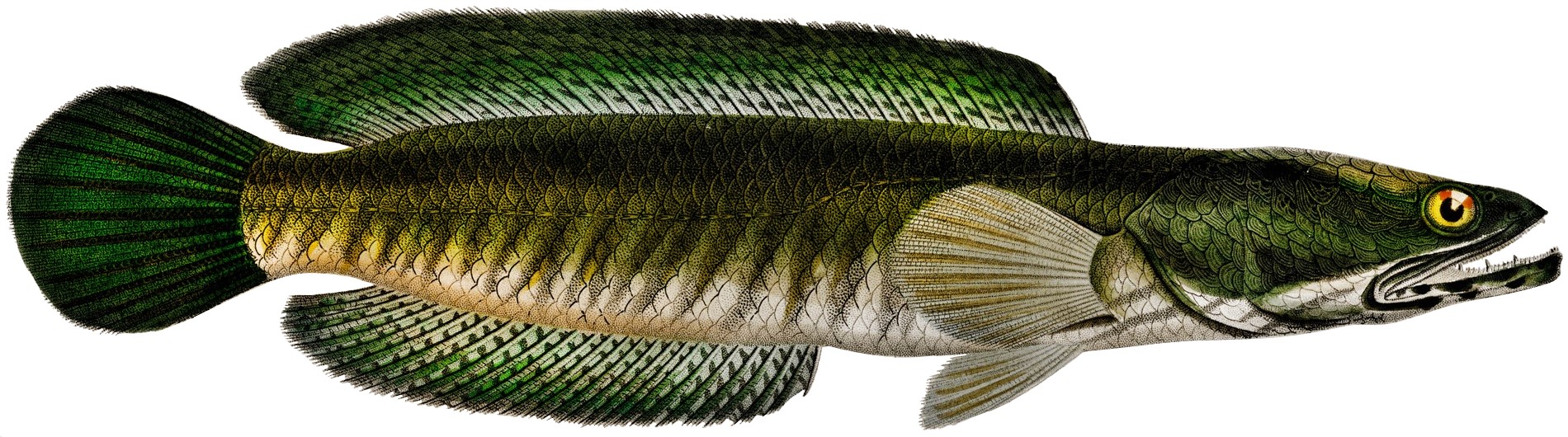
The target is common snakehead, Channa striata, also called haruan or aruan, native to Singapore and much of Southeast Asia. Adults have an elongated body, a flattened head, a long dorsal fin and dark, angled markings on the sides. Giant snakehead, Channa micropeltes or toman, is a different species. Its adult colour pattern tends toward broad horizontal contrast rather than the common snakehead's angled flank markings. Do not identify a fish from size alone.
Common snakeheads use slow or still freshwater and ambush small fish, crustaceans, insects and frogs around cover. That mixed diet supports both a small swimming-fish imitation and a slower, less mobile soft bait. It does not establish which prey is abundant at a particular fishing station.
A published observation by Teo and Yeo records an adult with fry at Lower Peirce on 9 July 2021, in very shallow vegetation beneath a boardwalk. This establishes historical presence, not a current concentration or a legal casting position. Do not seek out that boardwalk to fish, and leave an adult attending a fry group undisturbed. The useful lesson is to inspect shallow margins before assuming the fish must be in deep open water.
Start from the designated zone
Lower Peirce Reservoir Park is reached from Old Upper Thomson Road; NParks lists Bright Hill as the nearby MRT station and a car park on Old Upper Thomson Road. Use the current PUB fishing map and on-site signs to locate the designated zone. Park access and fishing permission are separate: a path beside attractive water does not make that water fishable.
Before unpacking, identify a clear casting space and a landing position inside the permitted area. Look along the near edge before walking close to it. If the bank is shaded, inspect the light-dark boundary. If vegetation is present, find the outer edge or an opening that lets a hooked fish come back without crossing a solid mat. Where the edge is bare, compare a shallow shelf with the first visible or detectable drop.
Do not assume a reservoir has a strong river-like current. Wind can push your line sideways while the lure sinks almost vertically. Watch the line and the lure separately. After rain, a change in colour may reduce visibility; it is a reason to test a slower, more noticeable presentation, not proof that fish are feeding. Thunderstorms are a reason to stop fishing.
One useful outfit
Start with a 2.0–2.3 m medium-power spinning rod rated for roughly 7–28 g, a 2500–3000 size reel and 15–20 lb braid. Join 60–100 cm of 20–30 lb abrasion-resistant leader with a carefully tied braid-to-leader knot. The leader helps around rough cover, but is not a guarantee against teeth. Inspect it after every fish, strike or scrape.
Choose a rod with enough backbone to steer a fish away from an edge while retaining a tip that casts a lightly weighted lure. A very stiff rod can throw a small soft bait poorly; an ultralight rod gives little control when the fish turns toward submerged branches. Match the total lure weight, including hook and sinker, to the rod rating.
Set the drag by pulling line against the bent rod in a safe direction. It should release under a strong pull while allowing you to apply steady pressure. Locking it solid transfers the failure point to the knot, hook or rod. Carry long-nose pliers and a landing net with a handle suited to the bank height.
Rig one: a lightly weighted weedless soft bait
Use a 7–10 cm soft minnow or straight-tail bait on a 2/0–3/0 offset worm hook, matching the hook gap to the bait's thickness. Thread the hook point into the nose for a short distance, bring it out underneath, slide the bait to the offset shoulder and rotate it. Measure where the bend meets the body, pass the point through and rest it just beneath the skin. The bait should lie straight, with enough space to collapse and expose the point.
For a shallow edge, begin unweighted or with a 2–4 g bullet weight sliding on the leader ahead of the hook. Add a small protective bead if needed to keep the weight off the knot. Avoid a heavy fixed weight until you know it is necessary: extra mass makes the lure fall quickly into gaps rather than glide past them.
Cast obliquely along the edge, approximately 20–45 degrees to the bank where space permits. Let the bait settle on a controlled slack line, then move it with two short rod-tip draws and a pause. Start with pauses of two to four seconds. These are test intervals, not a claim about a snakehead's preferred rhythm. Keep enough contact to notice the line twitching or moving sideways without dragging the lure continuously.
When a fish takes, reel down until you feel its weight, then make a firm controlled sweep. Do not strike at a splash alone. A weedless hook must clear the soft body before it can penetrate, so an oversized, stiff bait on a narrow-gap hook is a common cause of missed fish.
Rig two: swim a jig through clean water
In an open lane, rig a 6–9 cm paddle-tail on a 3–7 g jighead with a hook around 1/0–2/0. Push the hook straight through the lure's centre and bring it out at the measured point on the back. A twisted bait rolls, making depth and action harder to judge.
Make a short trial cast and count the fall until the line relaxes. Repeat to distinguish bottom contact from wind-blown slack. Begin the retrieve before the head settles into debris. A slow, steady swim just above the bottom or vegetation is the first test; then compare a brief lift followed by a controlled fall.
Use the lightest head that still reaches the chosen lane. If the lure never gets down before returning to shore, add a little weight or cast farther along the edge. If it repeatedly collects weed or knocks into timber, reduce the countdown, lift the rod or return to the weedless rig. Changing from brown to chartreuse cannot fix the wrong depth.
Start with a muted brown, olive or translucent pattern in clear water. A pale or more contrasting bait is a useful comparison when visibility is reduced. Treat colour as an experiment after controlling depth and speed, not as a universal rule that bright water requires one colour and cloudy water another.
A surface alternative
Where the permitted casting lane is clear of birds and heavy overhead cover, a 5–7 cm surface walker or small hollow-bodied frog offers a different presentation. Use the manufacturer's weight rating to confirm the same rod can cast it. Work a walker with short downward taps and pauses; move a frog with small pulls that keep it near openings rather than dragging it across the whole reservoir.
Start this test when you see fish movement or when a shallow margin can be searched without snagging. Early or late light can make observation easier, but does not guarantee feeding. After a surface boil, keep the rod pointed toward the lure, recover slack and wait for solid weight before setting the hook. If fish repeatedly miss or follow, return with the slower subsurface soft bait rather than striking faster.
| Situation in the permitted zone | Likely holding reason | Starting method | Presentation | Change if ineffective |
|---|---|---|---|---|
| Sparse vegetation with clear gaps | Concealment beside a feeding lane | Weedless soft minnow | Short glides and pauses along the edge | Reduce weight or shorten the cast |
| Bare shelf beside deeper water | A change in depth worth testing | Light jig and paddle-tail | Count down, then swim above bottom | Alter countdown before colour |
| Shallow open pocket with visible movement | A fish may be using the upper layer | Small surface lure | Brief pulls, then pause | Follow with a subsurface bait |
| Debris that traps every presentation | Cover with poor retrieval access | Unweighted weedless bait outside it | Stay on the outer edge | Leave if a fish cannot be landed safely |
A worked ninety-minute session
Arrive with the PUB map saved and confirm the signs before choosing three reachable lanes. Spend the first ten minutes watching the water and checking the net position. Start with the 8 cm weedless minnow, a 2 g sliding weight and an 80 cm leader. Make short casts beside the nearest cover before extending the search.
Give each lane several genuinely different presentations: a shallow swim, a slower fall and a pause beside the outer edge. If the lure returns clean and no fish responds, test the jig in the open lane at two countdowns. Record which count contacts bottom rather than assuming a fixed metres-per-second sink rate.
After roughly half an hour without a sign, move within the designated area to a different bank shape. If you get a follow, repeat the depth once, then slow the lure or reduce its size. If you get repeated snags, change the angle and hook exposure immediately. Finish by revisiting the most promising lane with the simplest rig; do not spend the final minutes cycling randomly through every lure.
Rules and handling
PUB permits fishing only in designated areas, requires artificial bait and prohibits fly fishing. Its current maps and signs govern the session; worms, prawns and live bait are not alternatives here. Keep casts clear of pedestrians and wildlife. For a hooked snakehead, maintain controlled side pressure, net it without lifting by the leader, keep fingers away from the mouth and unhook promptly with pliers. Release carefully where appropriate, and never move fish between waters.