Start with the coast, not a promise
Namibia’s Benguela coast is cold, powerful and changeable. Galjoen live around rough reef and broken water, but a November–December visit should be framed as a prepared shore-fishing trip rather than a guaranteed peak. Wind, fog, swell, access restrictions and fish movement decide whether a day is fishable. Build the plan around a legal stretch with a safe retreat and accept that observation may be the best result.
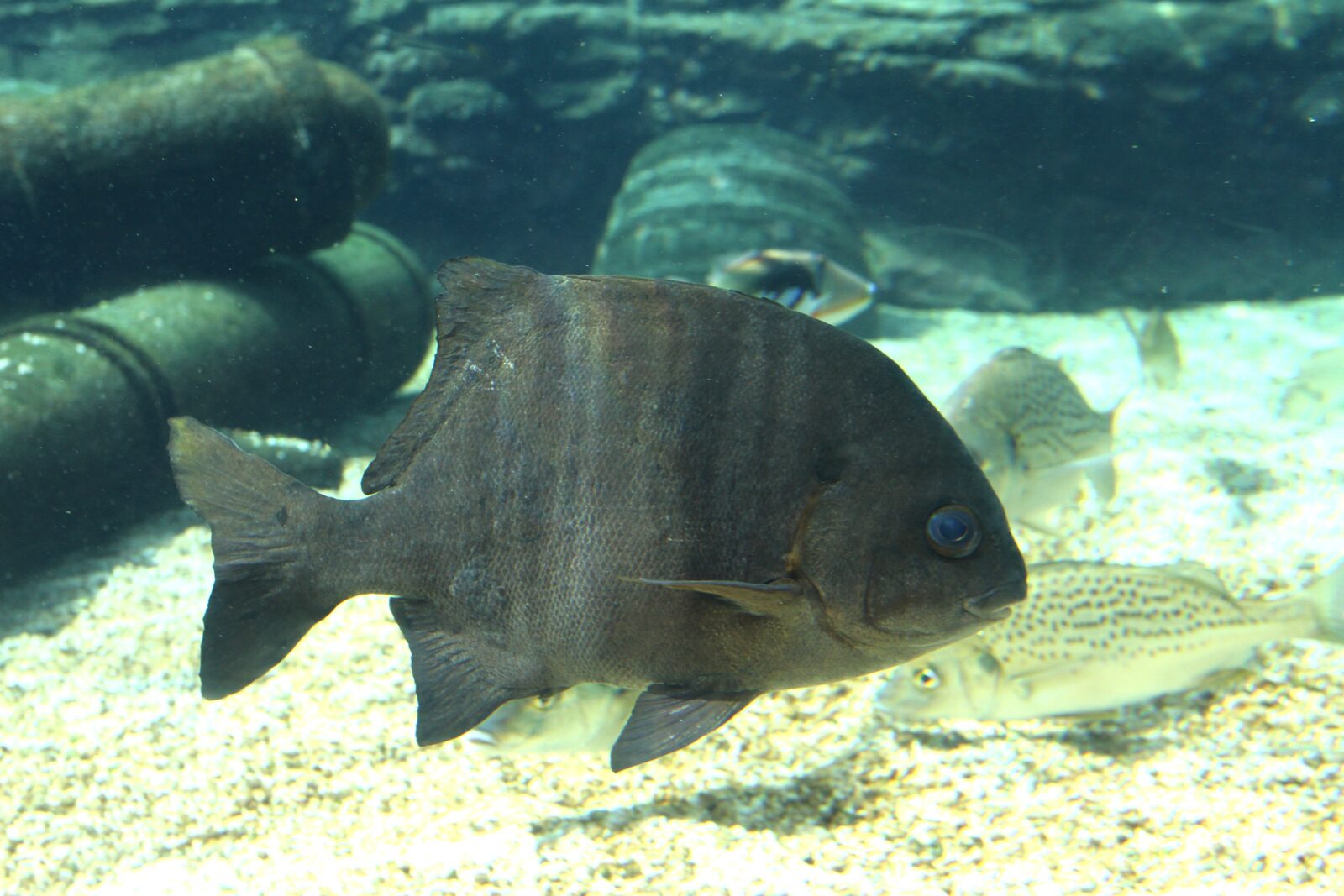
The cover is a visually inspected, species-identified photograph of a whole galjoen at an aquarium. It is representative of Dichistius capensis and does not claim a Namibian location, a recent catch or a release outcome.
Permit and official rules
Namibia’s Ministry of Fisheries and Marine Resources publishes an official recreational-fishing rules packet under the Marine Resources Act framework. It says a person harvesting recreationally in Namibian waters must possess a fishing permit and follow its conditions. Permits may be issued for one month or one year. The same packet identifies hook and line as a permitted method and names galjoen as Dichistius capensis.
The packet groups galjoen with blacktail, kob and West Coast steenbras under a combined daily limit, and says size limits in Annexure J apply. It also lists prohibited coastal sectors and transport rules. Because the short web packet does not reproduce every current Annexure J measurement, this guide does not guess a centimetre figure. Read the current annexure and the conditions printed with the issued permit before deciding whether any fish may be retained.
Rules and permit terms can be amended. Verify with MFMR or an authorised permit issuer immediately before the trip. Do not rely on a lodge notice, old forum post or an earlier visitor’s ruler.
Choosing a lawful, survivable mark
Study the official prohibited-area list before selecting a beach or rock platform. Some closures are described by coordinates and beacons; “there were anglers here last year” is not proof of access. Protected park areas can also have separate entry, driving or camping conditions. Confirm the road, tide escape and communications plan in daylight.
Galjoen habitat usually means white water washing over reef, gullies between rock and sand, and turbulent pockets where food is dislodged. The best-looking pocket is useless if it requires turning your back on a rising sea or descending a ledge that cannot be climbed when wet. Choose a stance above the wash, identify two exit routes, and keep tackle landward of the surge line.
Rod, reel and line
A 3.3–4.0 metre surf rod rated for roughly 3–6 ounce sinkers gives control without demanding maximum distance. Match it with a robust spinning or conventional reel holding 20–30 lb main line. Braid improves bite contact but needs a long abrasion-resistant rubbing leader; mono offers stretch and can be forgiving around close rock. Use a properly rated shock leader whenever the sinker and cast require it.
Galjoen feed in abrasive structure, so terminal tackle should be simple. A single-hook running or fixed-trace arrangement reduces tangles. Start with a hook size around 1/0 to 3/0, adjusted to the lawful bait and expected fish, a short 20–40 lb trace, and the lightest sinker that holds. Carry spares pre-tied because re-rigging beside cold surge is where mistakes happen.
Bait and legal sourcing
The MFMR rules restrict bait collection. The official packet says annelid worms may not be used as bait or possessed, and red bait may not be cut or dislodged from the substrate; only red bait washed onto the shore is allowed under that rule. Check current conditions before collecting or buying anything.
Use bait from a lawful, traceable source and keep only the quantity needed. A compact, securely bound bait presents better in turbulence than a large soft bundle. Thread and elastic should hold it through repeated wash without creating loose plastic waste. Never cut living shoreline organisms because a local tip says it is traditional.
Reading a gully
At low or moderate water, identify the gully’s entrance, the foam line and the point where backwash meets incoming surge. Galjoen can feed close; distance is often less important than placing the bait where water moves food across rock. Make the first cast short of the roughest reef and learn how the sinker holds.
Keep the rod high enough to lift line over the nearest wash, but do not wedge it somewhere that forces you to stand at the edge. A bite may feel like taps, weight or a sudden pull amid surge. Wind down, feel the fish and lift firmly rather than striking wildly. Once hooked, use the rod to steer away from the sharpest lip and move only when the platform is dry.
Swell, fog and wind
A forecast cannot describe the exact set arriving at one rock. Check official coastal weather information, tides and any local park or harbour warning. Then watch the mark for at least ten minutes before setting up. Look for the highest wet line and for occasional sets larger than the average.
Cold fog reduces visibility and can hide both waves and vehicles on beach tracks. Tell someone the exact area and return time, carry warm layers, water, a charged phone and a simple first-aid kit, and avoid fishing alone on isolated rock. Stop when swell reaches the stance, wind prevents line control, fog removes visual reference or rising water cuts off the return.
Landing, measuring and release
Prepare the measuring tool before casting. If a fish might be retained, it must be checked against the current permit and Annexure J immediately and kept whole where transport rules require it. Do not convert a combined limit into a target; conservation-minded anglers can stop well before any maximum.
For release, wet hands, support the fish horizontally and minimise time out of water. Do not hold a galjoen by the gill cover. Use pliers to remove the hook; if deep hooking makes extraction destructive, cut the trace close. Return the fish in a calmer pocket when possible and wait until it can hold itself. Never claim survival from the way a fish swims out of sight.
Common errors
Legal errors include fishing without the permit in hand, entering a prohibited sector, collecting bait unlawfully and quoting a size from memory. Safety errors include setting up below the wet line, carrying too much gear, chasing a snag during a large set and driving an unfamiliar beach without a recovery plan.
Fishing errors include casting beyond the feeding water, using a sinker so heavy that the bait cannot move naturally, and allowing slack to wrap around rock. Shorten the cast, simplify the trace and change stance before adding more weight.
A conservative day plan
The day before, obtain and read the permit, check the prohibited-area map or descriptions, confirm park access and review weather and tide information. Tell a contact the route and expected return. Rig two traces and pack a legal measuring tool, cutters, pliers, warm clothing and rubbish storage.
Arrive in daylight around a suitable tidal stage, then observe before unloading. Fish one gully for 45–60 minutes, adjusting distance and sinker once. If conditions remain safe, move to a second authorised mark rather than climbing farther out. Stop early if fog, wind or swell removes certainty. Record conditions and tackle, including a blank session; that evidence is more useful than an invented catch report.
Stewardship and final verification
Take line, hooks and bait packaging home. Avoid driving on sensitive areas, disturbing wildlife or leaving fish waste at public access points. MFMR’s research directorate describes ongoing stock and ecosystem monitoring, which is a reminder that regulations are management tools, not personal entitlements.
This guide was checked on 24 October 2026 against MFMR’s official recreational rules, permit information and resources-management page. Exact sizes, open sectors and permit conditions must be verified again on the current issued documents before fishing.