Northern Patagonia's spring opening is close enough to plan now. Neuquén's government announced on 16 October 2026 that its 2026/27 fishing season starts on 1 November. For a visitor arriving in November or December, the useful question is which water will be legally open, safely accessible and manageable with the equipment they can actually fish.
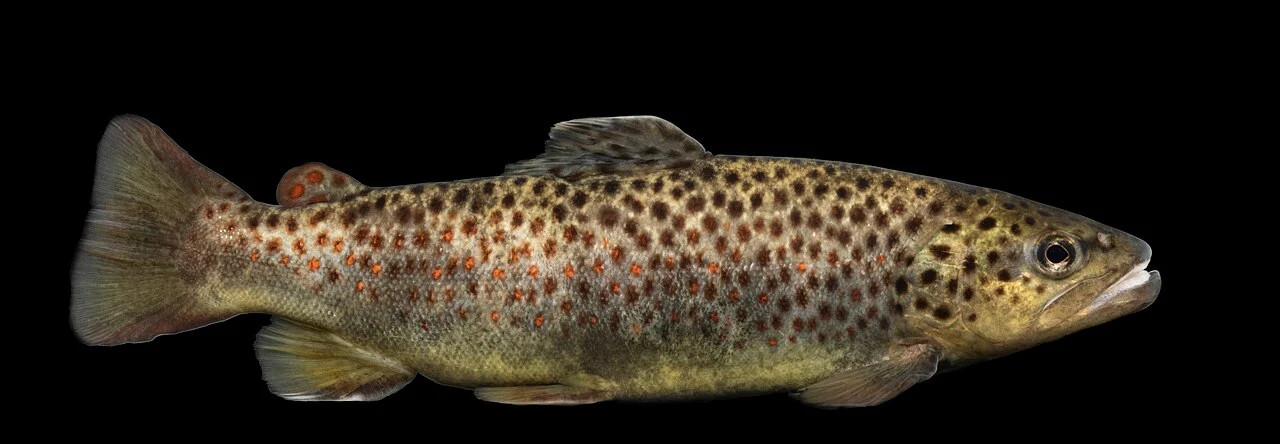
This guide concentrates on brown and rainbow trout around Junín de los Andes, in Argentina's Neuquén province. It offers a flexible fly-fishing plan rather than a promise about catches or an assertion that every nearby river opens together. The cover is Sam Stukel’s USFWS public-domain photograph of a brown trout (Salmo trutta), photographed at Gavins Point National Fish Hatchery in South Dakota. It is a representative species photograph, not a photograph from Patagonia.
Put the new season's rules ahead of the itinerary
The province's October announcement confirms the new season and permit sales. It also says that some environments, including particular rivers and lagoons, finish on 1 May 2027, while the wider season lasts a year. Those statements do not make every water open year-round. The required check is the current entry for the exact river, lake and section you intend to fish.
During this review, the regulator's downloadable rule link still led to the 2025/26 booklet. We therefore do not reproduce its individual water limits as 2026/27 law. Obtain the new applicable text or confirmation from provincial Fauna before fishing. If you cannot establish the current opening, permitted method and retention conditions, choose a different verified water or postpone the fishing part of that day.
A provincial fishing licence is mandatory and personal. Buy through the official channel, selecting the correct nationality/residency category and duration. Foreign nonresidents should have their passport available. Check separately whether your planned activity needs a preferential-area or trolling supplement. A general permit does not remove a special-zone restriction. Save the licence and relevant rules offline before travelling beyond dependable reception.
National park waters require their own applicable annex and current park advice. A nearby provincial river and a water inside Lanín National Park cannot be treated as interchangeable simply because both appear on a tourism map. For every chosen access, write down jurisdiction, section boundaries, opening dates, permitted tackle, release or retention rules, and any boating condition. Keep a second legally verified venue in reserve.
Choose a base and a realistic first water
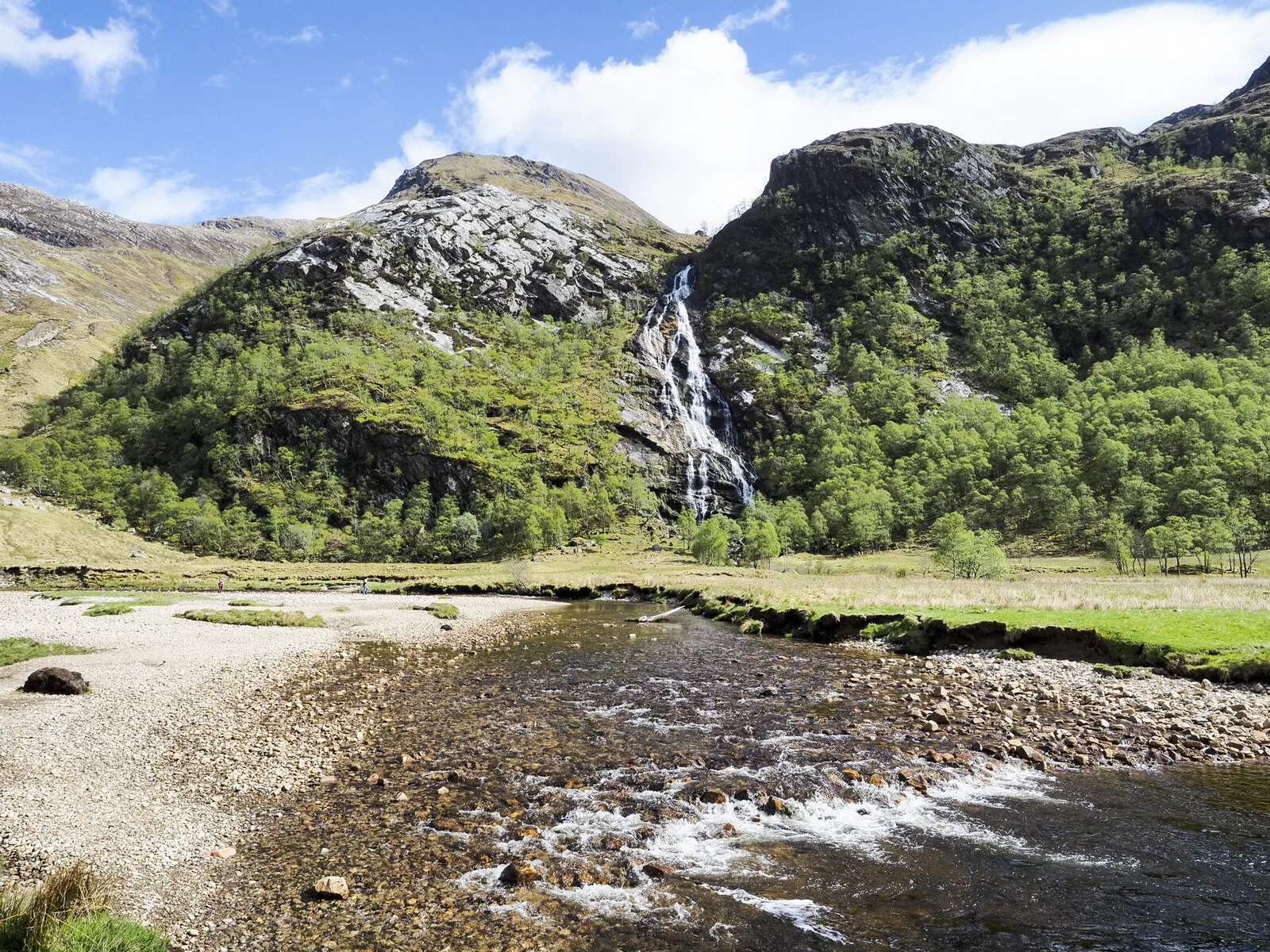
Junín de los Andes is a practical base for this style of trip. The provincial tourism office identifies the Chimehuín, Malleo, Quilquihue and Huechulafquen among the area's fishing waters. Nearby San Martín de los Andes offers another service base. Choose accommodation by transfer time and access arrangements rather than trying to visit every famous river in a short stay.
A named river is not one uniform fishing situation. On your map, distinguish a broad windy reach, a sheltered side channel, an accessible bank and a steep or private approach. Confirm the lawful access route with the authority, land manager or authorised guide. A fence, bridge or vehicle track is not permission to cross land, park in a gateway or launch a boat.
The Boca del Chimehuín is a particularly important example of specificity. The provincial government describes this source area as a protected setting where fishing is exclusively with fly tackle. Do not bring a spinning outfit there on the assumption that all trout equipment is equivalent. Confirm its new-season zone boundaries, supplements and other conditions directly before booking that session.
For a beginner, a modest, confirmed access on manageable water is more useful than an ambitious crossing to a renowned pool. Consider hiring an authorised guide for the first day. Ask which water the day covers, whether transport and permits are included, how much wading is expected and what happens if wind or high water makes that itinerary unsuitable.
Read spring conditions before choosing a fly
Spring snowmelt can produce cold, strong water and changing clarity. The province describes snowmelt-fed northern waters from November; that does not predict the flow of your chosen reach on your travel date. Check the short-range forecast and local observations again on the morning of fishing. Wind direction matters for casting, and upstream rain or warmth can matter even when the sky above you is clear.
Start from the bank and look for a manageable current seam beside faster water, the edge of a pool or a sheltered margin with a clear retreat. These are places to test a presentation, not guaranteed holding spots. Avoid assuming that a darker patch is deep enough for trout or shallow enough to cross. Glare and clear water both distort judgement.
Give a small piece of water time to explain itself. Watch foam, bubbles or drifting leaves to see where currents converge. If your line races across the surface while the fly should be sinking, the first problem is likely presentation. Changing fly colour repeatedly will not correct that mismatch.
Pack two simple fly-fishing options
The following are starting tackle suggestions, conditional on the current water's rules. They are not a claim that every method or rig is permitted everywhere.
- A 9-foot 5- or 6-weight rod, matching floating line and dependable reel form a useful general trout outfit. Choose the 6-weight if it is the outfit you can control more confidently in wind.
- Carry tapered leaders around 9 feet long, plus 3X, 4X and 5X tippet. Use a stronger tip for larger flies or difficult fish control, rather than choosing the finest diameter automatically.
- Build a small box of single-hook, barbless or properly debarbed flies: bead-head nymphs around sizes 12–16, visible dry flies around 10–16, and modest streamers around 6–10. These sizes are an adaptable selection, not a hatch forecast.
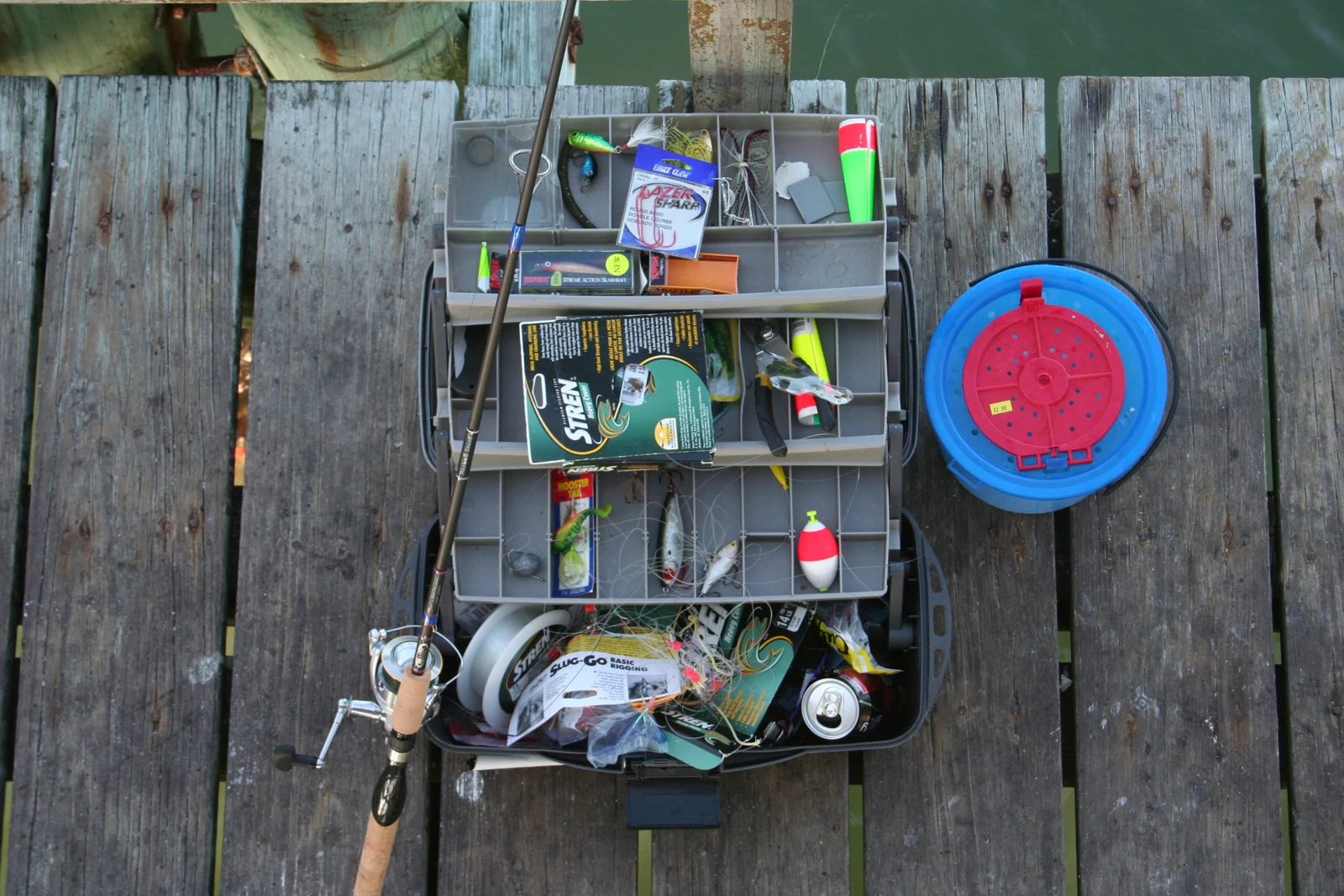
- Add a soft rubber-mesh landing net, forceps, spare leaders, polarised glasses, a brimmed hat and eye protection. Check rod sections, guides and knots before leaving town.
For a nymph starting rig, use one weighted fly on a tapered leader with enough tippet to make controlled depth adjustments. Where allowed, a small adjustable indicator can help reveal the drift. Starting with one fly reduces tangles and avoids assuming that a multi-fly arrangement is lawful. Match the indicator to the fly's weight; an oversized float creates unnecessary splash and resistance.
For a dry-fly option, remove the weighted fly and indicator, inspect the leader for damage and tie on a buoyant pattern you can see. Longer or finer leaders can help a delicate presentation, but only if you can turn them over without piling line into the target. A short accurate cast is a better beginning than a long collapsing one.
Fish a nymph lane methodically
Choose a short drift you can watch from a stable position. Cast slightly upstream of the suspected feeding lane, allowing the fly time to sink before it reaches the area you want to test. Keep unnecessary line off conflicting currents and follow the drift with the rod tip. Lift promptly but smoothly if the indicator stalls, dips or moves against the surrounding drift.
Treat depth as an experiment. If the fly never approaches the useful layer, adjust the indicator position or fly weight in small steps where those adjustments are allowed. If you snag repeatedly, reduce depth or weight. Constant bottom contact is not evidence of a superior presentation, and dragging flies over the bed wastes tackle and disturbs the swim.
After several controlled drifts, change one thing. Try the next current lane, a slightly different depth or a shorter casting angle before emptying the fly box. Record the change mentally. A repeatable sequence lets you learn whether trout are responding to location or presentation instead of attributing every result to a particular pattern.
Switch to surface or streamer work for a reason
Rising trout give a clear reason to consider a dry fly. Observe where the fish appears and where the fly must land to drift there naturally. Cast short of the fish first if the distance is uncertain, then extend carefully. Mend early and gently, or reposition to avoid crossing the strongest current with your line. If the fly skates unnaturally, correct the angle before making the same cast again.
A streamer offers another option when current rules permit it. Use a sufficiently strong leader for the fly and fish you expect, and a casting stroke you can manage safely. Begin with short casts from secure footing, covering a margin with controlled strips and pauses. Change retrieve speed deliberately. Do not turn a heavy fly into a hazard by repeatedly casting it past your companion's head in a crosswind.
None of these methods requires standing in the middle of the river. Work the near bank before stepping into it. Wading through an untested margin can disturb the very fish you hoped to reach with a longer cast.
Make release and biosecurity part of the kit
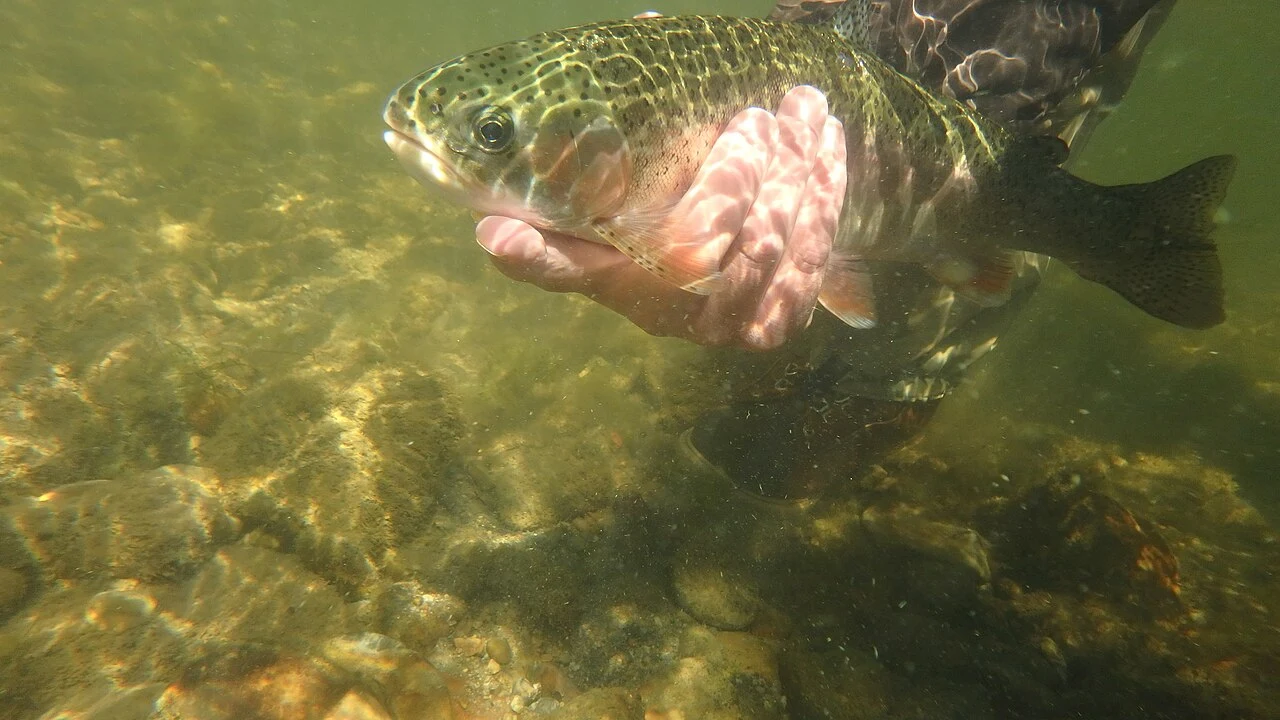
Plan voluntary catch and release, while recognising that the current rules may require release. Wet your hands, keep a landed trout supported in the water and remove the hook with minimal handling. Prepare any camera beforehand. If a photograph would require prolonged air exposure, unstable footing or laying the fish on stones, skip it. Avoid deliberately fishing over visible spawning activity or disturbing redd-like patches of clean gravel.
Argentina's environmental authority identifies wet fishing equipment as a pathway for spreading didymo between waters. Remove mud and plant material, follow the current local cleaning/disinfection instructions and allow equipment to dry properly. Use a designated cleaning point where required. Do not pour disinfectant into a river, carry untreated water between catchments or assume that rinsing a boot makes it safe. Pack easily cleaned footwear and verify current sole restrictions before travel.
Wear a properly fitted flotation aid when conditions warrant, use a wading belt with chest waders and carry a staff if trained to use one. Avoid deep or fast crossings, especially alone. If a safe return route is uncertain, stay on the bank. Sun, cold wind and distance from help justify spare dry layers, drinking water, a charged phone and a shared return plan.
A three-day plan with room for weather
Use arrival afternoon for permits, the new-season rules check, guide confirmation and a casting practice away from people. On the first fishing day, choose one verified, accessible reach and concentrate on controlled drifts. Take notes on clarity, wind, access and the method that was practical, even if you catch nothing.
On day two, change water only after confirming access and cleaning equipment. Compare a different habitat rather than repeating a long drive merely to visit a famous name. Keep the last day flexible: repeat the most manageable venue if conditions suit, take a guided alternative or use the time for a non-fishing activity if flows are unsafe.
Before departure, ask the guide or authority one final, precise question: “For this exact section on this date, are my permit and single-fly setup valid, and what must be released?” That answer, together with the current written rules, is more valuable than a broad promise that Patagonia's trout season is open.