Southland brown trout offer a good reason to plan a spring learning trip rather than wait for a perfect summer photograph. The useful opportunity is a combination of feeding fish, changing insect activity and a chance to build river skills. It is not a guarantee of easy fishing: rain, river height and an angler's approach can matter more than the month printed on a calendar.
This guide focuses on accessible Mataura River fishing around the wider Gore area and on methods that transfer to comparable legal Southland water. It is a planning guide checked on 20 October 2026, not a report of fish currently being caught. Its equipment examples assume modest river conditions and bank access; a guide should adjust them to the actual reach.
Why consider October through December?
Fish & Game's seasonal guidance describes October–November as an early-season period with feeding trout and increasing insect activity. Its summer guidance also explains why clearer, lower and warmer water can make fish more cautious. The practical inference is to consider spring and early summer for learning, while retaining a weather alternative. It does not establish that every tributary is open or that a particular hatch will occur during your visit.
Fish & Game identifies the Mataura as an important Southland trout river. A large river contains many different fishing problems, so choose an accessible reach with a local adviser instead of trying to learn its entire length. A day with a guide can be valuable if it teaches approach, presentation and access rather than simply moving you between fish.
Know what you are targeting
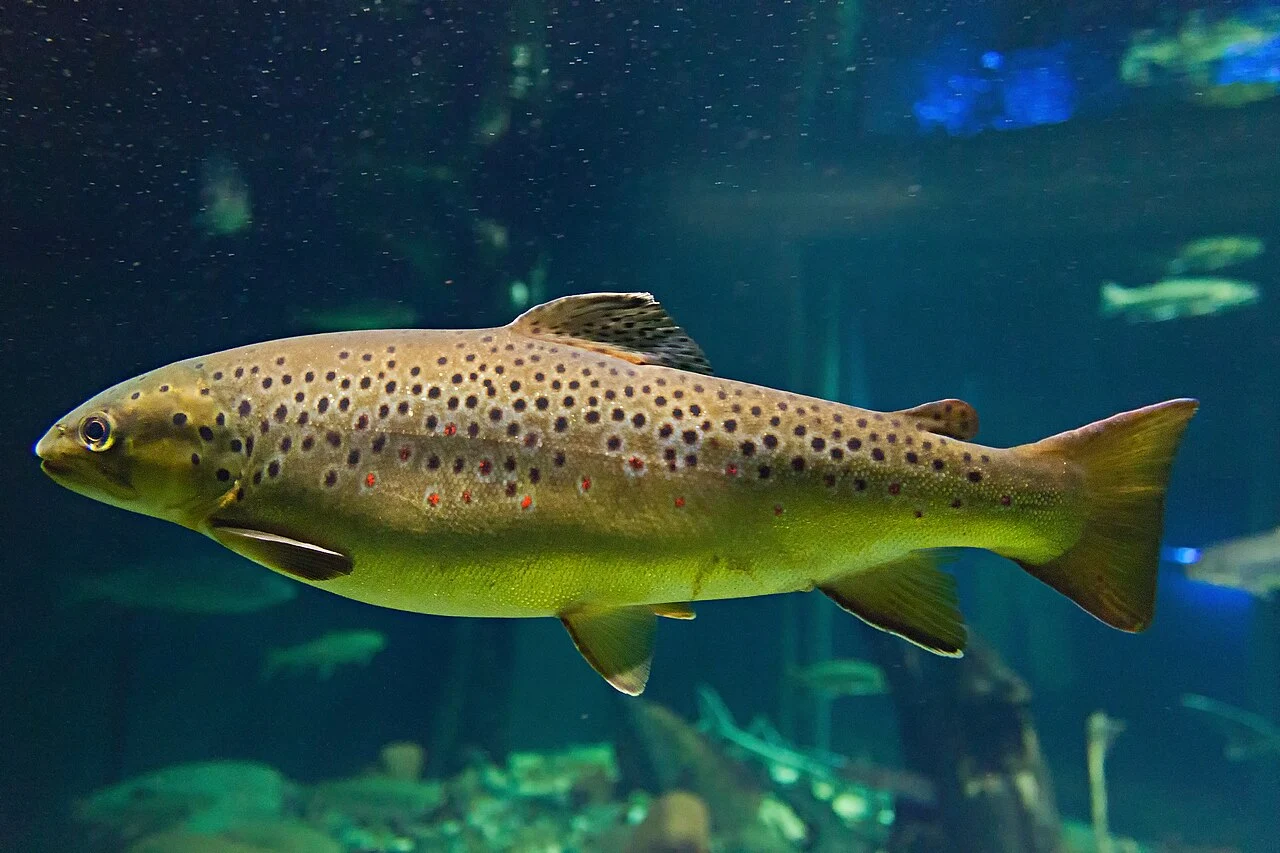
Brown trout commonly show dark spots and may have red spotting, but appearance varies with habitat and life history. Do not use colour alone to make a retention decision, particularly in water with more than one salmonid species. Use the local authority's identification material and release an uncertain fish carefully where lawful.
The key fishing idea is to search for a holding place beside a food route. A fish can use relatively gentle water while taking food carried in faster flow nearby. Look for seams beside the main current, the soft side of a riffle, undercut margins and the edges of pools. Those features are hypotheses to test, not proof that a fish occupies every one.
Read the reach before your first cast
Watch from a low, stable position for several minutes. Look for a repeated rise, a shadow that changes position or an interruption in a current seam. Polarised glasses can help with glare but do not reveal the depth or safety of a crossing. Avoid stepping into the nearest margin before you have looked at it: a fish may be holding there.
Identify a safe landing position, a clear casting lane and an exit route. Then choose three targets you can reach without entering difficult water. Fish the nearest first so a longer cast does not pass over it. If a fish is visible, observe its direction and feeding rhythm before presenting a lure or fly. Accuracy usually teaches more than maximum casting distance.
A balanced spinning outfit
For a bank-based introduction, a useful example is a light spinning rod around 2.0–2.1 m, a compact reel and 6 lb monofilament, with a few 3–7 g lures within the rod's rating. The purpose is to cast small offerings accurately and maintain control, not to use the thinnest line possible. Increase the strength when fish size, cover or local guidance demands it; excessively light line can prolong a fight.
Start with two lure types: a compact spoon or spinner for a visible swimming action and a small shallow-diving minnow for a different running depth. Carry modest colour choices and spare approved hooks. A single-hook option can simplify handling where suitable; check hook and lure restrictions before modifying or fishing tackle.
Fish & Game's spin-fishing material provides a useful foundation for balanced equipment and line connections. For the first session, monofilament tied directly to the lure keeps the system simple. If using braid, learn a suitable braid-to-leader connection, test it under controlled tension and check that the joining knot travels through the guides properly. Do not assume a knot that looks neat has seated correctly.
Fish one lure through one lane
Make a short cast slightly upstream and across, leaving room for the lure to begin working before it reaches the target. Close the bail by hand, take up slack and retrieve just fast enough to keep contact. Watch the line as well as the lure: current can create a bow that separates your rod movement from the presentation.
On the next cast, keep the same target but alter the angle slightly. Then try a modest change in retrieve speed or sinking time if the bottom allows it. Do not change lure, depth and position together after every cast. If you repeatedly touch bottom, shorten the sink, use a shallower lure or move the casting angle. Snagging on every pass is information that the presentation needs adjustment.
When a fish follows, keep a controlled retrieve and observe where it loses interest. A repeated follow may justify a different speed, profile or angle. It does not justify casting continuously at a fish that has become alarmed. Move on and return only if appropriate, respecting other anglers' space.
Add fly fishing when observation gives you a reason
A representative river-learning outfit is a 9 ft, 5-weight fly rod with a floating line, a tapered leader and tippet matched to fly size and fish. It is an example, not an instruction to buy equipment before your guide confirms the plan. Practise short accurate casts on land and learn to manage loose line before adding current.
For a surface-feeding fish, a dry fly should travel through the feeding lane without being pulled unnaturally across it. Start with a short drift you can control. Move position or mend line carefully when different current speeds create drag. For a subsurface nymph, depth and drift control matter; use a guide to learn how weighting and an indicator or other legal setup interact. Do not add weight blindly until the rig becomes difficult to cast or constantly snags.
One clearly understood method is enough for a first trip. If spinning is permitted and suits you, it is a valid way to learn trout water. A complicated fly rig does not replace observation.
Troubleshoot the problem you can actually see
- No sign of fish: check whether you are covering suitable holding water, then change position before cycling through every colour.
- Fish spook before a cast: lower your profile, reduce movement and approach from a different angle.
- Repeated snags: reduce depth or change the casting angle; do not keep sacrificing tackle to the same unseen obstacle.
- Follows without takes: try one change in speed or profile, then rest the area.
- Lost fish: inspect the hook point, line and drag, and keep steady pressure without lifting the rod excessively high.
- Rising, dirty or unsafe water: change the outing or stop; additional tackle cannot repair access or flood risk.
A practical three-hour session
Spend the first twenty minutes checking conditions, access, tackle and the landing plan. Use the next forty minutes to learn one short reach with one method. Pause to note where the lure or fly actually travelled and which casts were controlled.
Move to a second accessible feature and repeat the exercise. If a local guide has demonstrated a change, try it deliberately and record the result. Leave time for a final return to the most informative feature, followed by cleaning equipment and making notes. This is an original learning schedule, not a promised catch itinerary. Shorten it whenever conditions, fatigue or fish welfare require.
Check the reach, then prepare the release
Fish & Game's regional page provides the current 2026–27 regulations. Confirm the exact reach, open dates, allowed methods and any designated-water requirements. A licence does not create permission to cross private land. Use official access information, leave gates as found and avoid entering an occupied reach without agreement.
Before fishing, have a suitable net, wet-hand handling plan and forceps ready. Keep a trout supported in the water as much as possible, avoid squeezing its body or touching its gills, and make photographs secondary to a prompt release. Fish & Game's handling guidance warns against prolonged fights and rough treatment. If conditions make healthy release doubtful, choose another activity rather than continuing for a photograph.
Biosecurity New Zealand's Check Clean Dry requirements depend on the waterway and the pest involved. Clean and treat boots, nets and other wet gear using the applicable current instructions before moving between waters. Finish the day with a note of the river state, the presentations tried and one thing to practise. That is how a seasonal opportunity becomes a skill you can use on the next visit.