A December plan, not an October invitation
For a first Murray cod trip in inland New South Wales, December is a useful planning window because the normal spring closure has ended. That does not make opening day a guaranteed feeding event. River level, safe access, water quality and the amount of cover you can fish effectively matter more than a calendar promise. This guide is for a modest lure-fishing session on an open NSW inland reach in December 2026, with the Murrumbidgee system as a planning example. It is not a current catch report or permission to enter a particular property.
The NSW Department of Primary Industries and Regional Development confirmed the 2026 closure from 1 September through 30 November, except Copeton and Blowering dams. Plan an ordinary river session from 1 December, then check the exact water again before leaving. Do not use this guide to justify targeting spawning cod during the closure. If your available holiday falls in November, choose a genuinely open alternative and verify all rules applying there.
Rules to settle before choosing tackle
As checked on 23 October 2026, NSW's freshwater table lists a Murray cod legal length of 55–75 centimetres, a daily limit of two and a possession limit of four. Fish outside the legal length range must be released. These are ceilings, not a suggested catch target. The same table identifies the year-round exceptions at Copeton and Blowering. A general seasonal opening does not override a local fishing closure.
Carry a current NSW recreational fishing fee receipt unless you qualify for an exemption. The official fee page explains the obligation and links to the exemptions. Obtain it through the official route and save a copy you can produce without reception. A paid receipt is not a land-access permit: establish parking, the route to the water and the right to fish that bank separately.
Jurisdiction becomes especially important on border waters. NSW's methods page describes its inland coverage and specifically excludes Lake Hume from those NSW rules, identifying Victorian control there. This article does not resolve every border or reservoir exception. For a first trip, choose an unambiguous NSW reach and check the local closure map; avoid assuming that the rule displayed for a neighbouring town applies across every connected waterway.
The general inland method rules allow two attended lines, subject to the published water-specific exceptions. Our suggested session uses one rod and artificial lures, keeping attention on presentation and fish handling. Do not bring a collection of unattended bait lines or improvise a trap because another angler appears to be using one. Read the official methods page before adding another technique.
Find a manageable piece of cod habitat
The agency's species profile describes cod favouring slower, often turbid water associated with deeper areas, logs, boulders, overhanging vegetation and undercut banks. Translate that description into a small, fishable plan. A single piece of timber beside a gentle current seam can be more useful to a beginner than a spectacular snag pile that cannot be approached or landed from safely.
Choose three accessible features within a short walk: perhaps the edge of a pool, a shaded bank with a submerged branch and a slower pocket beside the main flow. Identify a stable landing position before casting. If the only way to reach a hooked fish is to climb a crumbling bank, step into unknown depth or drag it up dry ground, reject that position.
Read water from the bank first. Watch floating leaves to distinguish the main current from a returning eddy. Note where a lure could swing into the snag instead of away from it. A map's blue line does not reveal this detail. Resist the urge to cover kilometres immediately; learning the angle and depth of three safe positions gives you observations that can improve the next visit.
A practical lure outfit
For ordinary bank casting, a useful starting combination is a roughly 1.8–2.1 metre medium-heavy rod, a compatible baitcasting or spinning reel, 30–50 pound braid and an abrasion-resistant leader around 40–60 pounds. These are editorial starting ranges, not legal specifications or a claim that every cod needs heavy equipment. Match the outfit to the lure rating, cover and your casting ability; extremely large swimbaits require a purpose-built setup.
Start with a compact selection: a shallow-to-medium diving hard lure around 90–120 millimetres, a spinnerbait within the rod's casting range and a similarly manageable surface paddler. Carry spare leaders and strong, sound hooks. A lure you can place accurately beside cover is more useful than the largest model in the shop. Test its action close to shore before making a full cast.
Tie connections carefully and pull-test them before fishing. Set drag pressure so it gives line smoothly without collapsing the rod into an unsafe angle. Do not test a loaded outfit by pointing a hooked lure toward another person. Use pliers to check hook points and replace rusted or distorted hardware; stop if the tackle cannot safely handle the structure you intend to fish.
Work the cover in a deliberate order
Begin with the near edge of a feature. Make a short cast that allows the lure to travel past cover while remaining recoverable. Then change the angle slightly to examine the outside edge, the slower downstream pocket and the deeper approach. Changing angle can answer a different question without changing lure at all.
For a diving lure, use a controlled retrieve that lets you feel its regular action. If it touches wood, pause and assess before pulling harder. Sometimes easing pressure allows a buoyant lure to back away; sometimes the sensible choice is to abandon the cast. Never enter hazardous water to rescue tackle. Point the rod toward a snag only when intentionally breaking free, protecting your hands and others from recoil.
With a spinnerbait, first learn how quickly it sinks in the visible margin. Use that observation to begin a cautious countdown in deeper water, then retrieve steadily rather than letting it plough through the bottom. If every cast snags, shorten the countdown or change position. The problem may be depth control, not a lack of fish.
Surface paddlers offer a different option in low light. The Upper Murrumbidgee Demonstration Reach's cod guidance describes a slow, consistent retrieve and identifies dawn and dusk as useful periods to try. Treat that as a method to test, not a promise. Establish your route and landing place in daylight; a first session does not need to extend into darkness.
Respond to what the river tells you
After several careful casts, record whether you contacted bottom, timber or neither. Try a second angle or presentation before moving. A quiet pool is not proof that cod are absent, but repeatedly making the same ineffective cast does not add useful information. Set a reasonable time budget for each feature so one snaggy corner does not consume the entire outing.
If a fish follows without taking, avoid frantic lure changes. Note the direction it came from, give the spot a short rest and make one considered change in speed or angle. If nothing happens, move on. Do not report a swirl as a measured fish or assume that every heavy strike came from a trophy cod.
Check the leader after any abrasion or hard contact. Carrying one spare leader is useful only if you inspect the one being used. Small cuts near the lure can become the weakest part of an otherwise strong outfit. Replace damaged material before the next cast, even during a brief spell of activity.
Weather, water quality and the way home
This is inland freshwater fishing; tidal tables are not the planning tool. Check weather warnings, local river levels, road access and relevant water-quality notices close to departure. A safe bank on an earlier visit may be submerged or undercut after a rise. Avoid rising or fast water, visibly distressed fish and any water subject to a closure or warning.
Wear suitable footwear and a correctly fitted lifejacket where a fall could put you into deep or moving water. Take drinking water, sun protection, communication equipment and a plan another person knows. Mobile coverage can be unreliable; download your route and identify an exit that does not depend on crossing a channel. Do not assume a low-water crossing will remain passable for the return drive.
A boat adds launch, navigation and equipment responsibilities. For a newcomer, a familiar, sheltered launch with a short route is preferable to an ambitious exploration. Check local operating restrictions and required safety equipment separately. This guide's bank-fishing tackle suggestions are not a boat-safety checklist.
Land the fish with the release already prepared
Have a suitably large soft-mesh net, long pliers and an accessible measuring surface ready. Wet hands and equipment before contact. Keep the fish supported near water level and avoid dragging it over stones, sand or dry grass. Identify the species rather than assuming any mottled cod-shaped fish is a Murray cod; similar protected species make that distinction important.
NSW's photography policy allows only a brief, carefully controlled opportunity for photographs of fish that cannot lawfully be kept. It requires an immediately available camera, best-practice handling and return with the least possible injury as quickly as possible. Transporting a prohibited fish to weigh it is not permitted, and the policy does not authorize fishing in closed waters. If taking a photograph would delay release, skip it.
For a deeply embedded hook, prioritize minimizing injury rather than prolonged attempts at extraction. Follow the agency's catch-and-release guidance and use appropriate tools. Releasing a fish is an action, not proof of survival; do not claim a successful release outcome that you did not observe.
A compact first-session plan
The evening before, confirm the opening and local access, check warnings, prepare the receipt, test knots and pack the net. Arrive with enough daylight to inspect the first position. Spend the early part of the session working your three chosen features with one reliable subsurface lure, recording depth, cover and retrieve.
If conditions remain safe, try the surface option around the low-light period without extending beyond your planned exit time. Finish by checking that no line, hooks or packaging remain on the bank. Record the water level, clarity, effective casting angles and any definite observations. Those notes are useful whether or not you catch a fish.
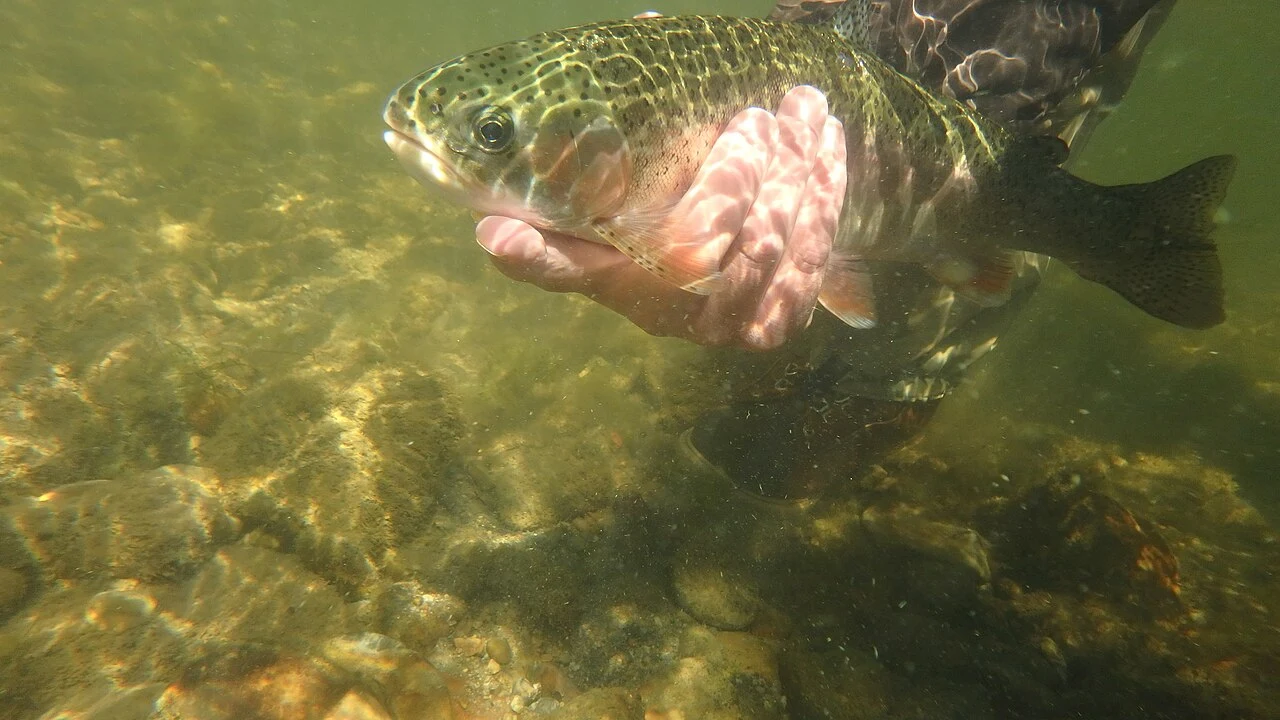
The cover is a photographer-identified juvenile Murray cod in an aquarium, used with permission through its public-domain release. It illustrates the species and is not evidence of a recent NSW catch. This AI-assisted guide combines current official rules with practical editorial suggestions; recheck regulations and conditions before the actual trip.