Late spring is a useful time to prepare a New South Wales estuary flathead trip: warmer days are arriving, summer holidays have not yet filled every ramp, and shallow-water lure fishing becomes an appealing option. NSW fisheries describes dusky flathead as more commonly caught in summer. Its Tuross Head guide lists October to April as the local peak season. Those are planning patterns, not a forecast of catches for November or December 2026.
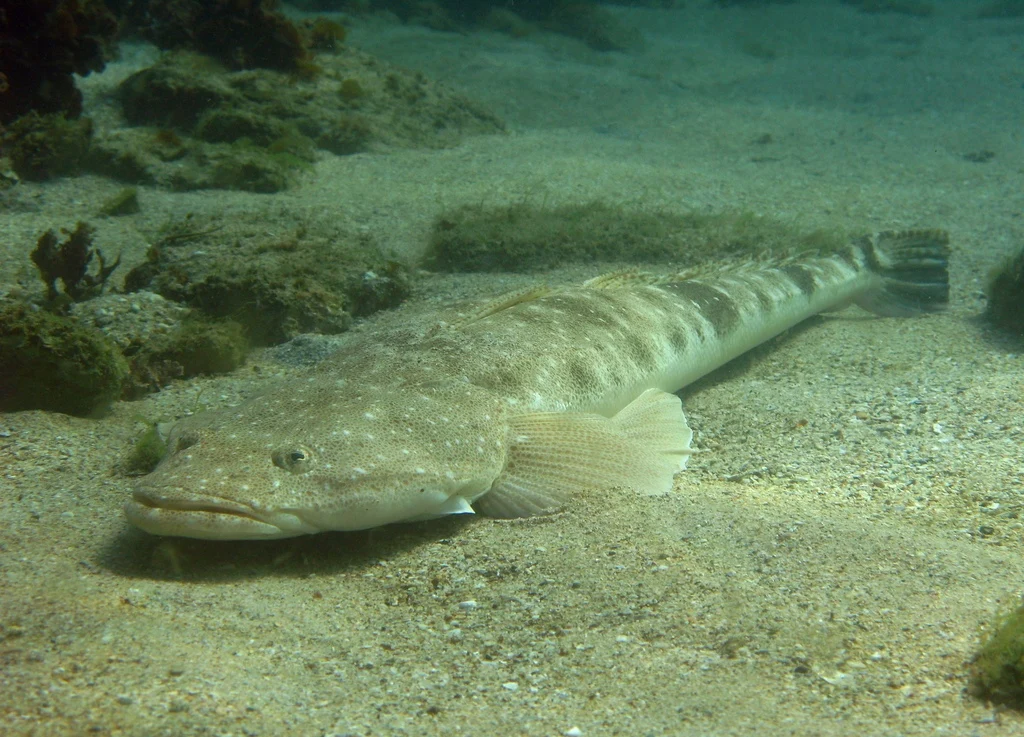
This guide uses Tuross Lake on the South Coast as a worked example, then explains a method you can adapt to other lawful NSW estuary locations. The cover is Richard Ling’s photograph of a dusky flathead (Platycephalus fuscus) at Fairy Bower, Manly, NSW, used under CC BY-SA 2.0. It is a representative species photograph, not a photograph of Tuross Lake. Tackle sizes below are practical starting choices; current rules and the actual depth, wind and current come first.
Start with the right flathead and the right rules
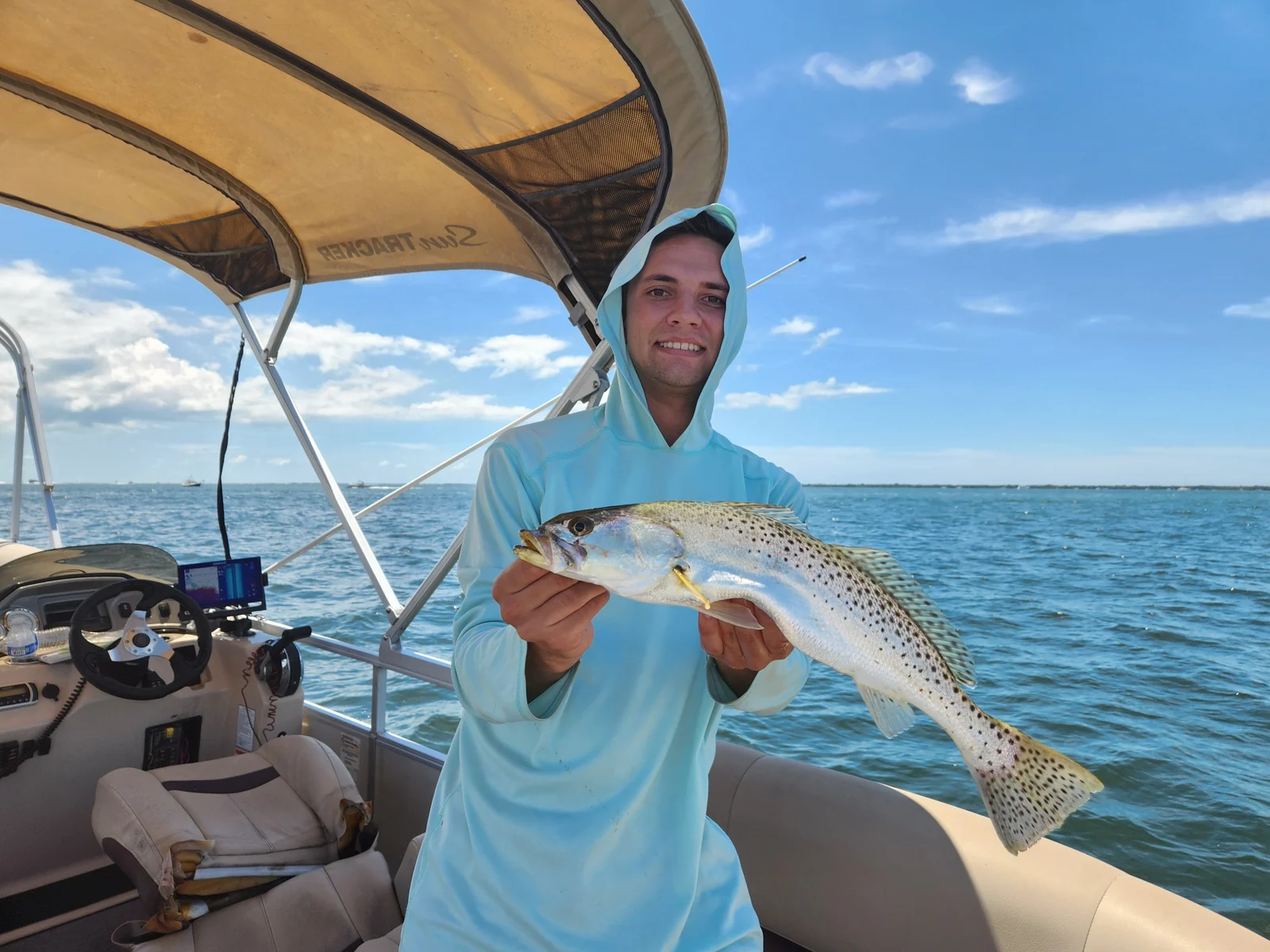
The target is dusky flathead, Platycephalus fuscus. NSW's species account describes variable coloration, a distinctive dark marking at the tail, and habitat over sand, mud, gravel and seagrass in estuaries and coastal bays. Use the official species photograph and identification information before retaining a fish. Colour alone is unreliable, and an unidentified flathead should not be treated as a legal dusky.
Checked on 20 October 2026, the NSW regulator's current saltwater table gives dusky flathead a legal length of 36–70 cm, a daily bag limit of five and a possession limit of ten. Release fish outside the length range promptly. The same table separately lists bluespotted and tiger flathead with different limits. Do not transfer those limits to duskies, or assume NSW limits apply across the Queensland or Victorian borders.
Measure correctly: NSW specifies overall length from the upper-jaw snout to the end of the tail. Carry a proper ruler or measuring mat, rather than estimating against a rod. Leave a comfortable margin around the legal boundaries, especially when deciding to retain fish. Possession includes fish stored elsewhere; yesterday's catch is not invisible to the limit.
Unless an exemption applies, pay the NSW recreational fishing fee and carry the required evidence. This applies in saltwater as well as freshwater. Check the official exemptions page rather than assuming age, residency or a hire-boat booking automatically covers you.
Choose an estuary you can fish safely and lawfully
Tuross offers a useful teaching landscape of shallow flats, channels, drop-offs and connecting waterways. The official guide describes it as a Recreational Fishing Haven and trophy flathead fishery, within Batemans Marine Park. That designation is not permission to fish every part of the lake. Establish your intended bank, drift or anchoring position against current marine park zoning and fisheries closures before arriving.
Use the NSW interactive recreational fishing map to screen locations, then consult the relevant official zoning material for precise boundaries. The department explicitly says its map is general reference, may not show every restriction, and is not a navigation chart. Save the relevant information for offline use, but recheck shortly before the trip.
For a first session, choose a sheltered, publicly accessible bank or an uncomplicated protected drift with a nearby exit. Inspect parking, ramp condition, walking distance, tide-dependent access and whether the landing place remains usable at low water. Keep clear of oyster infrastructure, private property and boat traffic. A productive-looking edge is of little use if you cannot land and release a fish there without damage.
Build one simple lure outfit
An editorial starting outfit for ordinary estuary work is a roughly 2.1 m spinning rod, a 2500-size reel and 6–10 lb braid. Add about a metre of 12–15 lb abrasion-resistant leader, increasing strength if rough structure, large fish or repeated abrasion justify it. Match the rod's casting rating to your actual lure weight. Extremely light line is a poor shortcut when it prolongs fights or repeatedly breaks.
Pack a small working box:
- A few 70–110 mm paddle tails or curl tails, including one natural colour and one more visible alternative.
- Jigheads spanning approximately 3–9 g, with suitably strong hooks around 1/0–2/0 for those lure bodies.
- A spare leader spool, scissors, long-nose pliers and a hook-removal tool.
- A large knotless net, wettable measuring mat and wet gloves for controlled handling.
These are an adaptable kit, not a shopping requirement. A straight, correctly fitted plastic matters more than a large colour collection. Lay the jighead beside the lure before threading it so the hook exits where the body will remain straight. A bent or bunched lure can rotate and fish poorly.
For deliberate trophy fishing, follow the stronger approach in NSW's trophy code: it prefers 4–6 kg outfits capable of landing fish promptly. Do not simply put an oversized lure on a very light rod and hope the outfit copes.
Find changes in the bottom before changing lures
Begin with one visible feature: the lip of a sandbank, a drain leaving a flat, or a clean strip alongside vegetation. Flathead search advice from Shimano emphasizes interruptions in otherwise featureless ground. Your first task is to locate a manageable piece of bottom and understand how the lure travels across it.
From shore, cast a fan with modest spacing rather than repeatedly reaching the same distant point. Include the water close to the bank before stepping in. From a boat, set up where you can cast toward the feature and retrieve across its edge without drifting over the water you intend to fish. Stop a drift before it carries you into a mooring field, lease, shallow obstruction or busy channel.
Treat tide stage as a testable hypothesis. On falling water, examine the outer edge of a flat and nearby drains; on rising water, test the newly covered margin if access allows. These are search ideas, not a rule that a particular tide always produces fish. Observe actual current and water level in the estuary. Local restrictions at the entrance, freshwater inflow and wind can make a coastal tide prediction an incomplete description of the lake.
Make bottom contact without dragging blindly
Cast, let the lure descend, then lift it with a small rod movement and recover slack. Pause long enough for it to return toward the bottom. Watch the braid as well as feeling the rod: a sudden stop, flick or unexpected movement may be the first indication of a take. Wind into contact and set the hook with a controlled lift.
Choose weight by presentation. If the lure never reaches the required depth before current sweeps it away, first shorten the cast or improve the angle, then increase head weight if needed. If it ploughs continuously and snags, lighten it or lift sooner. The goal is a readable sequence of descent, contact and movement, not maximum distance or a permanently buried hook.
A paddle tail can also be swum slowly just above the bottom. A curl tail offers an alternative subtle movement. Manufacturer technique guidance supports different retrieves; it does not establish one mandatory cadence. After several well-covered casts, change one thing: depth, casting angle, pause duration or weight. Changing the lure, weight, location and retrieve together makes it harder to learn what mattered.
A bait rig when casting is not the right method
A simple running-sinker arrangement provides another approach. Thread the main line through a small running sinker, protect the connection as appropriate, tie to a swivel, and add a leader with a non-offset circle hook. Around 1/0–4/0 is a useful starting range, matched to a modest prawn or strip bait rather than hiding the hook point inside a large bundle.
Use only enough lead to control the presentation. Keep the point and gap exposed, attend the rod, and let steady tension load a circle hook rather than making an abrupt strike. Inspect the rig frequently for weed, damage and bait loss. Before collecting live bait, check the applicable collection methods, limits and local rules; purchasing bait does not remove biosecurity responsibilities.
NSW's trophy code prefers lures where practical to reduce deep hooking. If a release fish is deeply hooked, avoid prolonged probing; follow the department's guidance to cut the line close to the mouth. A fishing lesson should not become an extended attempt to recover an inexpensive hook.
Weather, water and handling decisions
Check Bureau of Meteorology warnings, weather, wind trends, waves and tide information before departure, then observations again on arrival. A calm morning photograph is not evidence that an exposed afternoon crossing is suitable. This is an estuary plan: there is no need to cross an ocean bar to catch flathead, and the Tuross guide identifies its entrance as hazardous for heading to sea.
Wear appropriate flotation when boating or kayaking and choose a conservative route. Waders should assess footing, tidal escape routes and depth changes instead of following a fish toward a channel. Keep drinking water, sun protection, communication and a return plan within reach. Postpone rather than improvise around thunderstorms, unsafe wind or flood conditions.
Prepare the landing tools before the first cast. Dusky flathead have sharp spines beside the head, so keep fingers away from them. Land fish in the knotless net, wet hands or gloves and the measuring surface, support the body horizontally, and minimize air exposure. Never suspend a large fish by its jaw or leave it on hot sand for photographs. The NSW trophy code recommends recovery in the water and release close to the capture location; wait until the fish can swim strongly.
A four-hour session that teaches you something
The night before, select one primary area and a sheltered alternative, confirm access and zoning, prepare the fee evidence and check the weather. Rig at home so the first hour is not spent untangling equipment.
On arrival, spend ten minutes looking: where is water moving, where does pale shallow bottom become darker, and where can a fish be landed? Work one feature systematically for a short period, then either adjust presentation or move to the next accessible feature. Record actual current, clarity, lure weight and where takes occurred. A blank session can still establish which stretches were safely fishable and whether your lure stayed near the bottom.
Before leaving, inspect the leader, count retained fish accurately, pack out damaged plastics and line, and review what one change you would test next time. A successful beginning is a repeatable, lawful method with good fish handling—not a promise that summer flathead will be waiting at every cast.