Search a layer rather than the whole river
Bleak fishing begins with a light bait falling through a small piece of water that you can feed and observe. A short line and a sensitive float let you compare depths quickly. If you keep moving the bait to a different distance on every cast, it becomes hard to tell whether the fish changed depth or simply never encountered the hook.
The Saône around Neuville-sur-Saône offers a regional planning base for this approach. The local association, ALYVAL, documents the Neuville-to-Quincieux reach and its approach paths, while the federation's historical fish atlas records bleak along the Saône. Use the association's reach notes and the current federation map to confirm a permitted bank. A public path or launch access does not confer permission to fish from every quay or mooring.
All dimensions, feeding amounts and timings below are practical starting suggestions. They are a way to test a swim during late autumn and winter, without inventing a guaranteed cold-weather concentration or a special hour when fish must feed.
Identify ablette carefully
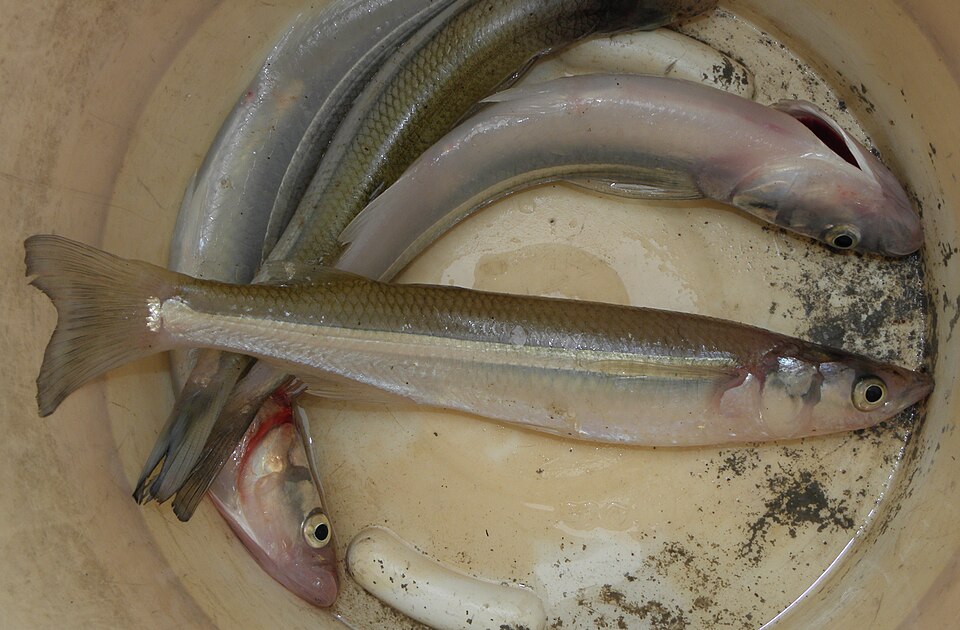
Bleak, Alburnus alburnus, are slim, bright silver fish with an upward-directed mouth and easily shed scales. The local name is ablette. A small silver fish is not automatically a bleak. The similar sunbleak or able de Heckel has a short, incomplete lateral line, while spirlin carry a more conspicuous patterned lateral line and flank markings.
Use those distinctions as prompts for a careful identification, especially with small juveniles. Do not rub off scales while examining a fish. An unfamiliar specimen deserves a quick check over the landing net, not a confident name based only on its shine.
Bleak occur widely in French lakes and slower rivers. They feed on plankton and small invertebrates and can take insects near the surface. These facts support a slowly falling small bait in open water. They do not establish that the surface will be the productive layer on a cold November day.
Choose a bank that permits controlled feeding
Walk the legal bank first. Look for a manageable open-water lane beside the main flow, with enough room behind you for a short pole or light rod. Avoid mooring ropes, navigation approaches, prohibited banks and places where the landing net cannot reach the water.
Start with the near seam before trying the fastest central current. A broad river can carry the float away long before a small bait reaches its intended depth. A stable edge gives you several comparable drifts and keeps a small amount of feed near the hook.
A pool or quiet indentation may offer shelter, but the centre of a rotating eddy can pull the line in circles. Fish its boundary before the reverse flow. Where vegetation is present, test the open edge rather than placing the float into stems. Bleak are an open-water target, so dense bottom cover is not a requirement.
Bridge shadows and bank structures are worth inspecting only from lawful, safe positions. Stay away from barriers, lock operations and hydraulic structures. The point is to find a repeatable presentation, not to stand as close as possible to a feature with a dangerous current.
Depth, current and boat wash
Begin with the bait about 40–80 cm below the surface, then compare a layer around 1–1.5 m where the swim allows. These are search depths, not the river's measured depth or the fish's complete distribution. If no fish responds, lower the bait in small steps before abandoning the station.
Cold conditions can make a slower, slightly deeper presentation worth testing. That is a practical hypothesis rather than a universal winter rule. Fish can remain near a suitable food lane even when the air feels cold. Observe whether bites occur on the fall, at the end of a drift or only after the bait has settled.
Navigation wash may briefly lift the float, move feed and change the depth along the bank. Recover the rig before it is swept into an obstacle, then let the disturbance settle and recheck the lane. Do not mistake every wave-induced dip for a bite. Wind direction also matters because a bowed surface line can pull the float faster than the water beneath it.
Rig one — a short pole line
A 3–4 m whip or short pole suits a near-bank swim. On a simple fixed-line whip, use about 0.10–0.12 mm main line with a 15–25 cm hooklength around 0.08–0.10 mm, roughly 1.5–2.5 lb depending on the material. Start with a fine-wire size 20–18 hook and a narrow 0.2–0.5 g pole float.
Keep the line short enough to place and lift the rig without repeatedly hitting the bank. Attach the float with suitable small rubbers and distribute fine shot down the main line. Place the smallest dropper above the hooklength connection, rather than crushing shot onto the weakest section. Set enough shot to leave a clearly visible tip.
Use one maggot or a tiny worm fragment that fits the hook. Pass the point through a firm part and keep it exposed. A large bait bunch can hide the hook and sink too quickly. With such fine tackle, inspect knots and line regularly and avoid lifting a larger incidental fish straight from the water.
Place the rig slightly upstream of the fed patch and lower it gently. Watch the tip as the bait falls. A pause before the float fully settles can be a take, particularly when repeated at the same depth. Lift the wrist smoothly rather than sweeping the whole pole overhead.
Adjust the fall with shotting
When bites arrive during the fall, spread the small shot farther apart so the bait descends gradually. When the float never settles before drifting out of the lane, gather more of the load into a small bulk above the hooklength. That gets the bait down sooner while leaving the final section relatively free.
Neither arrangement is always better. The useful comparison is the same bait, same distance and same depth with a different fall. If the float sinks at the same point on every run, plumb the swim and check for an obstruction before treating it as a feeding shoal.
Feed a small pinch of maggots or a little finely mixed groundbait, then watch. A visible cloud can bring fish through the upper layer, but excessive feed can draw birds, move fish beyond the hook or simply waste bait. Use much less than a large bottom-feeding session would require. Do not add milk or other unnecessary liquids to the river.
Rig two — a small waggler for extra reach
If the fish are beyond comfortable pole range, use a 3.3–3.6 m light float rod, a 1000–2000 reel and 3–4 lb mono. Attach a small waggler of about 1–2 g at its base using its designed fitting. Lock it with suitable small shot or stops, then use a few tiny droppers above a 20–30 cm hooklength around 2 lb.
Start with a size 20–18 hook and the same single maggot. Check the casting load against the rod and make a soft overhead cast only where the space behind you is clear. Cast slightly beyond the feeding lane and draw the float into it, rather than throwing the feed farther each time.
Keep just enough contact to detect a take without towing the bait. A line lying across faster water can pull the float out of the lane. Mend the slack gently or shorten the cast. Strike with a small lift when the tip disappears or travels unnaturally against the flow.
Artificial lures are a specialist alternative for this tiny-mouthed target and are unnecessary for the first session. A small bait on a fine hook makes feeding-depth comparisons clearer. If you choose to experiment later, check local gear conditions and avoid turning the session into an attempt to snag visible fish.
| Condition | What to test | Method | Presentation | Adjustment |
|---|---|---|---|---|
| Quiet near-bank seam | A controlled falling bait | Short pole line | Spread small shot and lower gently | Deepen by small steps |
| Current carries bait away too soon | Faster arrival at the chosen layer | Pole line with a small shot bulk | Let the float settle before the main drift | Use a slightly heavier float if needed |
| Fish beyond short-line reach | A repeatable lane farther out | Small waggler | Cast beyond and draw into the feed | Shorten range if wind creates a bow |
| Repeated dips after boat wash | Disturbance or bottom contact | Recover and reassess | Let the lane settle | Re-plumb before changing bait |
A worked two-hour session
Spend fifteen minutes confirming the bank, landing route and two nearby lanes. Begin with a 0.3 g float, size 20 hook and one maggot, with the bait about 60 cm deep. Feed sparingly and repeat several gentle presentations to the same patch.
If there are no signs, set the bait around a metre deep and compare again. If fish intercept it as it falls, spread the shot and shorten the time between clean presentations. If repeated takes fail to connect, inspect the bait and point before assuming the hook needs to be larger.
After thirty to forty minutes without a useful sign, move to the second permitted lane. Try the waggler only if the useful water is genuinely farther out. Finish by recording feeding depth, shot arrangement and current, including where the float was unreadable. That gives you a repeatable starting point for another visit.
Current rules and handling
For 2026, the Rhône prefecture's annual notice gives a year-round general season in second-category waters, subject to exceptions and reserves. Obtain the appropriate fishing card and rights for the exact stretch. Ordinary fishing hours run from half an hour before sunrise until half an hour after sunset, and night-carp permission does not cover a bleak session. Recheck the rules for a 2027 outing.
Keep back from steep edges and changing navigation wash. Use a small landing net, wet hands and prompt unhooking to protect the fish's delicate scales. Do not move live fish or water between fisheries.