
A useful fishing drift is a planned path through a chosen habitat, with a clear place to stop. It is not simply switching off forward motion and hoping the boat crosses fish. The boat, the water and the lure can all travel at different speeds. Understanding their relationship lets you make fewer, more informative passes and spend less time with a rig dragging somewhere you cannot identify.
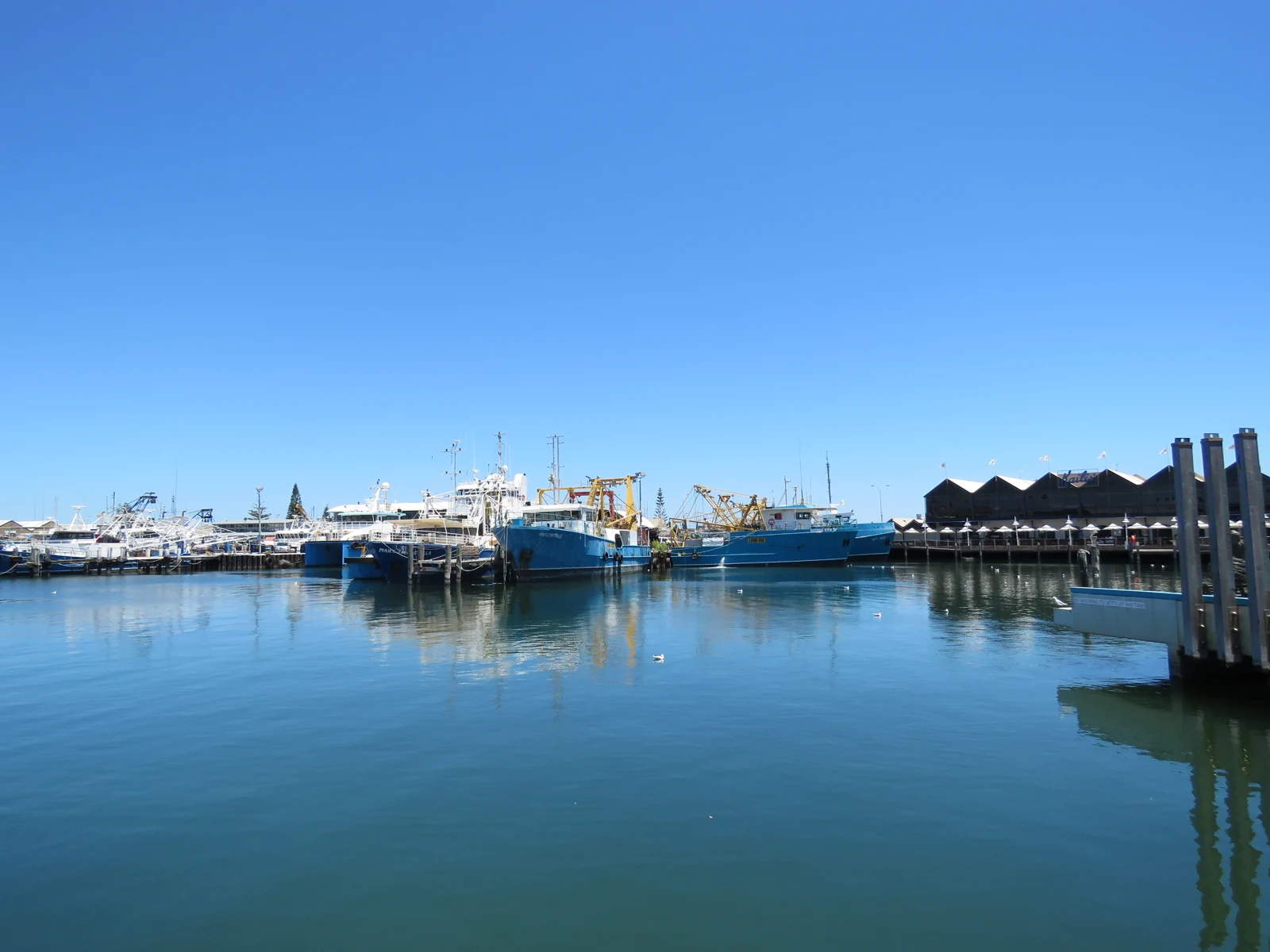
This guide concerns daylight fishing from a suitable small boat in sheltered coastal or estuarine water. It assumes a competent skipper, appropriate equipment and a lawful fishing area. It does not teach boat handling, offshore seamanship or bar crossings. The cover shows vessels moored at Fremantle Fishing Boat Harbour; it illustrates planning before departure, not a demonstration of a small-boat drift or an invitation to fish among those berths.
Choose the fishing lane and the escape route together
Begin with an up-to-date chart and local navigation information. Choose a manageable lane across a sand edge, a depth change or a patchwork of open bottom and vegetation. Identify the downstream end before approaching. There must be room to recover all lines and regain controlled movement well before rocks, shallow water, anchored boats, a navigation channel or a closed area.
A chart helps you plan but does not replace observation, soundings or local knowledge. Water level, chart accuracy and the vessel's draft all matter. Do not make the first practice drift beside an unfamiliar reef or a busy harbor entrance. An uncomplicated open area is a better place to learn what the boat actually does.
Assign the skipper and lookout roles clearly. If the skipper cannot fish while maintaining a proper lookout and safe control, someone else should fish or the boat should not drift there. Everyone should know the instruction that means lines in now. A bite does not suspend the plan to avoid a hazard.
Read the weather and the current separately
The Australian Bureau of Meteorology advises checking marine warnings, weather, wind, waves and tide times. Review the whole return journey, not only the expected conditions at departure. A sheltered-looking launch can lead to exposed water, and a forecast wind change can make the return markedly different from the outbound trip.
NOAA's tide guidance explains that high and low water do not have a universal timing relationship with slack or maximum current. Obtain current predictions where available, then check actual movement in your selected area. Wind acting on the boat can make its track over the bottom differ from the direction of surface current.
There is no single safe wind limit or ideal drift speed for every boat, crew and fishing method. Windage, load, hull form, waves and the chosen escape route all matter. If the boat cannot be kept under safe control, abandon the drift. More sinker weight cannot solve an unsuitable boating situation.
Make the first pass a measurement
Start outside the fishing feature with ample open water ahead. Once the skipper establishes a safe drift, observe the track on the chartplotter and compare it with fixed landmarks. Note the starting depth, the depth trend and the direction of travel. Use the same chart scale on later passes so the comparison remains meaningful.
A short practice interval can reveal whether the boat crosses the feature or follows it. For example, moving approximately 20 metres over the ground in one minute is about 0.65 knots. That calculation describes an illustrative measurement, not a recommended target. It also does not tell you the water speed past the lure, because the boat and the surrounding water may be moving together.
Mark a start and a stop point only when doing so does not distract from lookout duties. Note whether the drift changes as the wind or current changes. A saved track is a record of what happened once, not a corridor the boat will follow automatically on its next pass.
Match bottom shape, forage and presentation
Different habitats ask different questions. A sand edge can be searched near the bottom; vegetation may require a lure above the plants; suspended small fish can make a bottom-only approach irrelevant. Use local fishery information to establish which species and prey actually occur. Do not transplant a species list from another country merely because the seabed looks similar.
A useful Australian example comes from the Victorian Fisheries Authority's East Gippsland flathead guidance. It describes ambush opportunities near points, vegetation and depth changes, with small fish and prawns among the relevant prey. Its advice to repeat a productive drift supports a practical principle: once an encounter identifies useful water, learn that section before searching a much larger area. This is an example of the method, not a flathead forecast for every estuary.
| Fishing lane | Food or holding opportunity | Starting presentation | What to watch | Adjustment to test |
|---|---|---|---|---|
| Open sand beside a depth change | Bottom-associated predators may wait near a route used by small fish or crustaceans | A small soft plastic on a jighead worked close to the bottom | Whether you can distinguish occasional bottom contact from constant dragging | Change weight slightly or shorten the cast to regain control |
| Sand pockets beside vegetation | Prey can use the plants while predators work the openings | Swim a paddle-tail above the vegetation, allowing a controlled fall in open pockets | Grass on the hook and whether the lure reaches the intended opening | Fish higher or use a more suitable weed-resistant presentation |
| Low relief over otherwise open bottom | A local break may offer shelter or feeding opportunities | A controlled jig or permitted bait presented close to the feature | Depth changes, line angle and snag frequency | End the pass before taller structure; reposition along its safe outside edge |
| Midwater baitfish activity | Locally present predators may feed above the seabed | A swimming lure at the observed layer | Depth of the activity, not just the boat's bottom depth | Shorten the sink time; do not keep fishing underneath the evidence |
| Quiet edge beside stronger flow | Shelter near passing food | A lighter lure or bait kept within the quieter lane | Whether the boat crosses out of the lane too quickly | Alter the starting position or choose another controllable lane |
These are editorial starting suggestions. Neither a mark on a sounder nor an apparently ideal edge proves that feeding fish are present. Treat the first few passes as tests of habitat and presentation, not a promise of a catch.
Build a rig that you can follow
For an introductory soft-plastic session over modest estuary depths, a spinning outfit around 7 feet with a lure rating appropriate to the complete rig is a manageable example. Choose line and leader for the expected fish, abrasion and local rules. A light rod suitable for open sand should not be used to force a large fish away from heavy reef or bridge structure.
A 7–10 centimetre minnow or paddle-tail plastic provides a useful illustrative profile for small-fish forage. The jighead should be heavy enough to reach the chosen layer while the boat crosses the lane, but not so heavy that it ploughs continuously. Exact weight depends on depth, current, line diameter, cast length and boat movement; keep a small range of compatible weights instead of treating one head as correct everywhere.
Check that the plastic is straight and that its tail works at the intended speed. A twisted body can spin and create line twist. For bait fishing, use a simple lawful rig with appropriately sized bait and hooks, avoiding unnecessary droppers until the crew can manage the lines. When catch and release is intended, do not deliberately wait for a fish to swallow the bait deeply.
A compact metal jig offers a different action from a soft plastic: compare small lifts with a controlled fluttering fall in clear water below the boat. A swimming plastic is useful for covering a horizontal lane; a permitted natural bait offers a slower scent-based presentation. Choose between these by the layer and movement you can maintain, not by a claim that one lure always catches more fish.
Manage the lure relative to the boat
In open water with a clear casting lane, a short cast in the direction the boat is travelling can allow the lure to settle before the boat reaches it. Retrieve excess slack as the distance closes, maintaining control without dragging the lure continuously. If the line starts passing beneath the hull, recover it promptly. This method requires clear communication so anglers do not cross lines.
A nearly vertical presentation can be easier to interpret in suitable conditions. Lower under control, establish the chosen layer, then make small lifts and controlled falls. Pay attention during the fall: unexpected slack or a sideways movement can deserve a careful response. If bottom contact becomes continuous, the rig may be too heavy, the depth may be decreasing or the drift may have changed.
Long line does not automatically mean better bottom contact. It can increase drag, make bites harder to interpret and leave the tackle far behind the boat. Before feeding out more line, check depth, angle and the remaining distance to the stop point. Adjust one variable, then assess whether control improved.
Repeat useful water deliberately
When a bite occurs, record the location if safe, but also record the depth, lure, line angle and stage of the pass. A waypoint alone leaves out the presentation that reached the fish. Recover the lines and return outside the fishing lane without running directly through other anglers or the small area you intend to test again.
On the next pass, begin far enough before the encounter point for the lure to settle into the same layer. The correct starting position may be upwind, up-current or somewhere between, depending on the measured track. Use the actual previous drift as the first clue, then allow for changed conditions.
Try one comparable repeat before substantially changing tackle. If the second pass misses the lane, correct boat positioning first. If it crosses the lane correctly but the lure never reaches the layer, adjust weight or sink time. Only then compare a different profile, action or bait. This order helps separate boat-control problems from fishing choices.
Know when a drift has stopped being useful
Repeated snags usually justify changing the lane, presentation or depth control. A rapidly increasing line angle can signal that the rig is no longer doing the intended job. A drift that enters traffic, approaches a lee shore or leaves insufficient maneuvering space should end immediately, regardless of bites.
A drogue can alter drift characteristics, but it requires correct equipment, attachment and deployment for the particular vessel. It is not an improvised cure for unsafe conditions. Obtain practical instruction and follow the equipment and boat manufacturer's guidance. Keep drogue lines and fishing lines clear of propulsion, and recover all necessary gear before maneuvering.
A compact session plan
Allocate the first part of the session to a safe practice pass and observation. Make two short comparable fishing passes over one open feature, then decide whether the evidence supports repeating it or moving. Keep enough time and margin for the return trip. Do not extend the session merely to complete a planned number of drifts.
Finish with a short record: starting position, track, depth range, actual conditions, presentation and what changed between passes. Check the current local fishing rules and any spatial restrictions before the next trip. A controlled drift becomes repeatable knowledge when you can explain both where the boat went and what the lure did beneath it.