Warmouth fishing rewards a short, accurate presentation more than a long cast across empty water. At Tahkenitch Lake on Oregon’s central coast, the useful starting question is not how far you can cast, but whether a small bait can reach a sheltered pocket beside cover and come back clean. A float lets you hold that bait above debris. A small jig lets you compare several pockets without continually adjusting a float.
This is a practical search plan, not a current catch report. The tackle dimensions, test depths and time allocations below are starting suggestions to adjust to observed conditions. Late autumn should not be advertised as the local peak: the strongest seasonal guidance for warmouth concerns late-spring spawning. In November, make the trip worthwhile through a careful cover search and realistic expectations rather than a promise of fast action.
Know which sunfish you have
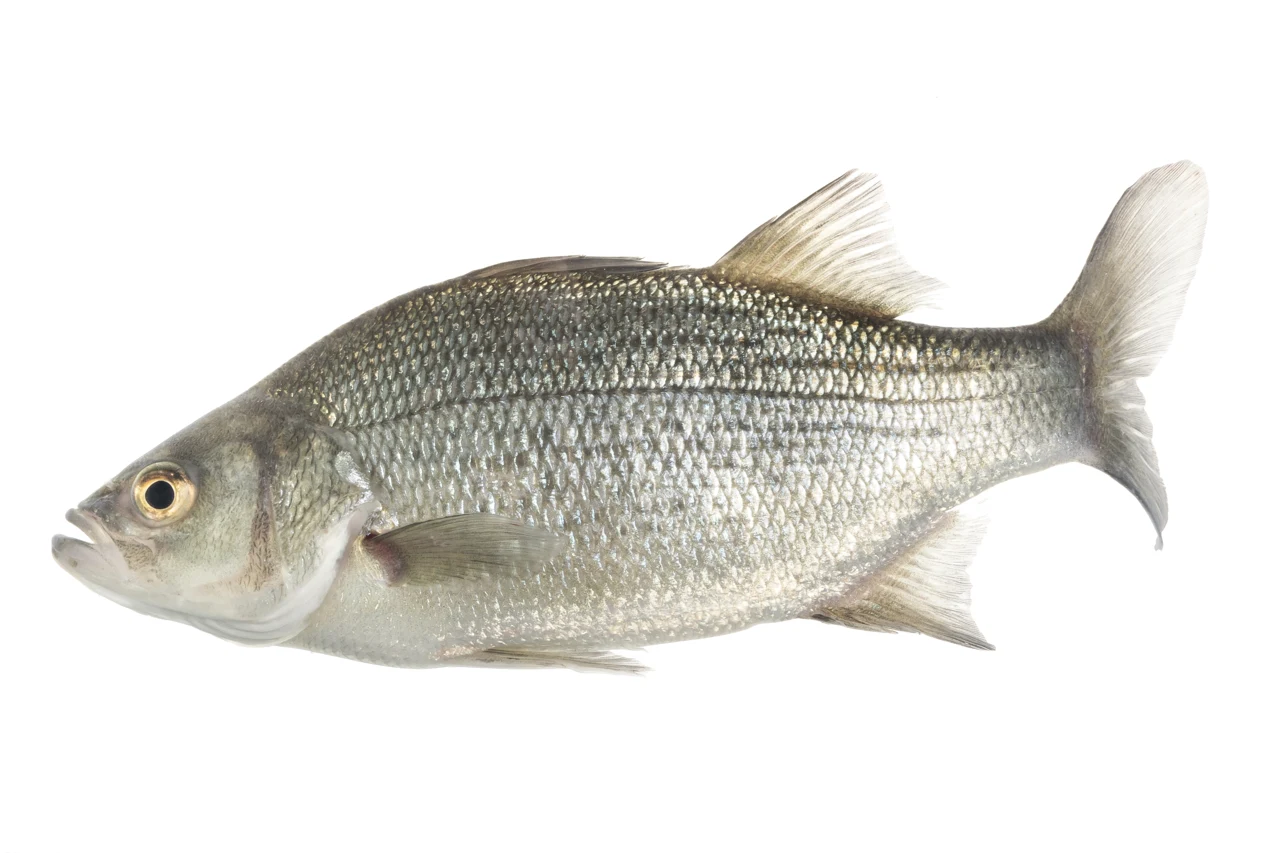
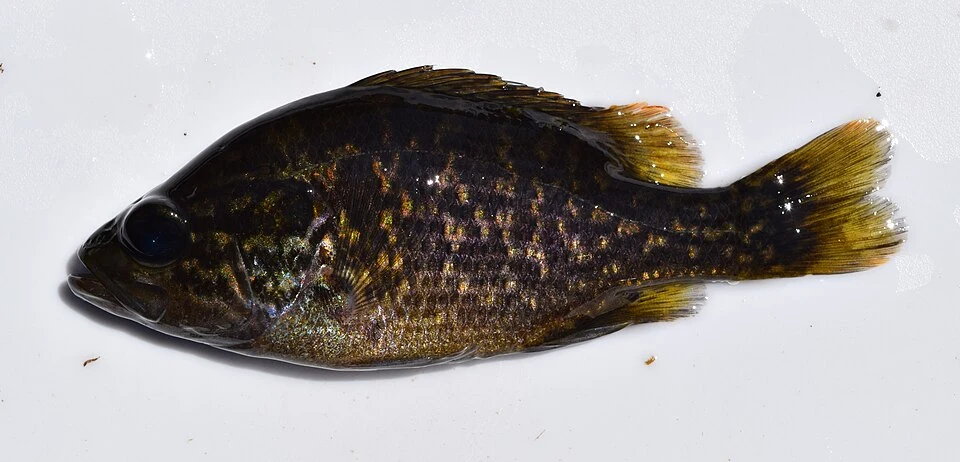
Warmouth, Lepomis gulosus, have a comparatively large mouth and a stocky, bass-like outline. Brown lines radiating behind the eye are useful identification features. Green sunfish can look similar, but have turquoise markings on the cheek and a dark spot near the rear base of the dorsal fin that warmouth lack. A rock bass is another possible source of confusion in identification guides: warmouth have three anal-fin spines, compared with six in rock bass. Do not use a red eye alone as identification.
The species’ native distribution includes much of the eastern and central United States, extending through Gulf drainages into Texas. Oregon populations occur in coastal lakes and the Columbia basin; Tahkenitch is specifically identified as a comparatively productive warmouth water. That is evidence for choosing the lake, not evidence that every landing or bay contains fish today. Photograph unfamiliar bycatch clearly if identification remains uncertain.
Access first, then choose a recoverable fishing lane
Tahkenitch Landing is on the lake in the Oregon Dunes National Recreation Area, north of Reedsport. Its published facilities include a boat ramp and day-use area. There is an important dated distinction: the Oregon State Marine Board’s 28 October 2026 access report lists Tahkenitch Landing’s ramp as open and its campground as seasonally closed, while separately flagging repairs at Tahkenitch Lake Boat Ramp. Check the current access report and local signs before travelling; the names do not make those facilities interchangeable.
An open ramp does not mean the entire shoreline is available for walking or that you should fish across launching boats. This plan can be used from a lawful, unobstructed bank position or a small boat positioned outside the operating lane. From a boat, begin with cover near the access area that you can fish and leave safely. Do not cross exposed water simply because a distant cove looks attractive.
Before rigging, identify where a hooked fish will be landed. A gap between branches with a clear route toward the net is more useful than an inaccessible hole under a large submerged tree. Avoid standing on unstable bank edges or climbing onto fallen wood to gain a few extra metres.
Read cover and food together
Warmouth favour sheltered water, soft bottoms, vegetation and submerged objects. Their food changes with size: small fish use tiny animal food including plankton and insects, while larger warmouth take larger invertebrates and small fish. Wood and vegetation can offer both concealment and access to food. The useful target is often the boundary where a fish can leave shelter briefly to intercept something edible.
Separate three kinds of water before casting. First is the shallow inside edge, where stems or branches meet a clear pocket. Second is the outside edge, where cover ends and the bottom begins to fall away. Third is an apparently similar but open control area. Comparing them helps distinguish a cover response from a general depth response.
Do not transplant a spring nesting depth into every autumn session. Instead, start with a bait about 45–90 cm below the float where the water permits, then use small adjustments to establish the bottom and the level at which the bait remains clean. These are test settings, not measured Tahkenitch fish depths. Where a pocket is deeper, investigate the outside edge rather than forcing a shallow presentation.
| Observed feature | First presentation | What it tests | Change if unsuccessful |
|---|---|---|---|
| Clear pocket beside stems | Suspended worm piece | Fish close to cover | Move bait down 10–15 cm |
| Wood with an open outer face | Short float cast | Accessible ambush edge | Try the next face before casting deeper into branches |
| Deeper outside weed edge | Small jig with a counted fall | Depth beyond the shallow shelf | Add fall time before adding weight |
| Soft bottom fouling the hook | Bait suspended above bottom | Clean food presentation | Shorten float-to-hook distance |
| Similar open water | Brief control cast | Whether cover matters | Return to structured water if no response |
Outfit and float assembly
A light spinning rod around 1.8–2.1 m with a 1000–2000 size reel is a useful starting outfit. Use roughly 4–6 lb nylon where the lane is open. Around abrasive wood, move toward 6–8 lb while keeping the terminal tackle small. Reel size labels differ by maker; choose balance and a smooth drag rather than a particular number.
For the first rig, attach a small fixed float to the main line. Below it, use a fine-wire size 8–12 single hook. If you prefer a replaceable hooklength, join about 30–45 cm of slightly lighter nylon with a small loop-to-loop connection. Add only enough non-toxic shot to stand the float with a clearly visible tip; place the lowest shot about 15–25 cm above the hook. Test the float at your feet before casting.
Thread on a short piece of worm that leaves the hook point exposed. A long trailing bait invites missed bites without necessarily attracting a larger warmouth. Start with a piece roughly 1–2 cm long, then enlarge it only if the hook and observed bites justify doing so. Keep the bait fresh enough to hang naturally rather than as a stretched, exhausted strip.
A fixed float is simplest when the required depth is comfortably shorter than the rod. If the lane is substantially deeper, use a sliding float with a stop knot, bead, float, shot and hook in that order. Set the stop to the tested depth. The advantage is casting a compact package; it is not permission to fish blindly into submerged timber.
Make the float work for you
Cast just beyond the open face of the cover, not into its thickest part. Feather the line before the rig lands so that the hooklength straightens. Allow the bait to settle, then take up loose line without dragging the float away from the pocket. A short cast across or slightly along the cover edge usually offers better retrieval control than one aimed directly through it.
Watch how the float behaves before assuming every movement is a fish. Wind can pull a large loop of line, while vegetation can hold the bait and make the float lean. A sustained sideways movement, a decisive dip or a float that lifts and stays changed deserves attention. With a small conventional hook, tighten and make a short, controlled lift; a sweeping overhead strike can pull the bait away or snag nearby branches.
Give a promising pocket a few quiet placements before moving. Try a slightly deeper setting and then a slightly shallower one. If each retrieval returns coated in weed or dark sediment, stop repeating the same depth. Raise the bait, move outward or change the casting angle. A presentation that spends most of its time buried is not a meaningful test of whether fish are feeding.
The small-jig alternative
For a second approach, tie on a jig around 1/64–1/32 oz carrying a 2–4 cm soft plastic. Choose the lightest head you can place accurately and follow through the water. The small profile provides a practical insect- or fry-sized offering; it is not a claim that the fish are eating that exact lure shape.
Start with a muted brown, olive or translucent plastic in clear water. A contrasting pale option can make the lure easier for you to track in stained water. These are visibility experiments, not a guaranteed colour rule. Keep size and action unchanged during a colour comparison so the result tells you something useful.
Cast beside the same open edge tested with bait. Count the initial fall, close the bail, and retrieve slowly with brief pauses and small lifts of the rod tip. Avoid aggressive hopping that repeatedly throws the jig into branches. A tap, unexpected weight or line movement during the fall can be a bite; reel until contact and lift smoothly.
If the jig snags repeatedly, first shorten its fall and pull it past the cover from a different angle. Only then consider changing weight. A heavier head may improve contact in wind, but it also reaches the snag faster. Where even a short fall fouls, return to the float rather than sacrificing tackle to an unsuitable lane.
A worked session and a decision after no bites
Imagine a sheltered, lawful position with a shallow stem pocket and a deeper open edge nearby. Start with the light spinning outfit, a size 10 hook and a short worm piece. Spend about ten minutes establishing clean depth and trying two float settings. This time block is an organising tool, not an expected bite window.
Next, move the rig a few metres to a second cover face while keeping depth similar. If one placement produces repeated float movements, reduce the bait slightly and make the next cast land on the same line. If nothing happens, compare the deeper outside edge with the small jig, recording the fall count that remains free of debris.
After roughly half an hour of controlled tests, change location if both clean bait and clean lure presentations have failed. Do not respond by simultaneously increasing hook size, bait size, weight and retrieve speed. Change one variable or move to a genuinely different cover arrangement. Record water clarity, wind exposure, cover type and successful depth setting; a blank session is still useful when the tests were consistent.
Local rules and a brief handling note
Check ODFW’s current Southwest Zone regulations and in-season updates before fishing. The 2026 zone table places other sunfish in its no-limit category unless an exception applies; that does not remove licence, gear, access or bycatch requirements. This guide concerns the lake, not permission to fish adjoining streams under lake rules.
Keep a small net and forceps ready, wet your hands and support fish while unhooking. Protect yourself from fin spines. Wear suitable flotation when afloat, avoid exposed crossings in poor weather, and take line and soft-plastic fragments home. The aim is a repeatable, accurate presentation beside cover, not a risky cast into the hardest place to retrieve a fish.