
Find a clean route between food and cover
At Theewaterskloof, the useful catfish cast is often beside a feature rather than directly into it. A bare strip alongside submerged wood, a firm patch beyond soft mud or a small depth change gives you somewhere to place a bait and a route to bring the fish back. Casting into the thickest visible branches may produce interest, but it also turns the first run into a tackle-loss problem.
This guide concerns bank fishing for sharptooth catfish, locally often called barbel. November and December offer a reason to plan a warm-season session, but neither month guarantees activity. Water level, wind and the location of food matter more than a calendar label. All tackle sizes, depths, bait dimensions and waiting periods below are practical starting suggestions, to be adjusted to the bank and fish you encounter.
Recognise the target
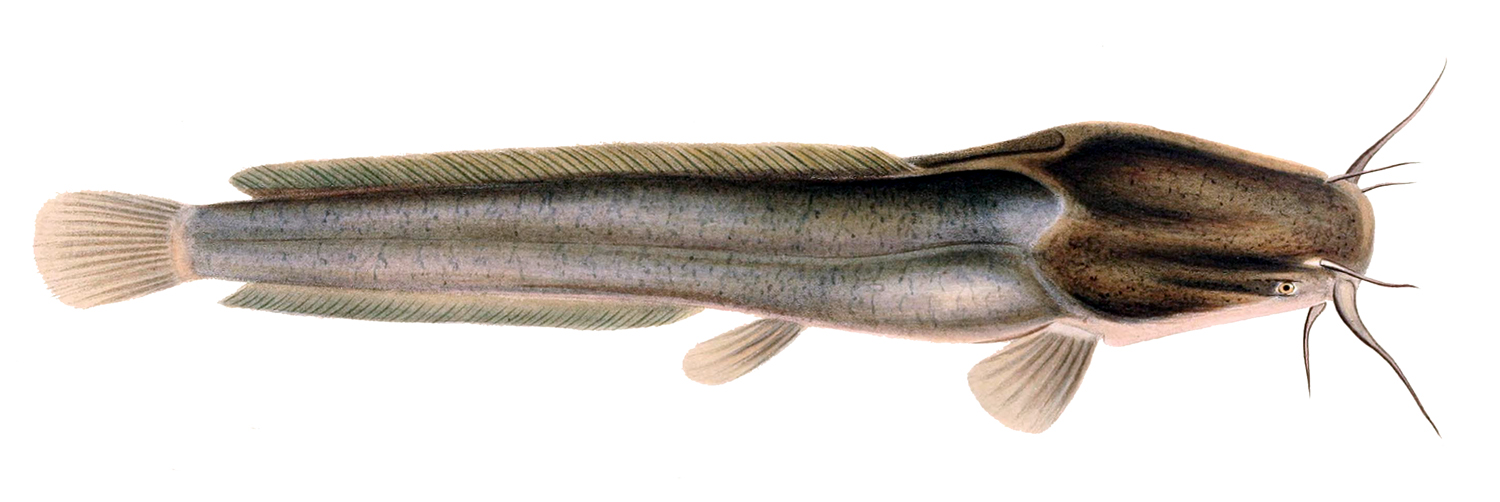
Sharptooth catfish, Clarias gariepinus, have smooth, scaleless skin, a broad flattened head, four pairs of barbels and long dorsal and anal fins. Their colour can vary from dark olive or brown to mottled grey. The local name barbel does not mean the scaled European river fish Barbus barbus. Carp also have barbels, but their scales, deeper body and very different fin arrangement make them distinguishable.
The species occurs widely in Africa and has been introduced beyond parts of its natural range. CapeNature specifically lists sharptooth catfish at Theewaterskloof; that is stronger evidence for planning than a photograph with no reliable locality. It does not establish how many fish occupy a particular bank.
These catfish can feed on invertebrates and fish, with larger individuals tending more toward fish prey. Their sensory barbels help locate food in poor visibility. That supports testing a natural bait on a clean bottom lane, without assuming the largest or strongest-smelling bait is best. An overloaded hook can conceal its point and create a presentation that is difficult to cast and easy to miss.
Use a verified access base
Theewater Sports Club, outside Villiersdorp, offers visitor and camping access on a peninsula in the dam. Its visitor information includes freshwater angling and identifies barbel among the fish present. Confirm the current visitor arrangements, shoreline areas available for angling and permitted session hours when planning the trip. A booking at one property is not permission to fish every neighbouring bank.
Choose a station with enough room behind you to cast and a gentle, clear landing edge. Keep away from swimming areas, slipways and active boating lanes. If the shoreline has retreated, inspect the newly exposed ground before carrying equipment across it: a firm-looking crust can cover soft mud. Pick the landing position before casting, particularly if you intend to remain toward dusk.
The club notes the importance of seasonal wind, including summer southeasterlies. For bank fishing, wind chiefly changes line control and the shoreline you can use comfortably. A modest wind toward a bank is worth comparing with a sheltered shore, but a large bow in the line can hide bites and drag a bait out of position. There is no benefit in fishing the theoretically attractive side if you cannot detect or control the rig.
Search in an ordered way
First inspect the near margin without standing directly over it. Look for a shallow shelf adjoining deeper water, an open gap beside wood or a change from weed to bare bottom. Then make short exploratory casts with a plain weight, staying clear of obvious snags. Feel whether it settles cleanly or buries into soft material, and retrieve gently rather than dragging it through branches.
Begin with water roughly 1–4 m deep where the shore offers it. This is a test band, not a measured local preference. Compare a near-bank lane with a slightly deeper position before trying maximum range. A longer cast also puts more line in the wind and makes the first few metres of a hooked fish's movement harder to control.
Low light is a reasonable time to test a bank, because the species commonly feeds at night, but daytime fishing can still be useful. If access ends before dark, fish a permitted afternoon session rather than inventing a night-fishing entitlement. Rain can alter the level and colour of inflows; observe those changes from safe ground and do not assume a fresh muddy plume automatically contains feeding catfish.
Rig one: running bottom bait
Start with a 2.7–3.3 m medium-heavy rod rated for the intended total casting weight, a 4000–6000 reel and 15–25 lb monofilament or 30–40 lb braid. With braid, add an abrasion leader suited to the bottom and casting load. A roughly 1.5–2 m length of 30–40 lb mono is a reasonable close-range starting point, but stronger casting protection may be needed for heavier loads and forceful casts.
Run the main line or abrasion leader through a free-running sinker link, add a protective bead, and tie on a strong swivel. Attach a 40–70 cm hooklength of 25–40 lb abrasion-resistant mono to the other end. Finish with a strong inline circle hook around 3/0–5/0, choosing its actual gap to fit the bait. Hook numbers vary between makers.
Begin with a 30–60 g sinker only where the rod can safely cast the sinker plus bait. Use enough weight to hold the chosen lane, not enough to pin the whole system into the bottom. The running link should pass line freely and should not be trapped between tight stops. On a clean bank, make a smooth lob rather than a sudden power cast.
A small, legally obtained dead-fish strip or a compact worm bait gives two different tests. A fish strip about 5–8 cm long is an initial size, not a required bait. Hook it through a tough section once or twice, leaving the point and gap clear. Do not gather bait fish from another water or assume a fish caught incidentally may lawfully be used as bait. Obtain bait through a lawful source and check local conditions.
Fish the circle hook correctly
After the sinker lands, recover slack until there is gentle contact. Rest the rod securely, keep the reel controlled and stay beside it. The line should neither hang in a large belly nor pull the bait across the bottom. A few taps may be small fish or movement of the bait; a steadily tightening line is a more useful signal.
With an inline circle hook, allow the fish to draw the line tight, then wind steadily and raise the rod as it loads. Do not make a violent strike. The hook works by turning toward the mouth corner under sustained tension. If you repeatedly pull the bait away, reduce the urge to strike and check whether the bait is obstructing the hook gap.
When the rod loads, use low side pressure to steer the fish away from the nearest obstacle. If it runs toward cover, respond early rather than waiting until the line has wrapped around wood. A strong leader helps with abrasion; it does not make a snagged fish recoverable by force.
Rig two: suspend worms above troublesome bottom
A float rig is useful when bottom baits vanish into soft mud or when you want to compare a shallow margin without repeatedly retrieving a buried sinker. Use a robust sliding float capable of carrying about 10–20 g, a float stop, bead, sliding float, suitable weight, swivel and a 40–60 cm hooklength of 15–25 lb mono.
Start with a strong size 1 to 1/0 J hook and a modest bunch of worms, keeping the point exposed. Match the hook to the bait rather than adding worms until the hook disappears. Set the stop so the bait hangs perhaps 20–40 cm above the measured bottom. Plumb the station carefully; moving the float stop by a metre without checking depth does not tell you where the bait actually fishes.
Cast a short distance along the margin and allow the rig to settle. Hold or lightly mend the line so wind does not tow the float faster than the water. If the float repeatedly lies flat, the weight may be resting on bottom; if it drags sideways and disappears at the same place, suspect an obstruction before striking.
On a sustained submergence or purposeful sideways movement, wind out slack and lift firmly. This is a J-hook response, unlike the slow loading of the circle-hook rig. If small fish strip worms immediately, change bait size or move the station instead of feeding the same nuisance fish for the entire session.
| Bank condition | Why inspect it | Starting presentation | Bite response | Adjustment |
|---|---|---|---|---|
| Clean bottom beside wood | Cover and open feeding lane meet | Running rig with compact dead bait | Wind into a sustained pull with circle hook | Cast farther from branches if fish cannot be steered clear |
| Soft mud on a shallow shelf | Bottom bait may disappear | Float with worms just off bottom | Lift into a definite take with J hook | Re-plumb before adding weight |
| Wind pulls line across the lane | Rig control is poor | Shorter running-rig cast | Watch for steady tightening rather than wind taps | Move to a more sheltered bank |
| Repeated bait theft without a proper run | Small fish may be feeding | Slightly tougher or larger bait | Avoid striking every vibration | Change location if the pattern persists |
A worked afternoon
For a three-hour legal bank session, choose one clean lane beside structure and one open shelf. Set up a 3 m rod, 20 lb mono, a freely running 40 g sinker and a 50 cm hooklength ending in a 4/0 circle hook. Confirm the loaded rig is within the rod rating. Start with a small dead bait and cast short enough to inspect its placement reliably.
After fifteen to twenty minutes, retrieve and inspect the bait. An untouched bait suggests a location or activity question; a stripped bait suggests a presentation or small-fish problem. Replace it, then test the adjacent depth rather than doubling the bait size immediately.
If the sinker is burying, switch to the float and worms above the shelf. If neither lane shows activity after a disciplined comparison, move to another permitted station with a different bottom type. Keep the next test simple: the same bait in a new place tells you more than simultaneously changing bait, depth, hook and range.
Finish by noting the useful depth, whether bites occurred in wind or shelter, and whether bait remained intact. These observations make the next visit more precise even when the session produces no fish.
Rules and handling
CapeNature requires the applicable freshwater angling licence for public waters such as Theewaterskloof. Check current permit conditions, bait and fish-disposal requirements, and the club's access rules before setting up; the club's visitor fee does not replace a licence. This bank plan does not require a boat.
Use a large net where practical, keep clear of the stiff pectoral spines, support the body and never lift a fish by its barbels or gill openings. Keep unhooking equipment ready and handling brief. Do not move live fish between waters. Avoid fishing a position from which a hooked fish can only be dragged over rocks or lifted up a high bank.