
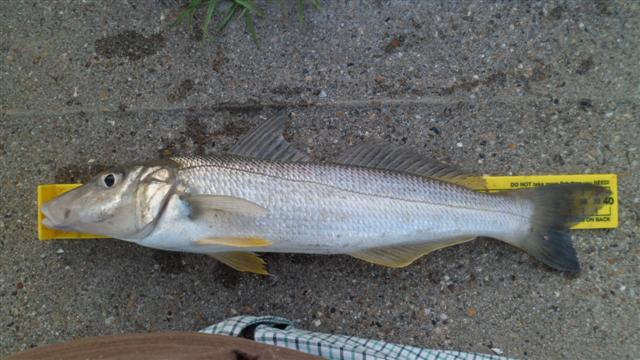
Tuross Lake offers two very different ways to catch sand whiting: put a small natural bait where fish are searching the bottom, or persuade a moving fish to chase a surface lure across a shallow flat. For November through summer, carry both options. The useful decision is whether the fish are feeding close to the sand or willing to rise through the water, rather than which method has the most fashionable tackle.
The local seasonal guide identifies November–April as the typical whiting window. That is a planning season, not a current catch report or a promise that every warm afternoon will produce fish. The measurements below are practical starting suggestions for this fishery; adjust them to actual depth, wind, bait size and the action of your particular rod and lure.
Recognize the fish and the feeding ground
The target is sand whiting, Sillago ciliata, a slender eastern Australian coastal fish. A dark mark at the base of the pectoral fin helps separate it from yellowfin whiting, which lacks that mark. Do not identify a fish from yellow fins alone. King George whiting is another distinct species, and a general photograph labelled simply whiting does not establish sand-whiting identity.
Sand whiting use shallow sandy and muddy-sand environments. Small bottom-dwelling prey explain the value of worms, nippers and small crustacean-shaped offerings. Think of a flat as a feeding surface rather than featureless water. A slight gutter, patch of broken shell or border between open sand and vegetation can concentrate searching activity. These are places to test, not evidence that fish occupy every visible edge.
Tuross is a connected system of shallow lakes and channels on the NSW South Coast. The local fishing guide verifies extensive flats and shallow weed-bed fishing for whiting. Focus this plan on the accessible margins of the lower lake and main basin rather than assume every upper freshwater reach has the same species. The entrance and sandbanks change; an old map cannot give today's wading depths.
Choose a lane before choosing a lure
Walk or idle along a permitted margin and look for three things: a clean presentation lane, water reaching a feeding flat, and a deeper escape route nearby. A flat that is entirely exposed cannot be fished in the same way as a covered bank. At higher water, test its inside edge; as water falls, move toward the adjoining gutter instead of repeatedly casting onto sand that fish have left.
On a rising tide, one useful experiment is to work across the advancing water and cover new ground. On a falling tide, try casting along the draining edge. Local water exchange can be affected by the entrance, so use observed movement as well as a tide prediction. A wind ripple may make a surface presentation less conspicuous, but strong wind can also prevent accurate casting and line control.
| Water feature | First method | Presentation | Change when |
|---|---|---|---|
| Clean shallow sand | Worm on running rig | Short cast and gentle movement | Bait returns untouched |
| Sand beside low weed | Small surface stickbait | Brisk continuous tracking | Lure repeatedly fouls |
| Slight gutter beside flat | Nipper or worm | Let bait settle near edge | Sinker buries or rolls |
| Fish following on top | Smaller popper or stickbait | Keep lure travelling | Repeated follows without contact |
A light outfit that serves both methods
A 2.1–2.4 m light spinning rod and a 1000–2500 reel make a useful compact outfit. Start around 4–6 lb main line, with roughly 1 m of 4–8 lb leader. The lighter end suits open clean sand; increase abrasion resistance when shell or rough ground is repeatedly damaging the trace. A heavier leader is not automatically better if it prevents a tiny lure working properly.
Choose a rod that casts the actual lure weight. A stiff heavy rod makes a small popper difficult to animate and pulls small hooks abruptly. Set a yielding drag before fishing, and check that the leader knot passes the guides cleanly. Carry a few small swivels, several sinker weights and spare hooks rather than a large box of unrelated rigs.
For bait, a small long-shank hook around size 4–1 is a practical range to trial, matched to the bait; hook sizes vary among makers. A small non-offset circle is an alternative when you intend to let the fish load the rod. These two choices require different hook-setting responses. Do not use a large bait bundle merely because a larger hook is already tied on.
Build and fish the running-sinker rig
Thread the main line through a small running sinker, add a protective bead if the sinker would damage the knot, and tie to a small swivel. Attach about 80–100 cm of leader to the other end, then the hook. The sinker stays above the swivel while the bait moves behind it. Start with only enough weight to cast and keep occasional bottom contact; roughly 2–7 g is an experimental range in sheltered shallow water, not a required weight.
Thread a worm sufficiently far up the hook to hold it during the cast, keeping the point exposed and a short section moving freely. With a nipper or small prawn portion, avoid masking the hook gape. Bait that spins, bunches into a ball or comes back folded over the point needs re-rigging before you change locations.
Cast slightly across the observed movement, allow the bait to settle, then take up excess slack without dragging it continuously. After a short pause, move it a small distance and let it settle again. You are offering a bottom-level target while checking a strip of sand. If the sinker ploughs deeply, reduce weight; if the entire rig races along, shorten the cast into a slower lane or increase weight a little.
With a long-shank J hook, lower the tip slightly after the first taps and lift smoothly when there is sustained pressure. With a circle hook, keep winding as the rod loads rather than striking sharply. Striking every tiny vibration often removes the bait from a fish still investigating it.
Assemble the surface option
Remove the sinker rig and connect a small popper or walking stickbait directly to the leader using the lure maker's recommended connection. A roughly 40–70 mm floating lure is a useful starting size. It must sit and move properly with the leader attached. Oversized clips can interfere with a small lure, while tangled front and rear hooks can make a perfect-looking cast ineffective.
Cast beyond the intended feeding lane, lower the rod and begin a brisk, controlled retrieve. With a popper, use small repeated tip movements to create a travelling disturbance rather than large stationary splashes. With a stickbait, coordinate short taps and winding so it changes direction while advancing. Test beside you first so that you can see what the hand movements actually do.
A following whiting may keep tracking a moving lure and lose interest when it stops. Try maintaining pace through a follow rather than imposing the long pauses used for other predators. Treat that as a presentation experiment, not an absolute rule. When a fish swirls, keep retrieving until you feel weight; a visual splash alone is not a reason for a hard strike.
Start with a translucent, pale or natural-looking lure in clear shallow water, then compare a more visible contrasting option if the first is hard to track. There is no verified universal rule that a particular sky or tide demands one color. Change visibility after checking depth, movement and whether fish are actually present.
Work a two-hour session
Spend the first ten minutes checking access, moving water and the sand–weed boundary. Start on a clean section with the running rig, a small worm bait and minimal sinker. Make a short cast along the near edge, then a second across the next lane. The nearest feeding fish should not be bypassed by every cast.
After twenty minutes, compare fresh bait at two distances. If taps occur but hookups do not, inspect the exposed point and reduce bait bulk. If there is no response and the bait remains intact, move a short distance to a different edge rather than immediately adding stronger scent or a larger sinker.
When you see movement over a shallow flat, spend a defined period with the surface lure. Fan three cast angles, keeping the retrieve consistent enough to compare them. After a follow without contact, repeat the lane once with a smaller profile or slightly different pace. Return to bait if the fish show no willingness to rise.
End by revisiting the best lane at its changed water level. Record the water coverage, method and response rather than only the tide-table label. That makes the next trip more useful even when the session produces no fish.
Local rules and a brief handling note
NSW DPIRD's current table lists a 27 cm minimum for sand whiting and a combined whiting bag of 20. Check FishSmart and the current Batemans Marine Park zoning, fishing-fee requirements and bait-collection rules for the exact place; a recreational fishing haven is not blanket permission everywhere. The source list provides the official starting points.
Use permitted shore access, avoid disturbing seagrass and oyster leases, and do not treat the shifting entrance as a routine boating route. Keep release handling brief and gentle, with wet hands and minimal time out of water.