
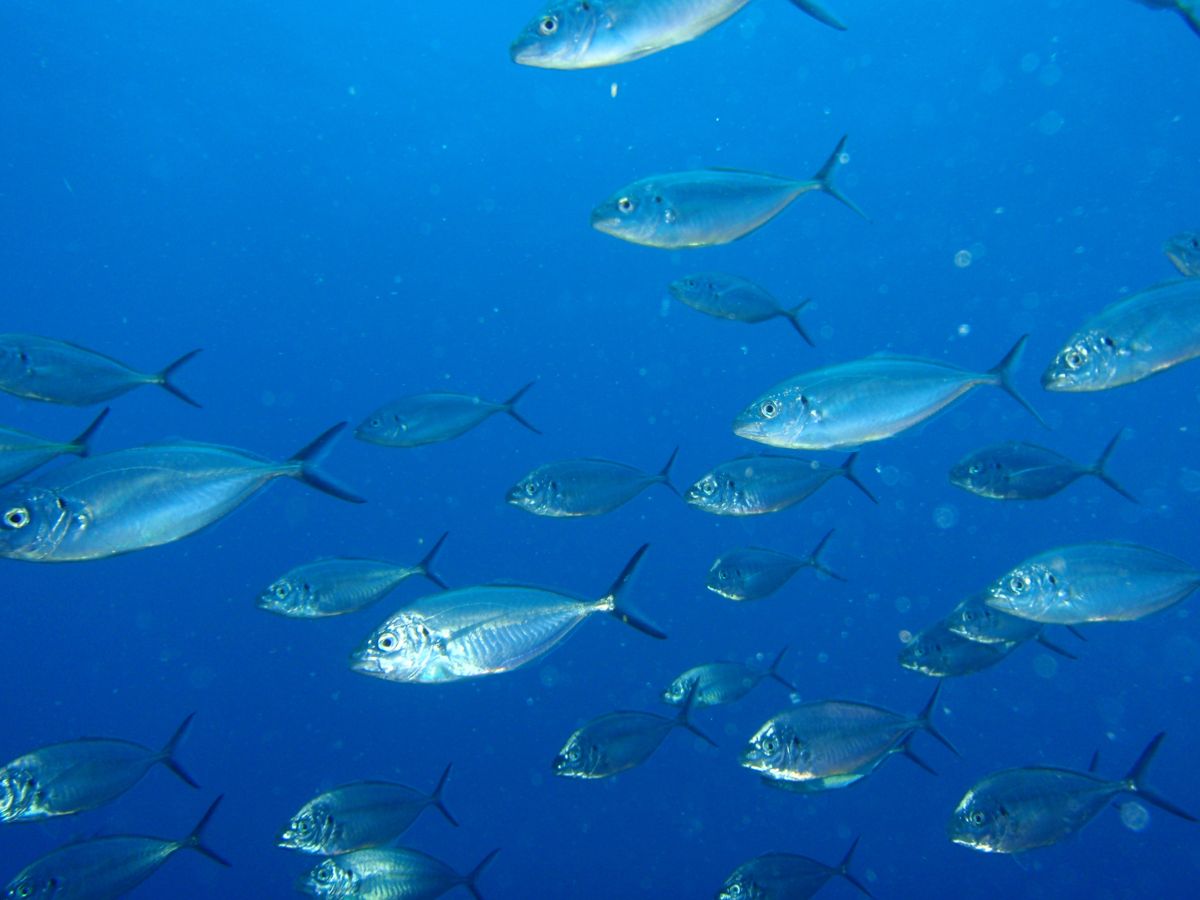
Silver trevally reward a different approach from simply casting the heaviest sinker as far as possible from a pier. A small bait travelling naturally beside structure can be more useful than a large bait fixed well away from it. On Western Port, the first task is to find a water lane you can control, then discover whether fish are feeding near bottom or higher in the water.
This guide uses the Victorian fishing category silver trevallies, Pseudocaranx spp., rather than pretending that every fish called silver trevally belongs to one conclusively identified species. The current Victorian category explicitly covers more than one species. It is distinct from giant trevally and other tropical trevallies. A photograph or a common name alone should not be used to make a more precise taxonomic claim.
The local seasonal booklet lists October–May as a typical opportunity. Plan for the coming warmer months, but treat that window as broad guidance. The rig measurements and working depths below are practical starting suggestions, not a report of present catches or an assurance of a peak bite at a particular tide.
Find accessible structure with a usable lane
The Western Port guide lists silver trevally among potential catches at San Remo Jetty, Stony Point Pier and other mapped locations. These are verified planning examples, not a live declaration that every part of either structure is open. Check current access, works and signs; leave ferry, boating and working areas clear.
The useful feature is not the pier name itself. Look for the boundary between pilings and open water, a slower pocket beside moving water, or a change from sand to darker cover. A structure can provide shade and feeding surfaces while current transports food past it. Your bait must reach that lane without immediately wrapping around a pile.
Smaller trevally use inshore sandy habitat; larger fish can occur farther offshore. They school, so one catch may justify repeating the same depth and angle. It does not justify assuming a school remains beneath you after the tide changes. Small crustaceans and other compact food items make prawn, shellfish and small fish portions useful bait choices; the local guide includes pipis, squid, whitebait and pilchards.
Start in a controllable lane close to the structure. Then compare a short cast to open water and one parallel to the edge. Where permitted and practical, moving a few metres along the pier may give a cleaner presentation than adding weight to fight the strongest current.
| Condition | Rig to test | Why | First adjustment |
|---|---|---|---|
| Slow water near a pile | Light running-sinker bait | Allows a small bait to move | Reduce sinker if bait pins down |
| Fish taking food above bottom | Float and prawn | Holds bait at a chosen depth | Change depth before bait |
| Open sand beyond structure | Small plastic | Searches more water | Alter countdown and angle |
| Fast lane with constant snags | Shorter controlled presentation | Reduces line belly | Move to slower side |
Choose light tackle with an abrasion margin
A 2.1–2.7 m light spinning rod and 2000–3000 reel are useful starting equipment. Consider 6–10 lb main line and 6–12 lb leader, with about 1–1.5 m of leader for bait or plastics. Choose strength for the structure and fish you actually encounter. On a clear unobstructed edge, a thinner leader improves the movement of a very small offering; beside rough piles, abrasion resistance matters more.
Set the drag so a fish can run without a sudden break but cannot take unlimited line through the structure. Test it by hand before casting. A soft tip helps show small bites and absorbs surges, while sufficient lower-rod power lets you guide the fish toward open water.
Start with small fresh bait portions instead of an entire large prawn or pilchard. A size 6–2 J hook is a practical range for compact pieces; select gape and wire strength to suit the bait and expected fish. A small non-offset circle is an alternative, but remember that circle hooks are loaded by winding rather than a sharp strike.
Build the running-sinker bait rig
Pass the main line through a small ball sinker, add a protective bead if needed and tie to a small swivel. Attach 60–100 cm of leader and then the hook. A roughly 2–10 g sinker range is worth carrying for sheltered presentations, but use the lightest weight that still allows you to follow the bait. You may need a different range in stronger flow; relocating often gives better light-tackle fishing than endlessly increasing lead.
Place a small prawn, pipi or narrow squid strip on the hook with the point exposed. A long squid tail may attract interest without bringing the mouth to the hook, so shorten it if bites repeatedly fail to connect. A bait that rotates in the current will twist the trace and should be re-rigged.
Cast a little up-current of the lane, let the rig descend, then wind slack until you can follow its travel. Allow it to move across the feeding area with intermittent contact rather than lock it motionless beneath the pier. Retrieve before it reaches the next pile. If you cannot tell where the line enters the water or where it will go next, shorten the cast.
For a J hook, respond to sustained pressure with a smooth lift. For a circle, wind steadily until the rod bends. Small taps can be bait picking, line brushing structure or another species; inspect the bait instead of assuming every vibration is a missed trevally.
Use a float when the feeding level changes
A float separates depth control from bottom contact. For water within comfortable fixed-float range, attach a small float to the main line, add shot below it to leave only a sensitive tip showing, and finish with 40–70 cm of lighter trace and the hook. For deeper water, use a sliding float with a stop knot, bead and appropriately placed weight, following the float's stated loading.
Set the bait initially above the bottom and test in small depth increments. You are looking for the level where it travels without dragging or snagging. If fish begin taking higher, move the stop or float rather than leaving a long section of trace scraping the substrate.
Cast up-current, close the bail and feed line sparingly so the float travels without being dragged sideways by a large belly. Stop the drift before it reaches a working area or adjacent angler. A float that lies sideways may have too much weight resting on bottom, a tangled rig or insufficient loading; solve that before interpreting it as a lack of bites.
Search with a small soft plastic
A 40–70 mm grub, small prawn profile or slender minnow on a 1–5 g jighead provides a useful alternative where current is moderate. Match a small fine-wire hook to the plastic so it hangs straight and the point clears the body. Use a slightly heavier head only when you cannot reach the intended lane.
Cast across the slower edge, allow a controlled countdown and retrieve with short lifts followed by a falling pause. Watch the line as the lure sinks; a jump or early stop can be the bite. Keep enough contact to detect it without pulling the lure unnaturally up and away on every movement.
A pale or translucent profile is a reasonable first comparison in clear water; a contrasting darker or brighter body may be easier to track in stained water. No fixed color has been verified as universally best here. Change depth and retrieve before assuming the fish reject the shade.
A worked pier session
Begin with ten minutes observing flow and safe casting lanes. Assemble the running rig with a small prawn portion and fish the nearest clean edge. Compare a short drift and a slightly longer one, retrieving before either reaches the piles. A fish on the first short cast is a reason to repeat it, not immediately cast farther.
After twenty minutes without a clear response, inspect the bait. If it is disappearing in tiny pieces, reduce the portion and check the point. If it remains untouched, try the float at a shallower level or move to a different side of the structure. Give each change enough casts to mean something.
Once the current is manageable, spend fifteen minutes searching open water with the plastic. Use two countdowns and the same retrieve so the comparison isolates depth. Return to the bait lane when conditions change. Record the successful level, current direction and rig rather than labelling the whole pier good or bad.
Rules and care
VFA's current silver-trevally page lists a 20 cm minimum and a combined bag of 20 across silver-trevally species. Check the current Victorian guide for licence requirements, marine protected areas and the exact access location. Do not borrow a Tasmanian or NSW limit from a species information page.
Use a suitable net where the height permits rather than lifting a fish by light line. Keep handling brief with wet hands, avoid sharp scutes near the tail and return unwanted fish gently. Fish from a position that remains safe as tide and wind change.