A careful first winter with pike
A pike following a lure through clear winter water can make a short English afternoon feel suddenly eventful. November and December offer a useful setting for learning: weed may be thinning, bankside vegetation is easier to read, and a mobile approach lets you explore several small areas. None of that promises a bite. The first objective is to learn a repeatable method and return any fish safely.
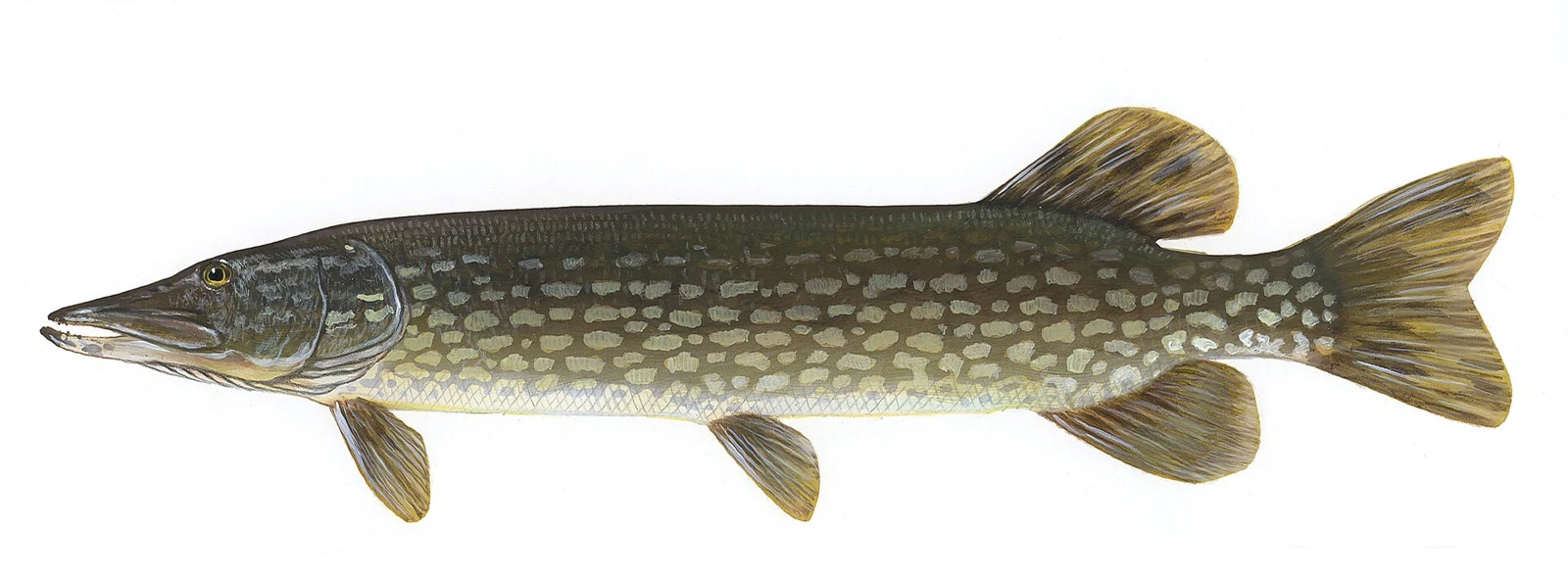
This guide chooses bank-based lure fishing for northern pike, Esox lucius, rather than deadbaiting. An actively worked lure keeps the angler engaged with the presentation and avoids the particular problem of leaving a natural bait while a fish swallows it. Lures can still hook awkwardly or deeply. Begin with an experienced pike angler or qualified coach who can demonstrate landing, hook removal and release before you fish independently.
Check the water, then the paperwork
In England, anglers aged 13 or over generally need an Environment Agency rod fishing licence for freshwater fishing; junior licences for ages 13–16 are free. The River Tweed has separate arrangements. A licence does not buy access: obtain the fishery owner's permission, normally through a day ticket, club membership or other permit. GOV.UK makes that distinction explicitly. A publicly accessible towpath is not automatic permission to fish.
Ask the controlling club whether pike lure fishing is permitted in November and December, where its boundaries run, and whether it requires particular hooks, trace strengths or equipment. Check both the national Environment Agency byelaws and the supplementary byelaws covering the actual catchment. A club rule can add restrictions; it cannot cancel a statutory one.
The coarse fish close season on English rivers, streams and drains runs from 15 March to 15 June inclusive. Pike are coarse fish. Most enclosed stillwaters and canals allow coarse fishing throughout the year, but exceptions matter. The current South East byelaws, for example, list the Wey Navigation and specified stretches of other canals as having that spring closure. Verify the particular water rather than assuming every navigation is exempt. November and December lie outside the national spring closure, but a venue may impose its own closure or suspend fishing.
Choose an easy place to learn
For an initial outing, favour a permitted canal stretch or small lake with firm, accessible banks, a clear casting lane and a safe netting position. Ask a local club for a beginner-suitable location rather than chasing reports of large fish. Flooded rivers, steep reservoir walls and remote marshy banks add problems before the fishing begins.
The Canal & River Trust describes pike as ambush predators using cover in slower rivers and canals. Translate that into a short list of places to examine: the outside edge of remaining weed, a change in bank profile, open water beside cover, and the approach to a wider basin. These are search ideas, not assurances that a pike lives at each feature. Never cast into prohibited lock structures, boat movements or obvious tangles of mooring ropes.
Stand back and watch before casting. Small fish dimpling or scattering may be useful clues. Water that looks uniformly empty from above can still contain changes in depth. Ask the fishery about depth and snags; do not discover an unknown drop-off by stepping into it.
A manageable lure outfit
The following is a practical editorial starting setup for modest lures on accessible, relatively open water. Have the local tackle shop or your mentor check that the components balance together and suit the venue.
- Rod: a dedicated spinning rod around 2.1–2.4 metres, with a casting range approximately 15–50 grams. Read the rating on the actual rod; it describes lure load, not the size of fish you may catch.
- Reel: a robust fixed-spool reel around the manufacturer's 4000 size, with a smooth, working drag and enough capacity for the chosen braid. Reel sizes vary between brands.
- Main line: approximately 65 lb braid is a conservative pike starting point, consistent with the Pike Anglers Club's all-round guidance. Check diameter and reel capacity as well as the claimed breaking strain.
- Trace: a commercially made, pike-rated wire leader roughly 40–50 cm long and 40–50 lb breaking strain, fitted with sound swivels and a secure locking snap. This is a starting specification, not a substitute for stricter venue requirements.
- Lures: a small selection with total rigged weights around 15–35 grams, comfortably within the rod's range. Include a shallow-running plug and a paddletail soft lure on a suitable head; add a spoon if your mentor recommends it for the water.
Use wire on every cast where pike are the target. Their teeth can cut ordinary fishing line; braid's high tensile strength does not make it a bite-proof leader. The Pike Anglers Club does not endorse mono or fluorocarbon traces. Inspect the wire, snap and knots after snags and fish, replacing damaged or kinked components. Practice the braid knot at home and have it checked.
Strong braid does not mean locking the reel solid or pulling with the rod until something breaks. Set the drag with your mentor so it releases under a firm pull while maintaining control. Never wrap braid around fingers when testing tackle or dealing with a snag.
Prepare for the fish before the first cast
Your landing and unhooking equipment is part of the outfit, not an optional purchase after a successful day. The PAC's newer basic leaflet recommends a large knotless net of 42-inch triangular size or an appropriate oval equivalent. Choose a handle that reaches the water safely from your bank. Assemble it fully before attaching a lure.
Lay out a large padded mat or cradle, wet it, and put long-nose pliers or forceps, strong long-reach hook cutters and spare traces within reach. Pike equipment needs genuinely long tools; ordinary short household pliers are inadequate. Carry a suitable wet sling if weighing is necessary, but a beginner can simply omit weighing. Confirm that the cutters can cut the lure's actual hook wire.
Rehearse the sequence with your companion: who nets, who controls the rod, where the fish goes, and who removes the hooks. Locate a safe release point. Move only after packing loose hooks securely, and repeat the readiness check at each new position. The Angling Trust's freshwater guide says pike fishing requires specialist unhooking knowledge as well as equipment.
Learn one retrieve before adding tricks
Make the first short cast into clear water where you can observe the lure. Check that a paddletail moves at a slow pace and that a plug swims rather than rolls or fouls its hooks on the wire. Familiarity with one lure is more useful than repeatedly changing an unfamiliar collection.
Work a small fan of casts from near to far, beginning above obvious snags. With a sinking lure, use a consistent short countdown before winding. Increase that count cautiously on later casts to explore deeper water; it is a repeatable comparison, not a depth measurement, because current, line angle and lure weight all affect the sink.
Start with a steady retrieve just fast enough to keep the lure working. Then test brief pauses while keeping contact with it. Rapala's manufacturer tutorials describe slow retrieves and pauses as useful presentations in cold water, but different lures behave differently: one floats during a pause, another sinks into weed. Observe yours instead of copying a fixed number of seconds.
Change one variable at a time: first the running level, then the pace, then the lure. A dozen nearly identical casts cannot establish that a swim is empty. Equally, repeated casts are not an obligation; after covering the available angles safely, move to the next accessible area. Keep a short note of conditions and what you changed.
Watch the line as well as the rod tip. A clear strike, sudden extra weight or unexpected movement calls for promptly winding into contact and a controlled firm sweep. Do not deliberately wait for a pike to swallow a lure. If a fish follows without taking, complete the retrieve steadily and reassess the next cast; leaning over the edge to perform tricks is unnecessary.
Landing, unhooking and release
Keep steady pressure and let the drag absorb surges. Guide the fish towards the waiting net, bringing it over submerged mesh rather than chasing it with the frame. Do not lift a pike from the water on the line or rod. Your experienced companion should manage the landing while you learn the sequence.
Keep the netted fish in adequately deep water, supervised, while checking that everything is ready. Transfer it carefully to the wet mat with its body supported. Locate all hooks before anyone handles it. A flailing lure can hook the angler as well as the fish. Have your mentor perform hook removal initially and demonstrate safe hand placement in person; a text description is not sufficient training for reaching around gills and teeth.
If removal becomes difficult, stop pulling. The PAC advises returning the fish in the landing net to the water and seeking another experienced pike angler's help. Use that support promptly. Do not cut the trace and release a fish with an unresolved hooked lure. Carrying cutters is useful only when someone knows how to use them safely.
For any brief photograph, stay low over the wet mat and support the pike horizontally, including the belly and rear body. Never suspend it vertically by the jaw, use a lip-gripping tool to bear its weight, squeeze its abdomen, or put fingers into its eyes or gill tissue. Skip the photograph if it adds delay or uncertainty.
Return the fish promptly and support it upright in the water until it can maintain balance and swim away under its own power. In gentle river flow, face it into the current. Do not push it backwards and forwards. Avoid extending the air exposure to achieve a time target or another photograph.
Make the winter session short and safe
Check forecasts, flood information, access notices and the return route before leaving. Tell someone your location and expected finish time; carry a charged phone and a torch even for a daylight session. Warm layers, waterproofs and footwear with sound grip help only if you choose a stable bank. Do not wade as a beginner or step onto ice, and leave if rising water, strong wind or numb hands compromise control.
Avoid overhead power lines, slippery platforms and undercut edges. Wear eye protection and check behind you before every cast, especially on shared towpaths. A properly fitted buoyancy aid or lifejacket appropriate to the setting adds protection near deep water. Keep a landing plan that never requires climbing down an unsafe bank.
Finish while you can still see and handle tackle comfortably. Collect line and damaged soft lures, secure every hook, and clean and dry equipment between waters. A useful first winter session may produce only better casting, a clearer understanding of one lure and a practiced landing routine. Those gains prepare you for the moment a pike does take.
Reviewed 20 October 2026. Rules and access can change; check the linked official sources and the fishery immediately before travelling.