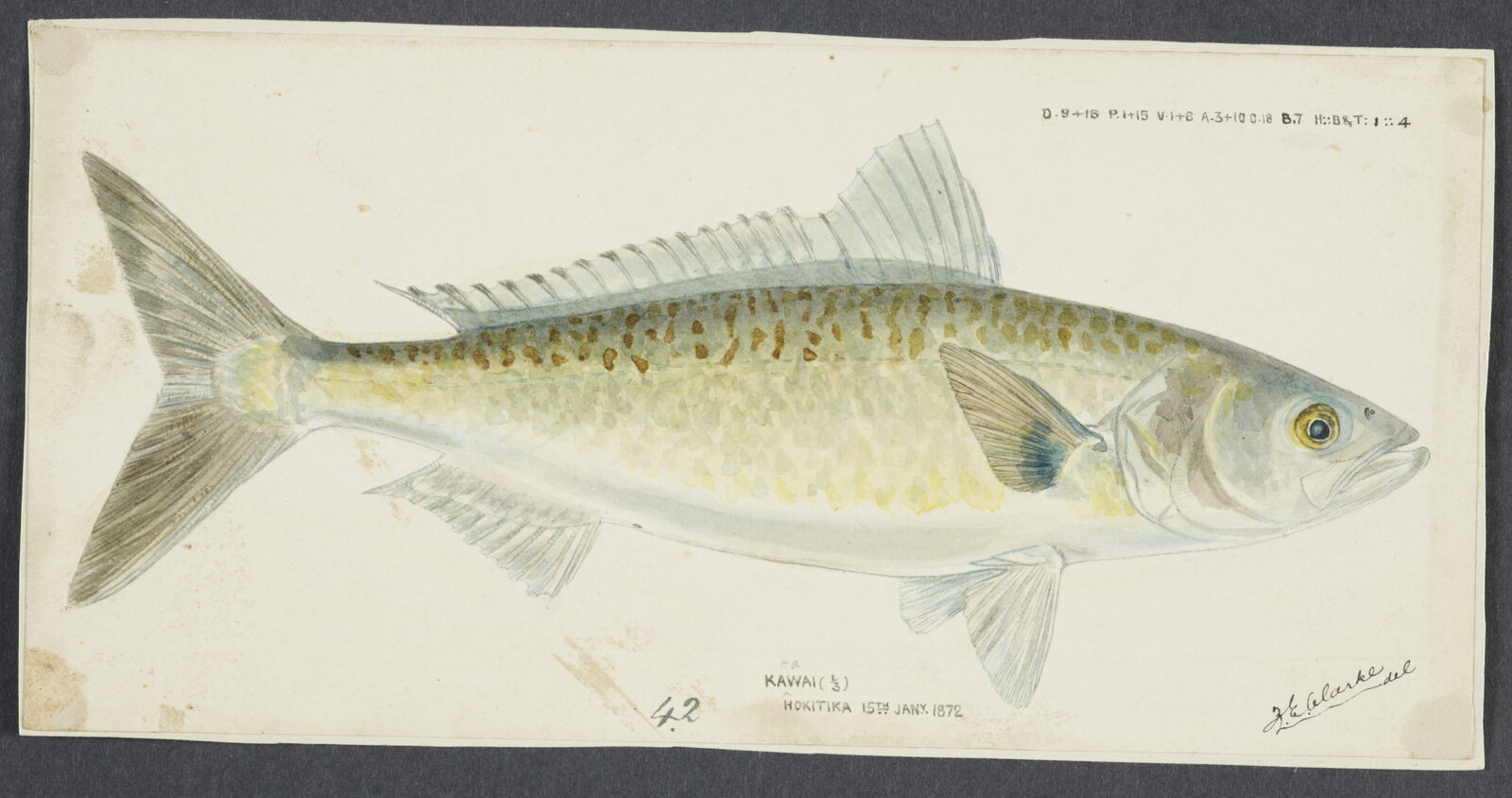
When eastern Australian salmon pass within reach at Carlton River, a lure can help you find their depth before you commit to a bait. Cast a compact metal through the open side of a seam. If the contacts repeat along a small trough, hold a strip bait there long enough for a fish to find it. Both methods depend on standing where you can fish a clear route and bring the line back without crossing swimmers, another angler or the strongest outflow.
Search the coastal side first
Carlton River is a named shore-fishing location in Fishing Tasmania's Tasman Peninsula regional guide. The river reaches Frederick Henry Bay, where Australian salmon are among the locally recorded catches. Use publicly accessible coastal shore and confirm the legal fishing area with the agency map before choosing where to stand. This plan is for accessible marine water at the coastal margin. It does not depend on wading the river mouth, walking through private land or assuming that marine rules apply upstream. Stay on firm ground with a clear line back to the water.
Eastern Australian salmon, *Arripis trutta*, occur in southeastern Australia and also in New Zealand, where the species is called kahawai. They have a long dorsal fin base, a strongly forked tail and yellowish pectoral fins. Young fish can show conspicuous brown spots that become less obvious as they mature. Australian salmon are not trout or true salmon. Australian herring, often called tommy ruff, can also be spotted, so look at body shape and check the identification guide rather than relying on spots alone. A school breaking the surface is a location clue, not a species identification.
Small schooling fish and other mobile prey are an important reason to work moving water. When you see repeated small splashes following the same route, test the edge of that movement. Predator schools may be below bait even when surface activity has paused. If birds are feeding well offshore, watch for signs within a comfortable cast rather than trying to reach them. At lower light, fish a short inside lane first. During bright calm conditions, the deeper side of the first drop is worth a pass. In early summer, tide and wind can change which lanes are fishable from shore. Treat this as a short search for reachable fish, not a promise of a run on a particular tide.
| What the shoreline shows | First rig | Change when |
|---|---|---|
| Bait moving along an open seam | Compact metal lure | Add a brief sink if fish follow high and turn away |
| Repeated touches in one calm pocket | Sliding sinker and strip bait | Shorten the bait if only the tail is taken |
| Foam carries every cast toward your feet | Change casting angle | Move if the rig still comes straight ashore |
| Rock or loose weed stops the lure twice | Start the retrieve sooner | Try an adjacent clean route before adding weight |
Work the water column with one small metal
A 2.4–2.9 m medium spinning rod, 2500–4000 reel, 10–16 lb braid and about 1 m of 12–20 lb abrasion leader make a practical start. Tie directly to the lure's solid attachment point or use a small rated snap. Start with a compact 12–28 g casting metal fitted with a single inline hook around size 1–2/0, sized so it swings freely without fouling. Use the lighter end in shallow sheltered water and the heavier end for a clean lane that needs a faster sink or better wind penetration. Weight and line angle affect the action together, so test the lure beside you if possible before the first long cast.
Make the first cast slightly ahead of the side sweep and begin the retrieve high. Close the bail by hand and make a few brisk turns. Follow with a steady pace that keeps the metal moving and a short pause over open water. On the next cast add a two- or three-count before winding. Compare only the sink at first, keeping the same angle and retrieve. If the lure ticks the bottom at the same spot twice, shorten the count or cast parallel to the drop rather than across it. Silver or a muted baitfish finish is a useful start in clear water. A pale painted face or dark contrast is an experiment when foam or stain makes flash hard to track.
A fish may hit on the pause or make the lure feel heavy halfway through a turn. Reel until the line tightens and sweep smoothly. Hold pressure through a jump without lifting the rod very high. Watch for a wave that carries the fish in, then bring it to a wet net or guide it through shallow water. If you see fish follow to your feet without taking, make the pause farther out or use a shorter metal at the same depth. Those changes are more informative than changing both size and colour at once.
Hold a strip in the trough
For a slower test, slide a 15–35 g running sinker and bead onto a section of 15–20 lb mono, then tie to a small swivel. Add 40–70 cm of 12–18 lb leader and a single inline circle hook around 1/0–2/0. Use a short strip of permitted pilchard or squid with one end pinned firmly and the point clear. A narrow strip is easier to cast than a broad flap and is less likely to rotate. Use only enough weight to keep it in the intended lane. On soft sand, a heavier sinker can bury while the hook drifts out of the pocket.
Make a short cast slightly up the sweep. After it settles, take slack out without pulling the sinker forward. A short controlled drift is useful. If the line keeps washing past your feet, change angle or position before you add weight. With a circle hook, wait for sustained movement and wind firmly into it. A hard strike can pull a circle hook away. If fish pick the strip off repeatedly, shorten it and keep the gap clear. If the bait comes back covered in weed, a high lure presentation is usually a better test than another long soak.
Use a second position to see whether the lure is passing a bar or simply being lifted by the line. From the side of the same lane, cast along the edge and compare the count with your earlier cross cast. If the lure comes through without touching and the line stays low, you can slow the retrieve briefly. If foam hides the lure but the line remains tight, you may still have a usable lane. A lure that spends most of the cast outside the bait's route teaches little about colour or size.
A bait trial works best after you know where the lead can settle. Hold through a modest surge and watch whether the line comes back to the same resting angle. A bait that drifts a little and settles in the trough may fish well. A rig that rolls to shore every time will soon leave the fish's depth. Shorten the trace if the bait repeatedly wraps the main line. If the weight still travels through the same strip of loose weed, use the moving lure above it or leave the lane. Do not try to make a difficult position fishable by adding lead alone.
One late-spring shore session
Suppose a light onshore wind marks a narrow foam line beside quieter water. Start with an 18 g metal and make two short casts along the edge. Begin winding on landing, then try a slightly longer count. A tap on the second pause is a reason to repeat the route. If nothing follows and you see activity farther along the sand, walk to a safe position before trying a longer cast. If the touches are concentrated in one short lane, put the running bait through it with a small strip. Compare its drift with the metal's route. When both presentations are clean but there is no further activity, test a new pocket or finish. Save the detail that mattered, such as the angle that kept the bait in moving water, rather than treating an empty hour as a colour problem.
Check Fishing Tasmania’s species rules, area map and seaward limits before fishing. Stay clear of mouth currents and surf wash, and handle fish quickly with wet hands.