Black drum offer a useful reason to slow down on Florida's Gulf coast as autumn moves toward winter. Instead of covering miles with a lure, an angler can study one shell edge, present a natural bait carefully and learn how the current changes that small piece of water. November and December are planning windows for this approach, not a promise of a seasonal run at a particular dock.
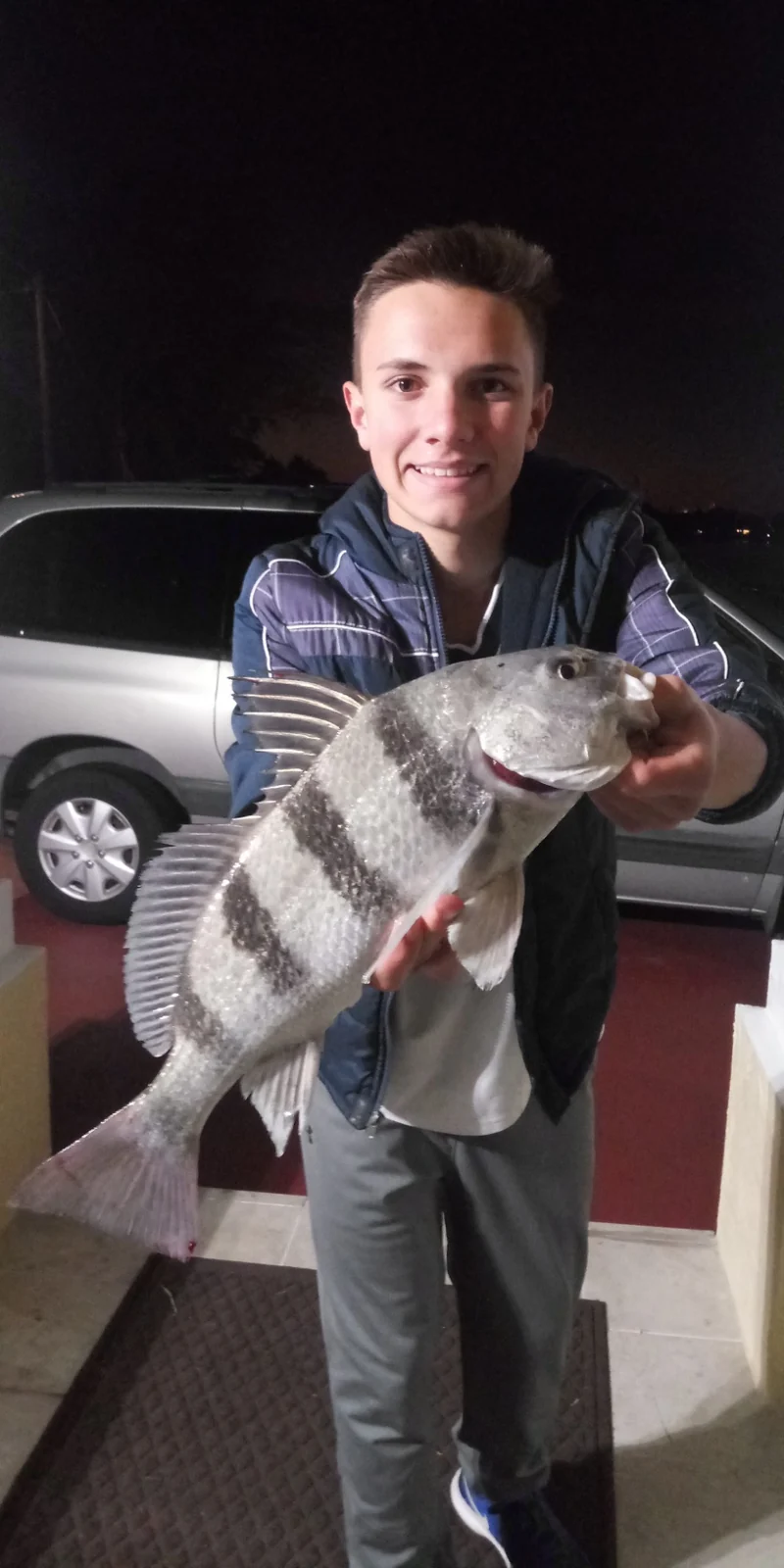
This guide concerns Florida Gulf-coast inshore fishing. The opening photograph comes from the owner's personal collection and shows an owner-identified black drum. Its catch location, date and weight are unconfirmed; it does not document a catch from the waters described here or demonstrate a recommended release technique.
Recognize the fish before choosing the spot
FWC describes black drum, Pogonias cromis, as bottom-dwelling fish associated with bays, river mouths, lagoons, oyster beds, docks and bridge pilings. Smaller fish can show dark vertical bars, which is why they are sometimes confused with sheepshead. Check more than the stripes: black drum have chin barbels and a strongly arched back. FWC notes that sheepshead and red drum lack those lower-jaw barbels. If identification remains uncertain, release the fish promptly rather than guessing from color alone.
The species eats shellfish and other invertebrates, including crabs and shrimp. That makes a compact bottom presentation a sensible starting point. Winter and early spring spawning described in the FWC profile should not be converted into an assertion that every bay has accessible spawning fish. Beginners are better served by manageable inshore fish and safe access than by deliberately searching for the largest adults.
Build a small, weather-resistant itinerary
Choose one bay sector with two legal access options: a sheltered shoreline or fishing pier and, if the forecast allows, a boat-accessible shell edge or bridge approach. Check the actual site operator's opening hours, parking and fishing restrictions. A public-looking seawall, private dock or marina entrance is not automatically available to anglers. Do not obstruct boat traffic, cast across an occupied slip or attach equipment to somebody else's structure.
For a first visit, daylight helps you identify snags and plan a landing. Arrive before the chosen current window so that rigging does not consume the useful period. The important question is where a fish can be brought to hand safely. An elevated bridge without an appropriate landing arrangement is a poor choice even when it overlooks promising water. Select a lower, lawful access point or fish with an appropriately equipped guide.
Autumn fronts can change exposure quickly. Compare the departure forecast with conditions expected when you must return, and select shelter for both legs. A forecast that looks manageable from shore can feel very different in a small boat across open water. Carry a properly fitted life jacket, communications and the safety equipment required for the vessel. Cancel or shorten the session when the safe return becomes doubtful.
Start with a controlled inshore outfit
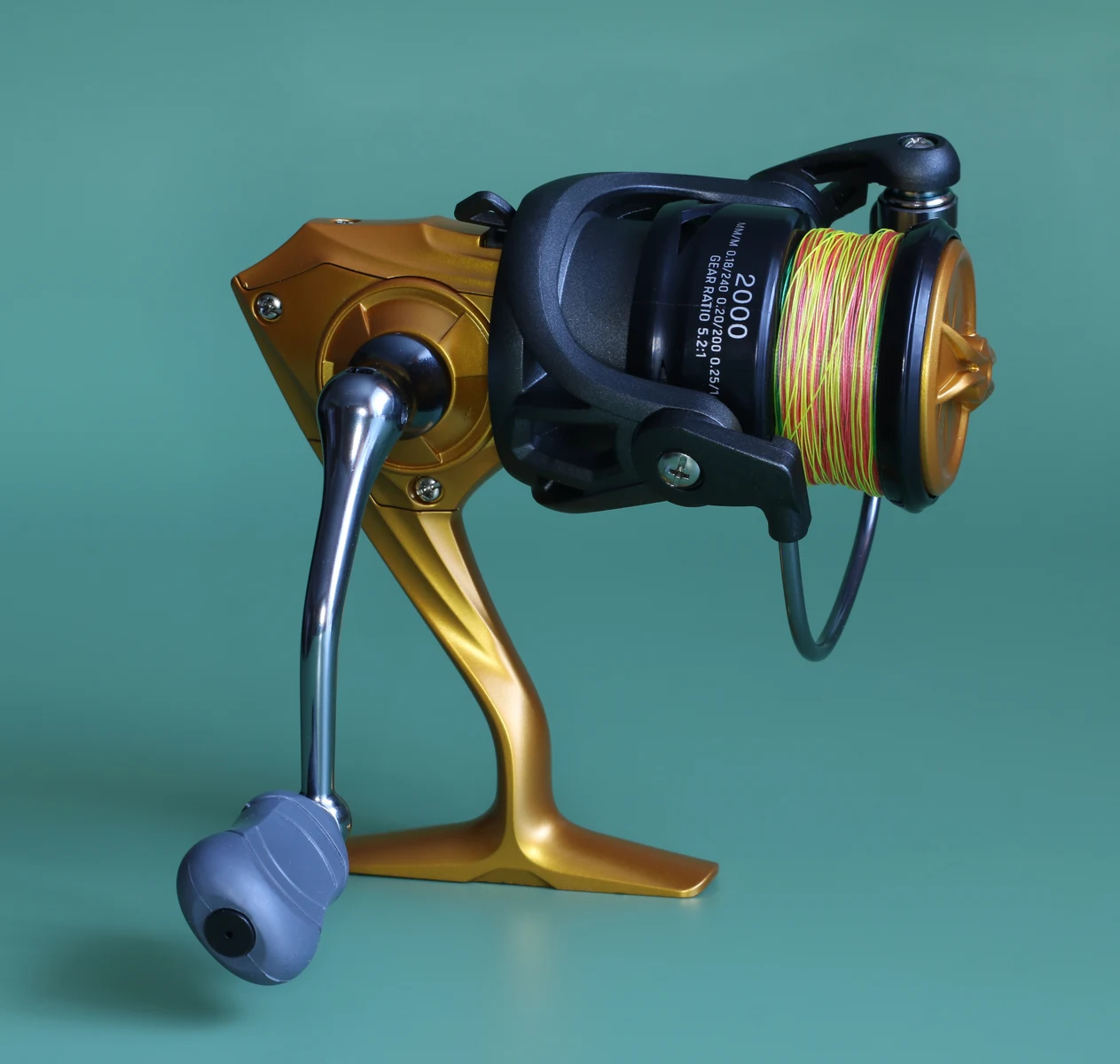
A practical starting outfit is a medium-heavy spinning rod around seven feet, a reel with a smooth drag, and 15–20-pound braid. Add roughly 18–30 inches of 25–40-pound abrasion-resistant leader. These are editorial starting ranges rather than legal requirements or a claim that one outfit handles every drum. Increase tackle strength near substantial structure and use a heavier, balanced outfit when large fish are the specific objective.
Inspect the leader after contact with shell, concrete or a fish. A fresh leader is inexpensive compared with losing a fish because the line has become rough. Tie a connection you can reproduce reliably and test it with steady pressure before fishing. Set the drag to give line smoothly while preserving enough control to steer a fish away from pilings. Do not lock down a small reel to compensate for tackle that is too light.
A simple sliding-sinker rig works well as a first experiment: main line through an egg sinker, a protective bead if needed, a small swivel, leader and a single inline circle hook. Begin with approximately a half-ounce to one-ounce sinker in modest current, adjusting to the actual bottom and flow. Use the lightest weight that holds the intended lane without tumbling constantly into snags. If several ounces are needed beside heavy structure, reassess the rod, footing and landing plan rather than merely adding more lead.
Fit the bait to the hook
Shrimp is a convenient first bait, while an appropriately sized piece of legally obtained crab can offer a tougher presentation. Start with a roughly 1/0–3/0 inline circle hook for shrimp or a small bait piece, adjusting to the hook model and the bait's thickness. Hook sizes are inconsistent between manufacturers; the useful test is whether the point and gap remain exposed. A ball of bait packed around the hook defeats that design.
Keep bait cool and clean. Rig one fresh presentation at a time rather than letting several rods fish unattended. Around mixed-species structure, a short, monitored soak makes it easier to react to a bite and remove a damaged bait. Do not collect crabs, shrimp or shellfish without checking the separate collection rules and any area closures. Buying bait legally is simpler for a visiting angler.
Cast onto open bottom beside the structure rather than directly into the thickest shell or under a maze of dock lines. Let the sinker settle, remove excessive slack and hold the rod where you can distinguish steady pressure from current vibration. Keep your thumb and fingers away from braid under tension. A fish's first movement is not a reason to wrap line around a hand.
Fish the edge, then change one variable
Begin where an oyster bar meets softer bottom, or where a manageable channel margin runs beside shallower feeding ground. Approach quietly. In a boat, position outside the casting lane and avoid running a propeller over grass or shell. From shore, make the shortest cast that reaches the useful edge. Greater distance is not an advantage if it prevents you from controlling a hooked fish.
Give a fresh bait a defined trial rather than waiting indefinitely. If there is no activity, move the cast a few yards along the edge before abandoning the whole area. If small fish repeatedly remove shrimp, try a smaller, tougher bait portion or a different lane. If the rig snags every cast, shorten the presentation distance, reduce unnecessary leader length or shift to cleaner bottom. Record which change helped so that the next visit begins with a reasoned choice.
With an inline circle hook, resist a sharp striking motion. As the line comes steadily tight, reel smoothly and allow the rod to load. FWC recommends circle hooks for natural bait and advises against a traditional hook-set with them. A sudden sweep can pull the bait away before the hook turns into position. If the fish drops the bait, retrieve and inspect it rather than repeatedly striking at an empty rig.
Use tide information as a starting hypothesis
A tide prediction describes water level at its station. It does not tell you the precise current speed beside your chosen piling, and a sheltered back bay can respond differently from an inlet. Look at the water after arrival: floating material, the angle of the line and the way the boat lies reveal the immediate flow. Fish a lane where the bait can remain controlled and retrieve without crossing hazards.
Try a moving-water period but keep an alternative for stronger flow. A nearby lee or wider flat can remain fishable when a narrow opening becomes uncomfortable. Wind can also alter the apparent water level and expose an access route you expected to remain covered. Leave enough water and daylight for a boat's return and never rely on a charted depth alone after changing conditions.
Keep the log simple: location type, approximate depth, bait, sinker weight, current direction, wind and whether bites occurred. Avoid recording an unsuccessful session simply as 'wrong tide.' A fouled hook, damaged leader, inaccessible bottom or exhausted bait may explain more than the calendar.
Check the rules before retaining anything
As checked on 21 October 2026, FWC lists a 14–24-inch slot for black drum in Florida Gulf and Atlantic state waters, with a daily limit of five per harvester that may include one fish longer than 24 inches. The season is open year-round. FWC prohibits harvesting black drum with any multiple hook used with live or dead natural bait, and also prohibits snatching. The single-hook rig described here avoids that multiple-hook issue. Special rules apply in Biscayne National Park, outside this Gulf-coast itinerary. Recheck the current FWC page before fishing; do not carry these numbers into another state or an unverified jurisdiction.
Arrange the appropriate Florida saltwater license or establish a valid exemption before attempting to fish. The no-cost shoreline-only license is for eligible Florida residents fishing from land or a structure attached to land; it is not a general boat-fishing license. Nonresident visitors need the appropriate nonresident license unless an exemption applies. Confirm separately whether a licensed charter or pier covers your activity.
Measure with a proper board according to FWC's measuring guidance. If a fish lies close to a legal boundary and you cannot confidently establish compliance, release it. Set a personal retention target below the legal allowance when that better matches your needs. The bag limit is a ceiling, not a goal for every outing.
Land efficiently and leave the next session possible
Have a suitable landing net and pliers ready before the first cast. Keep a fish in the water while removing the hook whenever practical. If lifting is necessary, use wet hands and support its body horizontally. Avoid lifting a drum by the line, jaw alone or gill opening. Keep photography brief and ready in advance. For a deeply embedded hook, FWC recommends cutting the leader close rather than causing further injury through prolonged removal attempts.
A successful release is more than a fish disappearing from view. Use tackle that avoids an unnecessarily long fight, return the fish promptly and reconsider the method if repeated captures are badly hooked or difficult to land. Collect line scraps and bait packaging, leave oysters and seagrass intact, and give other anglers room.
For the next trip, change only the weakest part of the plan: safer access, better leader protection, a more controllable current lane or a bait that stays correctly positioned. Black drum fishing rewards that attention to detail even on a day without a catch.