Garadice is large enough that simply arriving with a box of perch lures is not much of a plan. A better approach is to choose a manageable piece of permitted bank, learn its depth changes and compare a moving lure with one that can pause in place. That creates useful decisions even during a quiet session.
This guide is aimed at a cool-weather bank visit around Ballinamore. It does not promise winter catch rates or identify a currently occupied shoal. Numeric tackle ranges and suggested timings are starting points for testing the water, not local records or fixed prescriptions.
The perch you are looking for
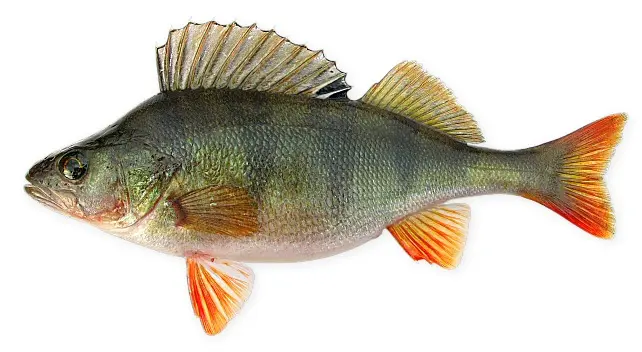
European perch, Perca fluviatilis, have dark vertical bars, red-toned lower fins and a prominent spiny dorsal fin. Their deep body and colour pattern distinguish them from the long-bodied pike that also inhabit Garadice. They are not American yellow perch, even though that related fish can look similar in photographs.
Perch occur across much of Europe and northern Asia and are widespread introduced fish in Ireland. They feed on aquatic invertebrates, zooplankton and small fish, including juvenile perch. Those different prey sizes help explain why a small worm-shaped lure can remain useful even when larger perch are capable of taking fish.
Their shoaling behaviour makes a single bite worth investigating, but do not assume that every companion fish is the same size. Dawn and dusk can be useful times to inspect feeding activity; in cold or unsettled weather, a comfortable daylight session with good lure control may be more informative than fishing darkness without understanding the bank.
Start with real access, then read the water
The official Garadice description identifies developed access at Haughton's Shore, Garadice Park and Church Shore. It also lists parking near other shores. At Connolly's Shore, use the provided parking and do not drive into the field without permission. Access can change, so confirm the route and current conditions locally.
Much of the lake is around five metres deep, with deeper water reaching about twenty metres in the basin southwest of Church Island. Those are lake-scale facts, not a claim that twenty-metre water is reachable from your chosen bank. Sound a swim with your lure or a suitable depth-measuring setup rather than copying a map depth into your float setting.
Choose a shore with safe footing, space behind the cast and a clear landing area. Examine the close margin before making a long cast. Where vegetation, stones or a change of slope is actually present, treat its edge as a potential feeding route. Do not invent weed beds simply because a general lake guide mentions them.
An ordered bank search
First fish parallel to the near edge, keeping the lure above any visible vegetation. Next cast diagonally across the slope. Finally cover the outer part of your comfortable range. This near-to-far sequence reduces the chance of repeatedly crossing an accessible group with your line before presenting a lure to it.
Use a small fan of casts at each distance. Change the countdown rather than changing lure after every cast. If the lure touches bottom quickly in one direction and much later in another, you have found a depth difference worth investigating. Countdowns are comparative: wind, lure shape and line tension all affect descent.
| Water you actually observe | Possible value | First method | Important caveat |
|---|---|---|---|
| Clear margin beside vegetation | Shelter and small prey | Light jig swimming along its edge | Keep the hook out of living plants |
| Clean slope into deeper water | A route between feeding levels | Jig with progressively longer countdown | Depth is measured, not guessed |
| Small area producing repeated taps | Fish may be staying close | Drop-shot with long pauses | Taps do not identify the species |
| Bait scattering at the surface | Active predators nearby | Small swimming plastic | Pike may also be responsible |
After a bite, repeat the same angle and depth before moving. If several casts produce nothing further, work a little to either side. A perch shoal may be small and mobile; it does not justify an hour of identical casts to an empty patch.
Rig one: a light jig
A practical outfit is a 2.1–2.4 m light spinning rod, a 2000-size reel and 6–10 lb braid with about a metre of 6–10 lb leader. Match the rod's casting rating to the total jig and plastic weight. For a first test, carry 3–7 g heads and 5–7 cm soft plastics, including a slim paddle tail and a less active straight tail.
Measure where the hook should leave the body, thread the plastic straight and keep the point unobstructed. A twisted plastic changes the action and can cause line twist. Check it beside the bank before starting the search.
Cast slightly across the area you want to cover. Close the bail, follow the sinking line and begin the retrieve before the lure settles deeply into debris. Try a slow swim, then a short lift followed by a pause. A subtle movement near the bottom can be more controllable than large hops that cross the useful depth too quickly.
Feel for a tap, but watch the line as well. If it jumps or moves sideways unexpectedly, recover slack and lift smoothly. Avoid striking at every contact with a stone; compare the feel of repeatable bottom contact with movement that does not match the retrieve.
Rig two: drop-shot for a small target area
Use the same light outfit with a leader long enough to include the hook and weight section. Tie a size 4–1 hook appropriate to a small worm or minnow-shaped plastic, leaving a 30–50 cm tag below it. Attach a 5–10 g drop-shot weight to that tag. The exact separation is a trial distance above the bed, not a guarantee of the bait's height when the line lies at an angle.
A suitable drop-shot knot should leave the hook standing away from the leader. Pull-test it and check the point faces correctly before adding the plastic. Nose-hook a short lure so it can move without folding around the hook.
Cast gently, allow the weight to settle and take up only enough slack to feel it. Quiver the rod tip without moving the sinker, pause, then drag the weight a short distance. This tests an area slowly after a moving jig has found interest. It is less useful as a fast search tool across a completely unknown bank.
If the sinker jams repeatedly, switch shape, reduce the drag distance or leave that lane. Pulling harder is not a presentation adjustment. The goal is to keep a bait accessible, not to force a rig into every crack.
Pike, colour and other decisions
Garadice also holds pike. When pike encounters are likely, fit a suitable fine wire bite trace and components compatible with the lure, or choose another method or area. Thin fluorocarbon is not a reliable substitute for pike-proof wire. A small lure does not exclude pike.
Test a natural pale or translucent plastic against a dark or bright contrasting one, but keep weight and retrieve comparable. In poor visibility, contrast may make the lure easier to find; in clear water, size and movement may matter more. There is no substantiated Garadice colour calendar. If a lure gets follows, first shorten it or change its speed rather than buying an entirely different colour collection.
A worm beneath a small float is another option where allowed and practical. Set it clear of the bottom, keep the hook modest and respond promptly to sustained movement. Do not use live fish as bait. This alternative can test whether fish will take natural food when artificials receive only tentative interest.
A worked afternoon
Arrive in daylight at a confirmed access point and walk the permitted bank before assembling tackle. Pick three comfortable casting positions with different angles. Begin with a 5 g jig and a small straight-rigged plastic, first close, then diagonally farther out.
Suppose two light taps occur on the longer countdown beside the same slope. Repeat the cast and then try the drop-shot at that level. If the lure is constantly fouled, shorten the hook-to-weight distance only if doing so improves presentation; otherwise raise the entire working level or move to cleaner ground.
After testing those positions, revisit the one that produced actual evidence. Record distance, count, lure weight and whether bites came during movement or pauses. The useful result may be locating a clean lane and learning that a second shore is too exposed, even without a catch.
Local rules and fish care
Check current IFI rules, any local permissions and access notices before fishing. Ireland prohibits live fish as freshwater bait and limits coarse fishing to rod and line with no more than two rods. This plan uses one rod and releases its catches; do not assume permission to cross private land follows from a fishing map.
Keep away from flooded or unstable banks, use appropriate flotation where a fall is possible and handle perch carefully around their spiny fins and gill covers. Support fish, unhook promptly and leave the bank and vegetation intact.