On Hakone’s Lake Ashi, the same point can offer a shallow strip where a hard minnow hangs over cover and a deeper face where a spoon needs a measured sink. Set up to fish both. Choose an authorized boat departure in the Kojiri area, then begin on an open, permitted margin where you can see how wind affects the line. Make your first casts to find a fishable depth, rather than searching the whole lake with one lure.
Use a north-end starting area
Kojiri is at the northern end of Lake Ashi. A boat operator at the Kojiri end of Motohakone lists rainbow trout among its target fish. Confirm the meeting point, eligible boat, permits and the current fishing map before booking. On the water, ask about no-fishing areas, other boat traffic and places where the boat can stay outside shallow hazards. This plan is for a controlled boat position and short casts. It does not depend on access to a particular pier or permission to fish from a private landing.
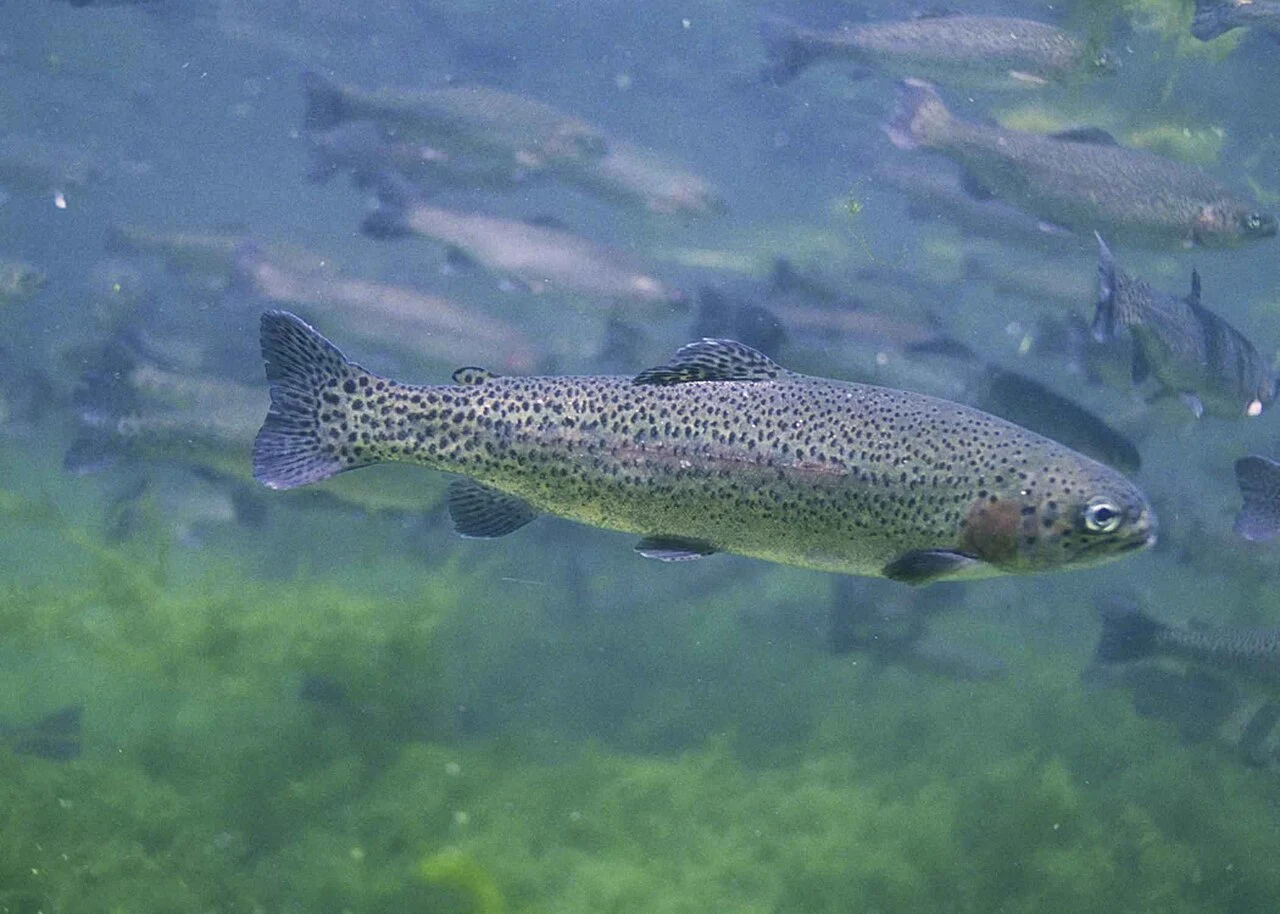
Rainbow trout, *Oncorhynchus mykiss*, are native to parts of the North Pacific region and widely introduced elsewhere. Kanagawa's stocking information lists rainbow trout for Lake Ashi. The body often has small dark spots across the back and tail and a pinkish band on the flank. Brown trout can show red or orange spots and often have a less spotted tail. A rainbow's band may be pale, especially under glare. Use the pattern on the tail and back together with the flank rather than relying on the colour of one stripe. Keep wet hands off the gills while looking.
Rainbow trout eat aquatic insects and other invertebrates, and larger fish can also take small fish. A minnow-shaped lure gives a useful profile when small fish move along a shallow edge. A spoon gives flash and a changing fall, which helps you search a wider depth range when no forage is visible. Neither lure identifies what a trout is eating. At the first headland, look for a clean slope, a seam between wind ripple and quieter water or scattered fish breaking the surface. If the current boat position sends the line across a large patch of debris, move before changing lure.
Late autumn gives you a chance to compare margins as the surface cools. Try a low-light spell on the shallow side first if bait is visible, and give the shaded slope a pass when clear water and bright light make the shallow approach feel exposed. On a windy day, pick a shore where you can still feel the spoon settle. A ruffled surface can reduce glare, but a crosswind can also carry a light lure out of its intended depth. There is no tide to use as a clock. Mark the line angle, clarity and depth at any follow or bite and see if the next clean pass repeats it.
| What you can observe | Start with | Change when |
|---|---|---|
| Small fish near a clean shallow point | Shallow hard minnow | Fish a pause before the lure reaches the boat |
| No surface signs over an open slope | Counted metal spoon | Add two beats at the same retrieve pace |
| Weed fragments on the hook every cast | Shallow hard minnow with a higher tip | Move to another lane if the line still crosses weed |
| Boat or line moves quickly across the edge | Short spoon cast from a sheltered angle | Change position if you lose repeatable depth |
Count a metal spoon down the slope
A 6½–7½ ft light or medium-light spinning rod and a 2000–2500 reel are a practical start. Try 5–8 lb braid joined to 80–120 cm of 5–8 lb mono or fluorocarbon. Tie a small reliable snap to the leader or tie direct to a solid split ring. Start with a 3–7 g spoon and a single inline hook around size 8–4, matched to the spoon so it swings freely without fouling. Pinch the barb if the rules and hook pattern allow. Check the spoon beside the boat first. If it spins continuously at your normal speed, slow down or use a different design.
Cast along or slightly across the slope and close the bail by hand. Start with a three-count under light tension. Retrieve at a speed just high enough to feel the spoon pulse, then let it fall a beat. If the first cast stays clear of weed and never gets close to the edge, add a couple of counts on the next. Do not use the same count as a fixed depth when you change spoon weight or the boat begins moving faster. If the lure comes back with weed at the same point, shorten the count or use a new angle. When the line stops early, wind in and sweep gently when weight stays on. A light hook can straighten or pull free on an abrupt strike.
In clear water, begin with a small dull silver or copper spoon. If you cannot see it at all beside the boat in coloured water, try a painted cream face or a darker shape for comparison. Keep the depth and speed unchanged when you test visibility. At the end of each cast watch for a following fish. If it turns away near the hull, put the pause farther out on the next cast, or move the boat away from the line you are trying to fish.
Hold a hard minnow above the shallow edge
Clip on a 45–70 mm floating or suspending hard minnow around 3–6 g. A lure with a shallow lip is easier to keep out of submerged grass. Choose a legal single-hook version or an appropriately matched replacement hook around size 8–4 where permitted. A hook change can change how the lure suspends, so test it beside the boat before relying on a long pause. Use the same leader and keep the lure close enough to the boat to control without dragging it through shoreline cover.
Cast at a shallow angle past the edge rather than straight into the bank. Bring the lure down with two or three steady turns, then use a short pull and pause. Let a floating model rise clear of obstructions. A suspender can stay in front of a following fish longer in a clear gap. A tap on the pause may show first as slack disappearing. Reel to contact and use a low sweep, then steer the fish away from the side of the boat. Keep the net in the water and lead the fish into it head-first.
Use a clear patch beside the boat to check how the spoon falls with and without a line bow. A tight line swings the spoon toward you. A slack line lets it fall more directly, but hides the early stop or sudden movement that can signal a take. Aim for a slight bow you can still see. When gusts make that impossible, shorten the cast and turn the rod toward the lure before choosing the next heavier spoon. A change of a few metres in casting position can do more for depth control than doubling the weight.
At a second point, compare the ripple line with the quieter side at the same depth. In the ripple, a spoon that gives a steady pulse helps you judge whether the boat is moving into the line or away from it. In the quiet pocket, a minnow you can see makes it easier to test where a fish loses interest. If the fish follows only as the lure speeds up, try a deliberate acceleration once on the next cast. If it follows through the acceleration but turns at the hull, reset the boat farther out. Change location after several clean casts with no evidence, rather than continuing to experiment with colour over empty water.
A worked Kojiri session
Suppose you start on a sheltered north-end margin with a modest crosswind. Fish a 5 g spoon at three and five counts along the open face. If a tap comes on the fall at five, repeat before changing colour. If the next cast hooks weed at the same point, move the boat back and cast parallel to the weed instead. A shallow minnow is the next test when you see a follow above the plants. Start the pause well before the lure reaches the boat. If both clean presentations come back untouched, try another point that offers a different slope or light angle. Avoid treating a dark patch or a sonar return as proof a trout is present.
Buy the appropriate permit and use the Ashinoko Fisheries Cooperative and Kanagawa rules for current hours, zones, seasons and tackle. This plan uses hard lures because soft-plastic worms and similar baits are prohibited. Wear a PFD and keep trout wet during release.