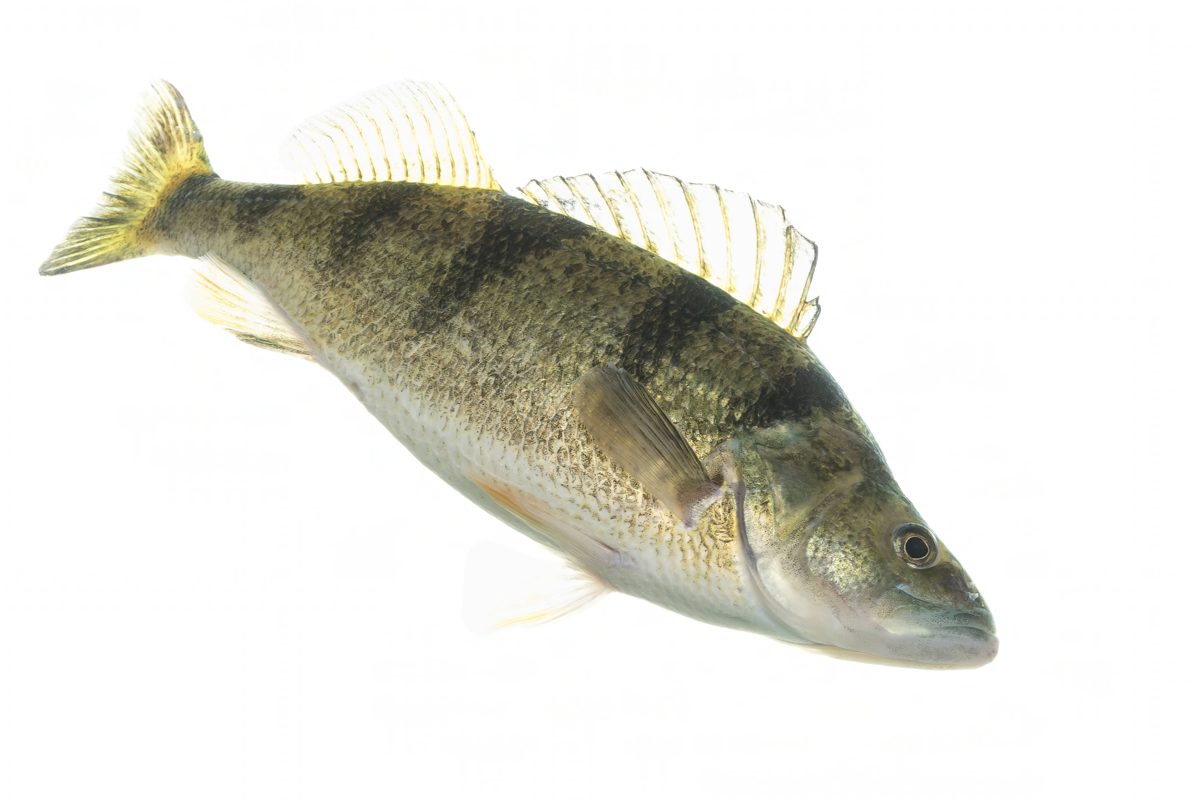
On the New York side of Lake Champlain, a yellow perch school can be just beyond casting range from the ramp or a short move away from yesterday’s position. Launch at Port Henry with a plan to compare two bottom types. Fish a small jig where a school has room to roam along an edge. Use a drop shot when you need to hold a bait at a known height without dragging a hook through the bottom.
Locate the first school
The public launch at Port Henry is off Route 9N. It gives boat access to the main lake. Use a lake chart to pick a shallow flat with a safe approach and a nearby break, then assess the actual wind and wave exposure at the ramp. Start on the protected side where you can control the boat, avoid crossing marked shallows at speed, and keep clear of traffic at the launch. The following plan is for ice-free water and boat access on the New York side.
Yellow perch, *Perca flavescens*, are native to much of northern and eastern North America and are part of Lake Champlain's panfish community. Look for a yellowish body with dark vertical bars, two distinct dorsal fins and a spiny front dorsal. The white perch in Champlain has a more silvery body without those strong dark bands. A walleye is more elongated and has a conspicuously larger, toothed mouth. Sun angle can make a perch look pale, so use the pattern and body together rather than relying on colour alone.
Perch school and feed on aquatic invertebrates and, especially as they grow, small fish. Larger perch can cruise beyond a weed edge where prey have less cover. Small fish can also collect on a sandy or muddy flat, where invertebrates give perch another reason to feed. Think of the weed edge as one boundary and the flat's deeper lip as another. A school may work the lip without touching the nearest patch of vegetation. Look for returns close to but distinct from the bottom and repeat a short pass to see whether they move. Sonar marks alone cannot identify the species.
On a calm late-autumn day, a shallow edge in 8–15 ft and an adjacent bench in roughly 16–25 ft are practical search bands, provided the chart and conditions support them. These are starting depths for the session. Try the shallower band in low light or where a ripple makes the surface less transparent. If the lake is clear and bright or the first drift is empty, give the adjacent bench a fair test. As the water cools, some perch remain near shallow cover while other groups use deeper edges. Freshwater wind changes your drift speed and the position of prey. It provides a reason to adjust the route, not a reliable clock for the bite.
| Reading from boat or sonar | First rig | Depth and approach |
|---|---|---|
| Fish moving just outside shallow weed | 1/16 oz jig | Cast along the weed edge and count down above it |
| Returns grouped above a clean bench | Drop shot | Set the hook 12–18 in above the weight |
| Soft bottom with small returns close to it | Light drop shot | Let the sinker settle once and hold without ploughing |
| Marks but heavy boat drift | Shorter drop or protected edge | Bring the line closer to vertical before adding weight |
Set the drop-shot hook above the silt
A 6½–7 ft light or medium-light spinning rod with a 1000–2000 reel, 5–8 lb braid and about 4–6 ft of 5–7 lb mono or fluorocarbon is a useful start. Tie a size 8–4 drop-shot hook with a Palomar knot, leaving a long tag. Pass the tag back through the eye from the point side so the hook stands out. Clip a slim 1/8–1/4 oz weight 12–18 in below the hook and nose-hook a straight 1½–2 in minnow plastic. The narrow sinker is easier to lift through scattered stalks. Over soft bottom, use only the weight that gives repeatable contact.
Lower the rig next to the boat, stop as soon as the weight touches and reel in excess slack. Make two or three tiny pulses without hopping the weight, then hold still for several seconds. Move the boat or lift and reset the weight after a short pause. A sideways line shortens the vertical distance between hook and bottom, even though your hook spacing has not changed. If the bait starts snagging, bring the boat back over the rig, reduce the line out or move to the lee. When the rod tip loads or the braid ticks, reel down and lift the rod firmly without snapping it. If only the tail comes back torn, shorten the plastic and try a smaller hook that still leaves the point exposed.
Swim a small jig above cover
For a moving school or the outside edge of remaining weeds, tie a 1/16–1/8 oz jighead to the same leader. Use a size 6–2 hook with a 1½–2¼ in straight or narrow paddle-tail plastic. Keep the body aligned and the hook exposed in open water. Cast slightly ahead of the drift and parallel to the drop. A first drop over bare bottom gives you a reference count for this weight, line and wind. On the actual cast, start winding before that count and use a steady turn with short pauses.
Watch the line during each pause. If it stops early, reel down and lift. A hook that stops at the same place every cast is more likely touching weeds or rock. Shorten the next sink or raise the tip through that stretch. If you never approach the fish level, try the heavier jig or reposition so the line no longer runs across the wind. In clear water a small olive, silver or translucent profile is a sensible start. Try a cream body or dark silhouette if a bit of stain makes the first profile hard to see. Change one variable at a time.
A single perch can be useful even when the school moves immediately. Note the water depth, how far the hook was off bottom and what the sinker felt like there. On sand it will often land cleanly and lift easily. On soft silt it may hesitate before coming free. In weeds the rig can feel springy. Try to find the same transition a short distance along the edge rather than assuming the fish moved straight into deeper water. If the next pass produces smaller fish, try the outside of the group with a slightly longer plastic while keeping the same hook height. The longer profile is a trial, not a guarantee of a bigger fish.
One late-autumn run from Port Henry
Imagine a light morning wind and no ice. Leave the launch for a protected, charted edge and make one slow pass from around 10 ft into 18 ft. Suppose bait shows halfway down over the flat but the only tight group of small returns is just off bottom at 18 ft. Stop on the deeper edge and set the drop-shot hook 15 in above a 1/8 oz weight. If the line trails and the bottom disappears on the next drift, shorten the drop and point the boat into the drift first. Use a quarter-ounce weight only if that is still too light.
When the first fish comes up, note how far you drifted from the turn in the edge. Reset on the upwind side and repeat once. If the marks spread shallow and the drop shot reaches each point too late, use a 1/16 oz jig to cast ahead of the boat. Fish it slightly higher on the first pass, then deepen the countdown one beat at a time. Net a larger perch and unhook smaller ones with wet hands away from the spines. After two clean but empty passes, move to the next change in depth or bottom. There is little value in cycling colours over the same empty bench.
Use the New York State DEC Lake Champlain entry for licences, jurisdiction and current local rules. The lake’s New York entry allows two lines per person with at most two baited hooks or two artificial lures per line. Wear a PFD and shorten the trip if cold wind or waves make boat control unreliable.